Zaalouk: Moroccan Eggplant Salad
What Is Zaalouk?
Zaalouk is one of the most popular Moroccan cooked salads, part of the spread of small dishes (called salades cuites) that often opens a Moroccan meal. Despite being called a salad, it is fully cooked down into a soft, smoky, spreadable mash.
It celebrates two humble vegetables, eggplant (denjal) and tomato (matisha), transformed by olive oil, garlic and warm spices into something deeply savory. It is naturally vegan, healthy, and endlessly satisfying.
Choosing and Preparing Eggplant
Use firm, glossy eggplants. They can be peeled in stripes, fully peeled, or left with skin on for more texture, depending on preference. Cubing or roasting whole are both common; roasting over a flame adds a smoky depth.
Many cooks salt the eggplant and let it drain to remove bitterness and excess moisture, but modern eggplant varieties are mild enough that this is optional. The eggplant will collapse and soften completely during cooking, so a precise cut is not critical.
Building the Flavor
Cook ripe, chopped tomatoes with crushed garlic and olive oil until they break down into a sauce. Add the eggplant and let everything simmer together, stirring and mashing as it softens, until the mixture is thick and the oil rises to the surface.
The defining spices are cumin (kamoun) and paprika (felfla hloua), with a little salt and sometimes a pinch of cayenne or harissa for heat. Fresh cilantro and parsley are stirred in for brightness against the rich, cooked vegetables.
Step-by-Step Method
1) Cook or roast the eggplant until very soft. 2) Simmer tomatoes with garlic and olive oil until saucy. 3) Add the eggplant and spices and cook down, mashing as you go. 4) Continue until thick and jammy with no watery liquid. 5) Stir in fresh herbs and a squeeze of lemon.
Cook over medium-low heat and be patient; the goal is a concentrated, almost caramelized texture. Adjust seasoning at the end, as zaalouk benefits from a generous hand with salt, cumin and olive oil.
Serving Suggestions
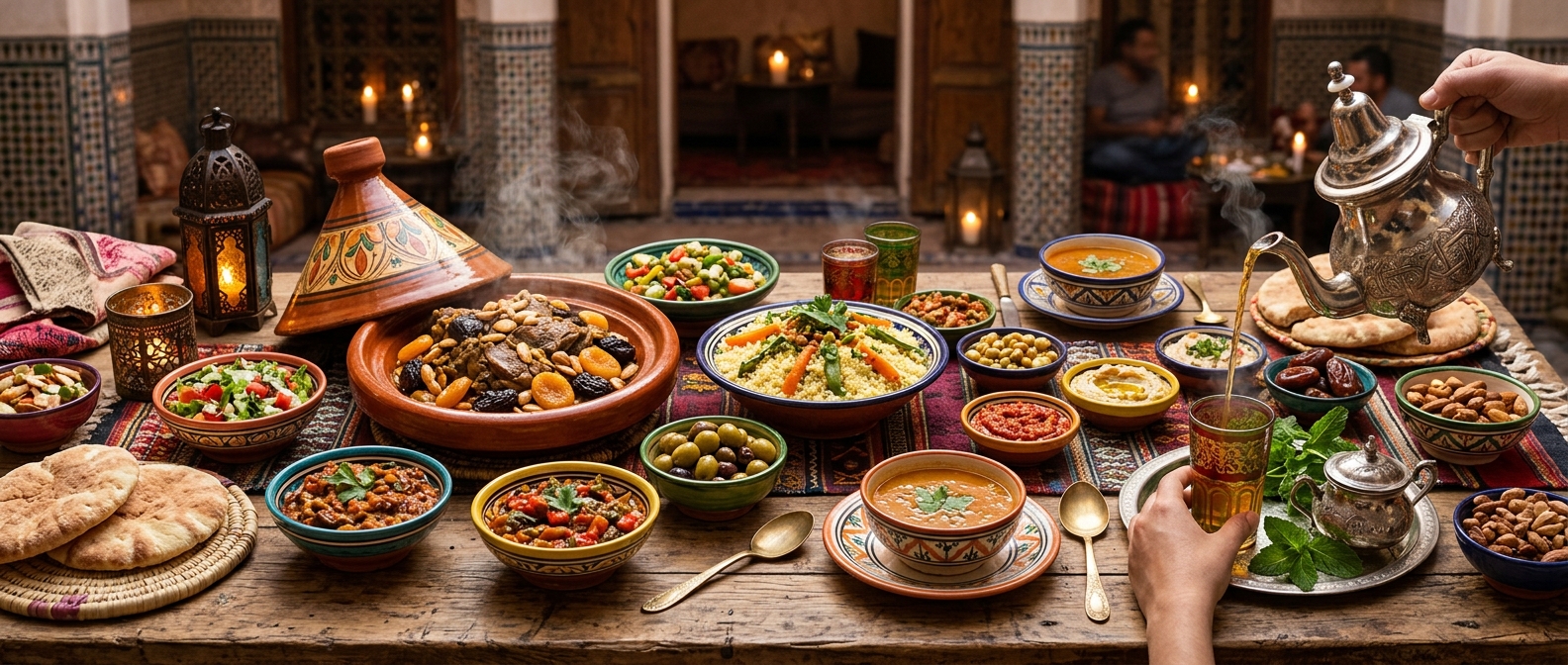
Zaalouk is traditionally served as part of a starter spread alongside other cooked salads like taktouka (peppers and tomatoes) and a carrot salad. It is eaten with pieces of khobz bread used to scoop it up.
It also makes a wonderful side to grilled meats and fish, or a topping for bruschetta-style toasts. Serve it warm, at room temperature, or chilled; the flavor deepens as it sits.
Storing and Variations
Zaalouk keeps well, covered, in the fridge for up to four days and tastes even better the next day as the flavors meld. Bring it back to room temperature before serving for the best flavor.
Variations include adding more or less garlic, a smoky char from grilling the eggplant, or a touch of harissa for heat. Some cooks finish with extra olive oil or preserved lemon for a tangy lift.
| Ingredient | Amount |
|---|---|
| Eggplant | 2 medium |
| Ripe tomatoes | 4 large |
| Garlic cloves, crushed | 3 |
| Olive oil | 4 tbsp |
| Ground cumin | 1 tsp |
| Sweet paprika | 1 tsp |
| Cayenne or harissa (optional) | 1/4 tsp |
| Cilantro and parsley, chopped | 1/3 cup |
| Lemon juice | 1 tbsp |
| Salt | to taste |
Ingredients
FAQ
Is zaalouk served hot or cold?
Both. It can be served warm fresh from the pan, at room temperature, or chilled from the fridge. Many Moroccans prefer it at room temperature as part of a starter spread, and the flavor improves after resting.
Do I need to salt the eggplant first?
It is optional with modern eggplant varieties, which are rarely bitter. Salting and draining can reduce moisture and bitterness, but you can skip it since the eggplant cooks down completely anyway.
How do I get a smoky flavor?
Char or grill the whole eggplant over a flame or under a broiler until the skin blackens and the flesh is soft, then scoop it out. This roasting step gives zaalouk its signature smoky depth.
Loved this? Useful? React below — your feedback helps other readers.