Inside a Moroccan Wedding: Traditions, Caftans and Customs
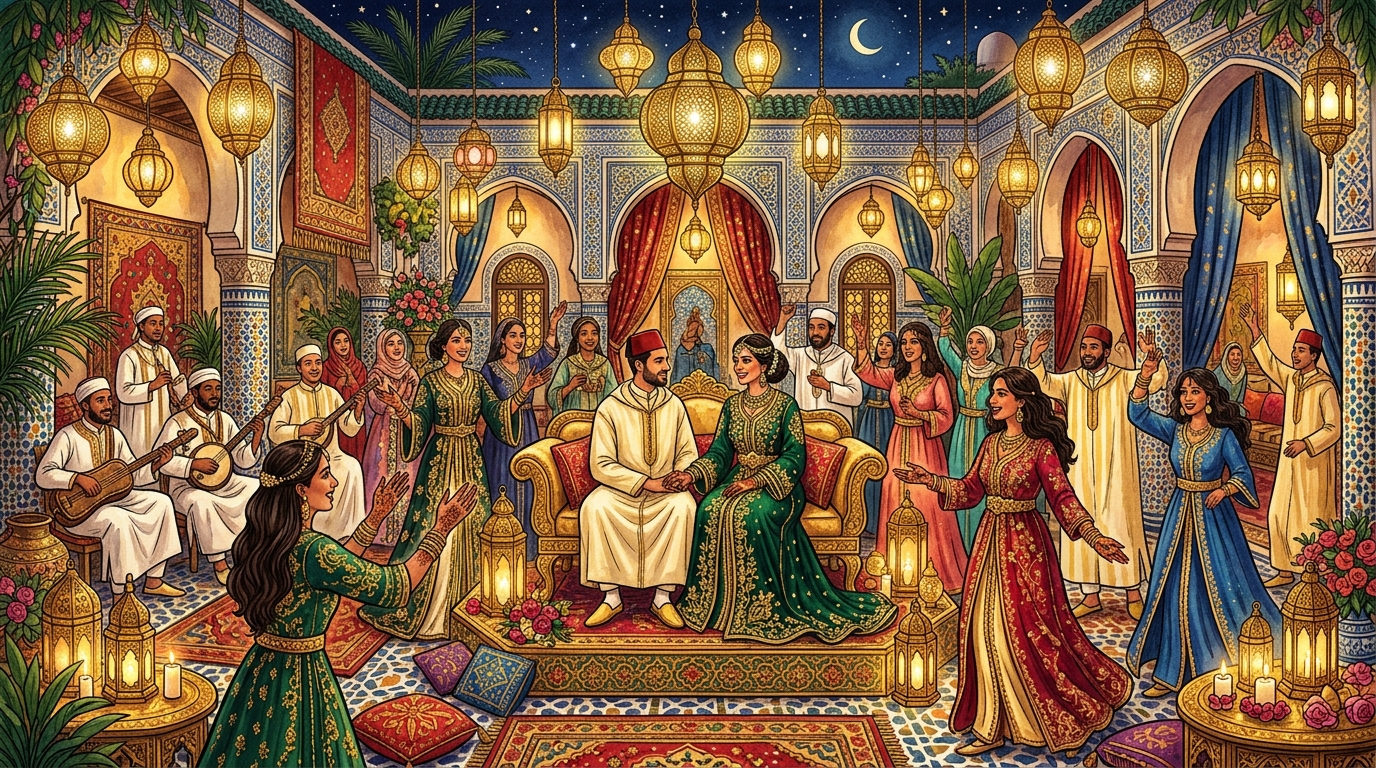
A Celebration That Lasts for Days
Traditional Moroccan weddings are not single-evening affairs; they can unfold over several days, sometimes a week, with a sequence of distinct ceremonies. The festivities historically begin with preparations and gift exchanges between the two families, building anticipation toward the main celebration and weaving together relatives, neighbors and friends into one extended event.
Each stage has its own meaning and mood, from intimate family rituals to a grand party with hundreds of guests. While modern couples, especially in cities, often compress the timeline, the spirit remains the same: a wedding is a community celebration, a public joining of two families, and an occasion to display generosity, beauty and tradition on the grandest scale a family can manage.
The Henna Night
One of the most cherished pre-wedding rituals is the henna night, or 'hflat lhenna.' The bride, surrounded by female relatives and friends, has intricate henna designs applied to her hands and feet by a skilled artist called a neggafa or a henna specialist. The patterns are believed to bring good luck, fertility and protection from the evil eye.
The evening is filled with music, singing and traditional sweets, and other women often get henna too. It is a warm, female-centered celebration that marks the bride's transition and blesses the marriage to come. The deeper and darker the henna stains, tradition says, the stronger the love between the couple, making the ritual both beautiful and symbolically charged.
The Amariya and the Caftans
The bride's grand entrance is a showstopper. She is often seated on an ornate carried platform called an amariya, hoisted on the shoulders of bearers and paraded into the hall to music and ululation, like a queen on a throne. It is one of the most photographed moments of any Moroccan wedding and signals the start of the main celebration.
Throughout the night the bride changes outfits multiple times, traditionally up to seven, each a different elaborate caftan or takchita representing a different region or style of Morocco. These gowns are richly embroidered, often gold-threaded and jeweled, accessorized with heavy traditional jewelry. The neggafa orchestrates each costume change, and the parade of caftans is a celebration of Moroccan craftsmanship and heritage in itself.
Food, Music and Customs
No Moroccan wedding is complete without a lavish feast. Guests are typically served pastilla, roasted meats such as mechoui or chicken with preserved lemon, and seffa, the sweet vermicelli dish dusted with cinnamon and almonds that is a wedding signature. Mint tea and trays of pastries keep flowing late into the night.
Music drives the celebration, from traditional chaabi bands and Andalusian ensembles to modern DJs, with dancing that often lasts until dawn. Customs vary by region and family, blending Arab, Berber and Andalusian influences, but the threads are constant: generous hospitality, vivid color, deep symbolism and a community coming together to bless the newlyweds. It is, by design, unforgettable.
Frequently asked
How long does a Moroccan wedding last?
Traditional Moroccan weddings can last several days, sometimes up to a week, with a sequence of ceremonies including the henna night and the main celebration. Modern urban couples often shorten this to a day or two.
Why do Moroccan brides change outfits so many times?
The bride traditionally changes into as many as seven different caftans or takchitas during the wedding, each representing a different region or style of Morocco. The outfit changes showcase Moroccan craftsmanship and are orchestrated by a wedding stylist called a neggafa.
What is the henna night at a Moroccan wedding?
The henna night is a pre-wedding ritual where the bride has intricate henna designs applied to her hands and feet, surrounded by female relatives. It is believed to bring good luck, fertility and protection, and is filled with music, singing and sweets.