Traditional Moroccan Vegetarian Dishes
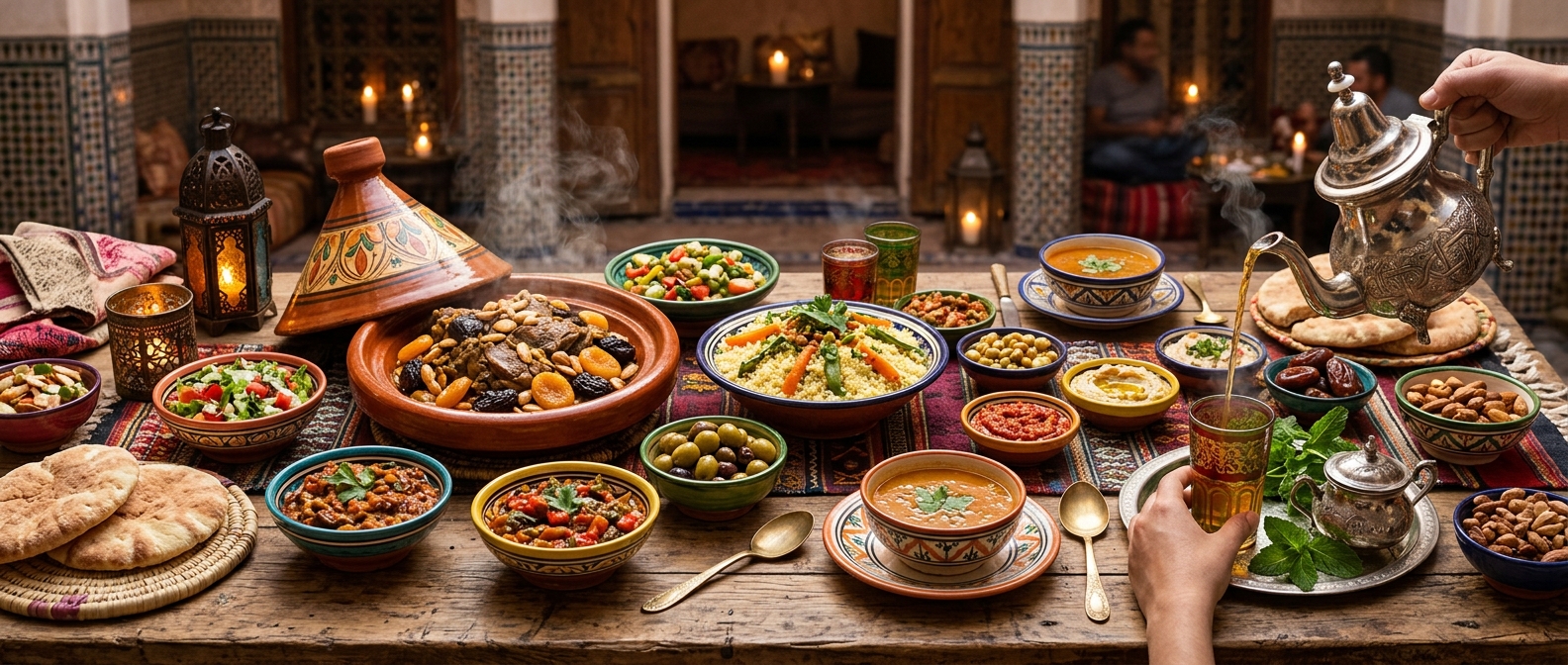
A Naturally Vegetable-Rich Cuisine
While Morocco is famous for its lamb and chicken dishes, much of its everyday home cooking is naturally vegetarian. Legumes, vegetables, grains and olive oil form the backbone of the diet, especially in rural and modest households.
Spices and herbs do the heavy lifting, so vegetable dishes are anything but bland. For travelers and vegetarians, Morocco offers a surprising wealth of flavorful, satisfying meat-free options rooted in centuries of tradition.
Vegetable Tagine
Vegetable tagine (tagine khodra) is a cornerstone of meat-free Moroccan cooking. Seasonal vegetables such as carrots, potatoes, zucchini, pumpkin, peas and tomatoes are slow-cooked with onions, garlic, ginger, turmeric and cumin.
Cooked in the conical clay tagine, the vegetables steam in their own juices and emerge tender and deeply flavored. Often crowned with a few preserved lemon slices or olives, it is hearty enough to be a full meal with bread.
Legume Dishes: Lentils, Beans and Chickpeas
Legumes are vital protein in Moroccan vegetarian cooking. Lentil stews (adas) simmered with tomato, garlic, cumin and olive oil are an everyday comfort food, cheap, filling and nourishing.
Bissara, the creamy fava bean soup, and loubia, a white bean stew in spiced tomato sauce, are equally beloved. Chickpeas appear in stews, in couscous and even as a simple boiled street snack, showing the central role of pulses in the diet.
Vegetable Couscous
Couscous can easily be made vegetarian by topping the steamed semolina with a mound of stewed seasonal vegetables, chickpeas and a fragrant broth. The classic seven-vegetable couscous is a celebrated meat-free version.
Carrots, turnips, zucchini, pumpkin, cabbage and tomatoes are common, simmered until soft and piled over the grain. Finished with a little olive oil or smen and a sprinkle of broth, vegetable couscous is a complete, comforting dish.
Cooked Salads and Vegetable Sides
Many of Morocco's famous cooked salads are vegetarian. Zaalouk (smoky eggplant), taktouka (peppers and tomato) and bakoula (cooked mallow greens with olives and preserved lemon) all make satisfying meat-free dishes.
Scooped with bread, these dishes can form a vegetarian feast on their own. Fresh salads of tomato, cucumber, beet, carrot and orange add brightness and round out a plant-based Moroccan meal.
Eating Vegetarian in Morocco
Vegetarians in Morocco can eat very well, though it helps to know the language: ask for tagine khodra (vegetable tagine) or couscous bil khodra (vegetable couscous), and confirm dishes are made without meat broth.
Breakfasts of bread with amlou, olive oil, honey, jben cheese and eggs are naturally meat-free, as are msemen, baghrir and harcha. With its bread, legumes, vegetables and spices, traditional Moroccan cooking is one of the more vegetarian-friendly cuisines of the region.
| Dish | Main ingredients | Type |
|---|---|---|
| Vegetable tagine | Seasonal vegetables, spices | Main |
| Zaalouk | Eggplant, tomato, garlic | Cooked salad |
| Bissara | Fava beans, olive oil, cumin | Soup |
| Lentil stew (adas) | Lentils, tomato, cumin | Stew |
| Vegetable couscous | Semolina, seven vegetables, chickpeas | Main |
Traditional Moroccan vegetarian dishes
FAQ
Is it easy to eat vegetarian in Morocco?
Yes, much of traditional Moroccan home cooking is naturally vegetarian, built on vegetables, legumes, bread and spices. Dishes like vegetable tagine, lentil stew, zaalouk and vegetable couscous are widely available and flavorful.
What is the most popular vegetarian dish in Morocco?
Vegetable tagine (tagine khodra), made with seasonal vegetables slow-cooked with onions, garlic and warm spices, is among the most popular. Zaalouk, bissara and lentil stews are also everyday vegetarian favorites.
How do I order a vegetarian meal in Morocco?
Ask for tagine khodra (vegetable tagine) or couscous bil khodra (vegetable couscous), and confirm the dish is prepared without meat or meat broth, since some couscous broths use meat stock.
Loved this? Useful? React below — your feedback helps other readers.