Types of Moroccan Tea & Herbs
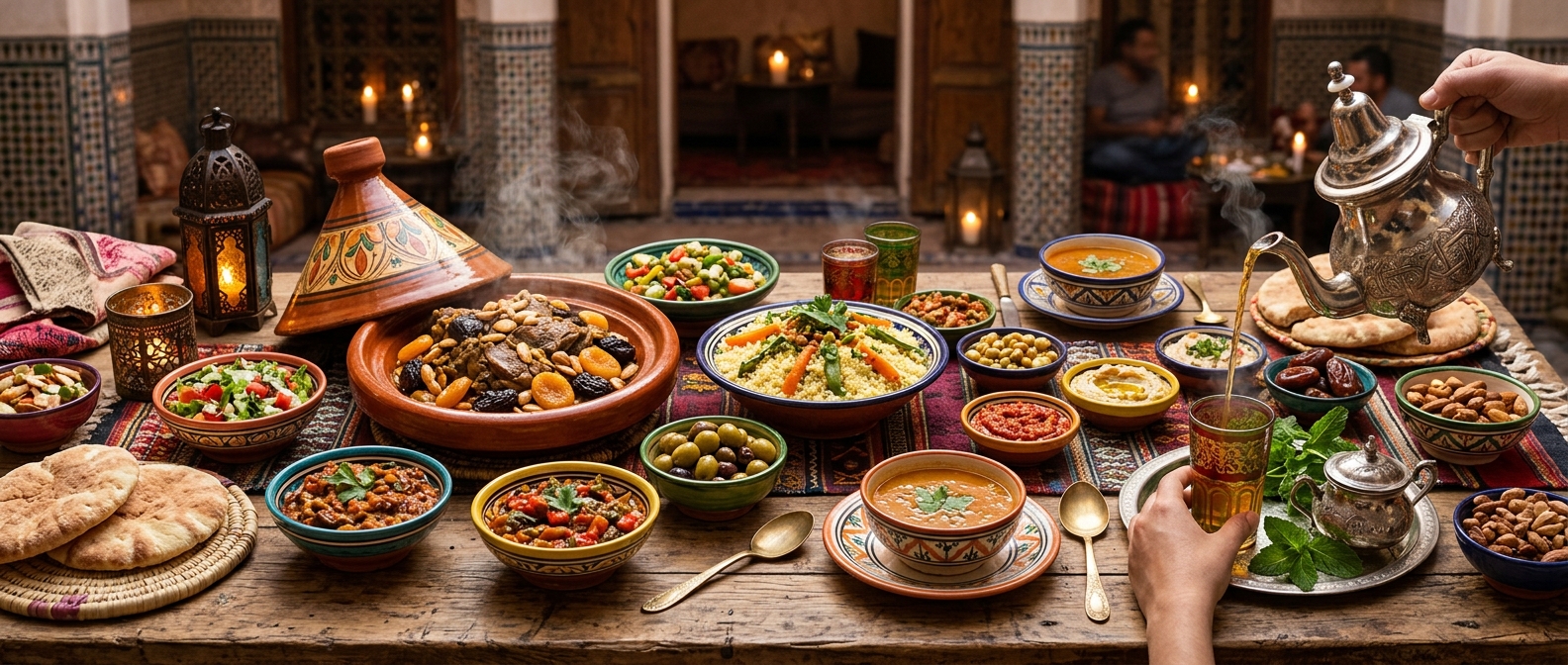
The Heart of Moroccan Tea: Atay bi Naana
Moroccan mint tea, called atay bi naana, is the country's signature drink and a daily ritual rather than just a beverage. It is made from Chinese gunpowder green tea, fresh spearmint, and a generous amount of sugar, brewed in a metal teapot and poured from a height to create a light foam on the surface.
Tea is far more than refreshment in Morocco; it is the centrepiece of hospitality. Guests are almost always offered tea on arrival, and refusing can seem impolite. The phrase often heard is that the first glass is gentle as life, the second strong as love, and the third bitter as death, reflecting how flavour deepens with each pour from the same pot.
Common Herbs Added to Tea
While spearmint is the default, Moroccan households swap and combine herbs depending on the season, region, and what soothes the body. Sage, called salmia, is hugely popular in winter and is believed to warm and comfort. Wormwood, known as chiba or sheeba, adds a bitter, aromatic edge and is common in colder months and in the north.
Other frequent additions include lemon verbena (louiza) for a calming citrus note, absinthe-like wild mint, marjoram (mardadouch), and za'atar-family herbs. In summer, when fresh mint is plentiful, tea is often served lighter, while winter blends lean on dried herbs and warming plants.
Regional and Seasonal Variations
Tea customs shift across Morocco. In the Sahara and the south, tea is often brewed extremely strong and sweet, served in small glasses to nomadic and desert communities where it provides energy and sociability. In the Rif mountains of the north, wormwood and other hardy herbs dominate the winter blends.
Sweetness levels also vary by household and occasion. Celebrations and welcomes call for very sweet tea, while some modern and health-conscious Moroccans now drink it with little or no sugar. The amount of mint, the choice of herbs, and the steeping time are all adjusted to taste and weather.
How Moroccan Tea Is Brewed
The traditional method begins by rinsing the gunpowder tea leaves with a little boiling water to wash away dust and bitterness, then discarding that first wash. Fresh mint and sugar are added to the pot, more boiling water is poured in, and the tea steeps for a few minutes over low heat.
Pouring is a skill in itself. The tea is poured into a glass and returned to the pot a few times to mix the sugar and aerate the liquid, then served from a height of 30 centimetres or more. This long pour cools the tea slightly and produces the prized foam, or keska, on top of each glass.
Serving and Etiquette
Tea is served in small decorated glasses, often on a metal tray with an ornate teapot. The host pours for guests, and accepting at least one glass is a sign of respect. It is common to be offered three rounds, and finishing the set is considered polite.
Tea accompanies almost every social moment: after meals to aid digestion, with sweet pastries and nuts during gatherings, during business negotiations, and at any visit. In rural areas, sharing tea with a stranger is a long-standing gesture of welcome and trust.
Health and Everyday Role
Many of the herbs added to Moroccan tea are valued for their digestive and calming properties. Mint and verbena are associated with settling the stomach, sage with warmth and comfort, and wormwood with digestion, though these are traditional beliefs rather than medical claims.
For visitors, sampling tea is one of the easiest ways to experience Moroccan culture. It is offered in homes, riads, cafes, and souks, and shopkeepers frequently serve it during a sale. The ritual of brewing and pouring is part of the experience, so taking time to enjoy it is well worth it.
| Herb | Local name | Season / use |
|---|---|---|
| Spearmint | Naana | Year-round, the classic |
| Sage | Salmia | Winter, warming |
| Wormwood | Chiba / Sheeba | Cold months, bitter aroma |
| Lemon verbena | Louiza | Summer, calming citrus |
| Marjoram | Mardadouch | Cooler weather, herbal |
Common herbs added to Moroccan tea and their typical use
FAQ
Is Moroccan tea always very sweet?
Traditionally yes, especially for guests and celebrations, but sweetness varies by household and many people now drink it with less sugar or none at all on request.
What tea leaves are used?
Chinese gunpowder green tea is standard, prized for holding up to strong brewing and repeated pours.
Can I drink Moroccan tea if I avoid caffeine?
Classic atay contains green tea and caffeine, but pure herbal infusions of mint, verbena, or sage without green tea are caffeine-free alternatives often available.
Loved this? Useful? React below — your feedback helps other readers.