The Moroccan Tea Ceremony, Step by Step
More Than a Drink
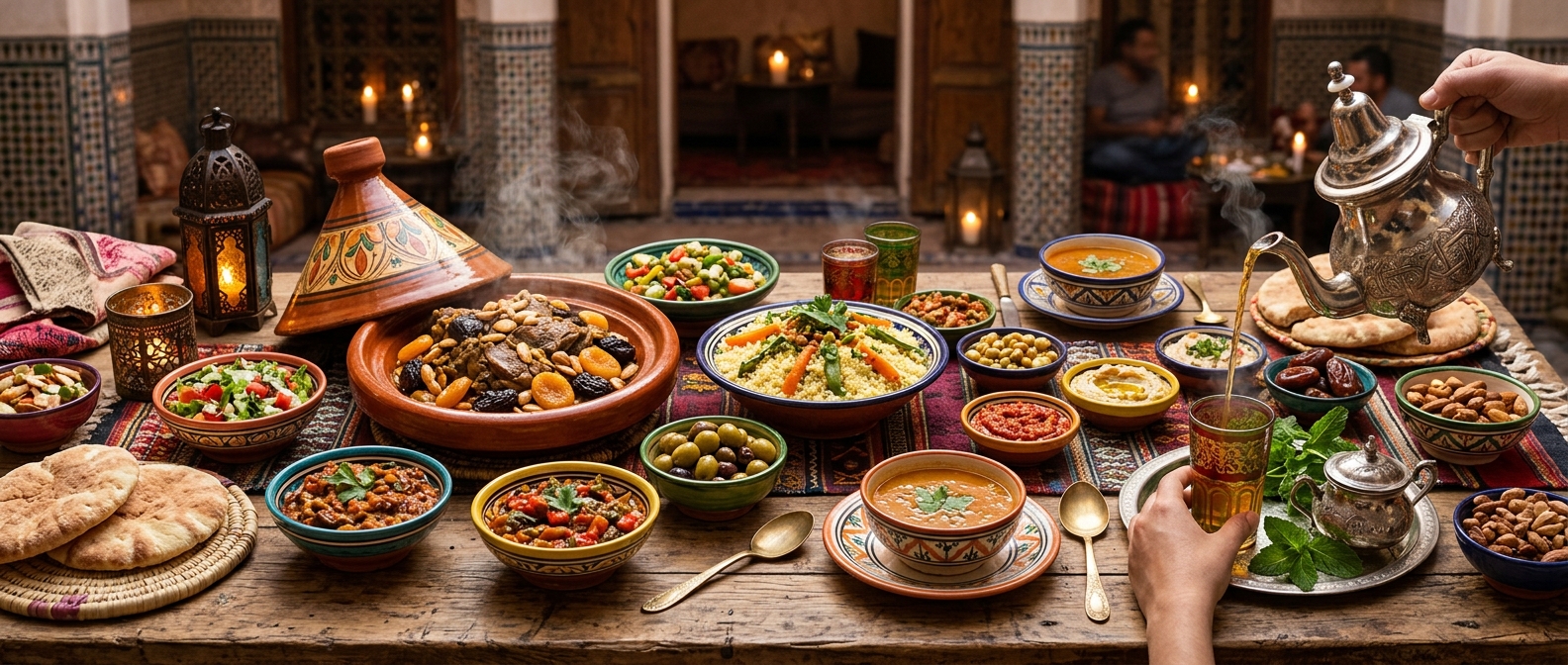
In Morocco, mint tea is not simply a beverage but a ritual of welcome, friendship and negotiation. Refusing a glass can be seen as a small slight, and offering one is the universal gesture of hospitality from the souk to the family living room.
The preparation is theatrical and deliberate, often performed by the head of the household or the eldest male as a sign of honor. The whole process, from rinsing the leaves to the dramatic high pour, is meant to be witnessed and enjoyed.
The Essential Ingredients
Three things define authentic atay: Chinese gunpowder green tea, fresh spearmint (na'na) and sugar, often in generous quantities. The tea leaves are tightly rolled pellets that unfurl in hot water, giving a robust, slightly smoky base.
In winter or when mint is scarce, other herbs join or replace it, such as wormwood (chiba), verbena or wild thyme. The sugar comes as solid cones that are chipped off, though loose sugar is now common.
The Equipment
A proper service uses a curved metal teapot called a berrad, traditionally silver or stainless steel, with a long spout that enables the signature high pour. Tea is served in small, often gilded and colorful glasses rather than cups.
A round engraved tray (siniya) holds the pot, glasses and sugar, and the whole set is itself a point of family pride. Many households reserve their finest tea set for guests.
Step-by-Step Preparation
First the tea leaves are rinsed: hot water is added, swirled and discarded to wash away dust and bitterness. Then fresh water and the rinsed leaves are brought to a brief boil, mint and sugar are added, and the pot steeps for a few minutes.
The tea master pours a glass and returns it to the pot once or twice to mix the brew evenly, tasting and adjusting the sugar. Finally the tea is poured from high above the glass, a foot or more, to aerate it and form a delicate foam crown called the keskes.
The Three Glasses
Tradition holds that a guest is served three glasses, captured in a famous Maghrebi saying: the first glass is as gentle as life, the second as strong as love, and the third as bitter as death. Because the same leaves are reused, each pour grows stronger and less sweet.
Declining all three can be considered impolite, so it is courteous to accept at least one. The ceremony is unhurried; the conversation that flows over the glasses is as important as the tea itself.
Etiquette for Guests
Accept the glass with your right hand, and do not rush; sipping slowly signals you are enjoying the host's company. Complimenting the foam and the sweetness is always welcome, as both are marks of a skilled pour.
If you cannot drink three glasses, accepting one graciously and explaining warmly is far better than refusing at the door. The gesture of sharing, more than the quantity, is what matters to a Moroccan host.
| Ingredient | Quantity | Notes |
|---|---|---|
| Gunpowder green tea | 1 tbsp | Rinsed first |
| Fresh spearmint | 1 large handful | Stems and leaves |
| Sugar | 4 to 6 cubes | To taste, generous |
| Water | 750 ml | Plus rinse water |
Mint tea recipe (serves 4)
FAQ
Why is Moroccan tea poured from a height?
The high pour aerates the tea and creates a layer of foam (keskes) on top, which Moroccans consider a sign of a well-made glass. It also cools the tea slightly and is part of the ceremony's showmanship.
What does the three-glass tradition mean?
A guest is offered three glasses, each stronger than the last as the leaves reuse. A saying calls them gentle as life, strong as love, and bitter as death.
Is it rude to refuse Moroccan tea?
Refusing outright can seem impolite since tea is the core of hospitality. Accepting at least one glass graciously is the courteous response.
Can I make Moroccan tea without fresh mint?
Yes. In winter Moroccans use wormwood, verbena or wild thyme in place of or alongside mint, though fresh spearmint is the classic and preferred herb.
Loved this? Useful? React below — your feedback helps other readers.