Moroccan Tagine: What It Is & Best Types
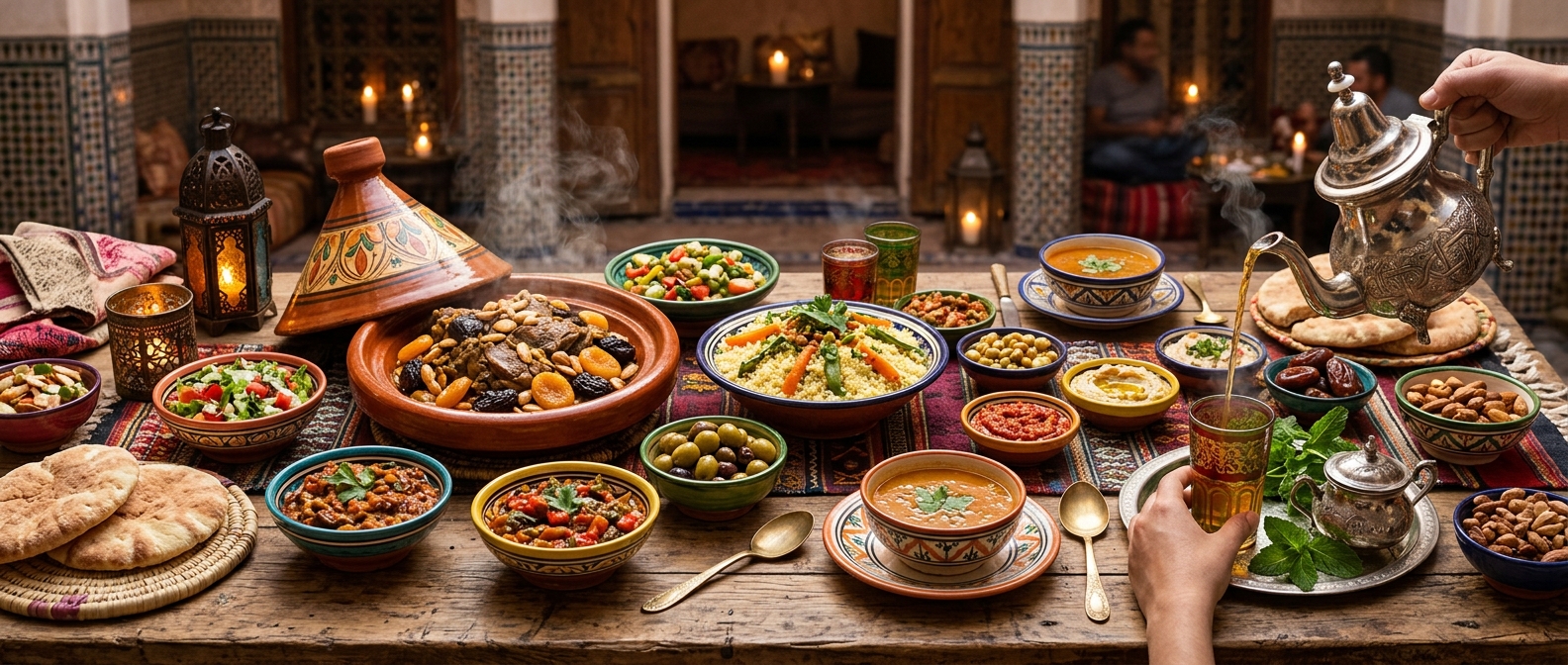
What a Tagine Actually Is
The word tagine refers to two things at once: the dish and the vessel. The pot is a shallow round clay base topped with a tall conical lid. As food cooks low and slow, steam rises into the cone, condenses, and trickles back down, basting the ingredients and concentrating flavor while using very little liquid.
Traditionally a tagine is cooked over charcoal or a brazier (mejmar), which is why authentic versions have a faint smoky depth. The technique is ancient and practical, designed for a region where water and fuel were precious.
How a Tagine Is Built
A good tagine is layered. Aromatics, onions, garlic and oil go down first, then the meat or fish, then vegetables arranged in a dome so they steam evenly. Spices like ginger, turmeric, saffron, cumin and a little cinnamon season the pot, and preserved lemon, olives or dried fruit are added near the end.
The cook rarely stirs. The whole point is to let the sealed environment do the work, so the meat falls off the bone and the sauce reduces to a glossy, spiced jus you mop up with khobz (bread). Couscous, by contrast, is steamed separately over broth, so the two dishes are not the same thing.
The Best Types to Order
Djaj b'l hamd (chicken with preserved lemon and green olives) is the most famous, bright, tangy and savory. Lamb or beef with prunes and almonds is the sweet-savory showpiece, often finished with sesame and a dusting of cinnamon for celebrations.
Kefta tagine, spiced meatballs simmered in tomato sauce with eggs cracked on top, is comfort food at its best. Coastal towns like Essaouira serve fish tagine with chermoula marinade, tomatoes and peppers. Vegetarians should look for the seven-vegetable tagine.
Choosing & Using a Tagine Pot
There are two kinds of pots: glazed, decorative serving tagines and plain, unglazed cooking tagines. If you buy one to cook with, choose unglazed terracotta, season it by soaking and oiling before first use, and always heat it gradually to avoid cracking, ideally with a heat diffuser.
If you just want a souvenir, the brightly painted glazed tagines from Safi and Fes are beautiful but meant for serving, not direct flame. Either way, the food tastes best eaten communally, straight from the pot.
| Tagine | Main ingredients | Flavor |
|---|---|---|
| Djaj b'l hamd | Chicken, preserved lemon, olives | Tangy and savory |
| Lham bel barkouk | Lamb/beef, prunes, almonds | Sweet-savory |
| Kefta | Meatballs, tomato, egg | Rich and comforting |
| Fish tagine | Fish, chermoula, peppers | Fresh and herby |
| Seven-vegetable | Mixed seasonal vegetables | Light and aromatic |
Popular tagine types and their flavor
FAQ
Is tagine the pot or the food?
Both. Tagine is the name of the conical clay pot and the slow-cooked stew prepared inside it. The pot's tall lid recirculates steam to braise the food gently.
What is the difference between tagine and couscous?
A tagine is a stew braised inside a clay pot, while couscous is steamed semolina grain served with a separate broth, meat and vegetables. They are different dishes, though both are Moroccan staples.
Can you cook a tagine on a regular stove?
Yes. Use an unglazed cooking tagine, cure it before first use, and always heat it slowly with a heat diffuser to prevent cracking. Glazed decorative tagines are for serving only.
Loved this? Useful? React below — your feedback helps other readers.