Moroccan Sweets and Pastries: Chebakia, Gazelle Horns, Sellou and the Art of Celebration
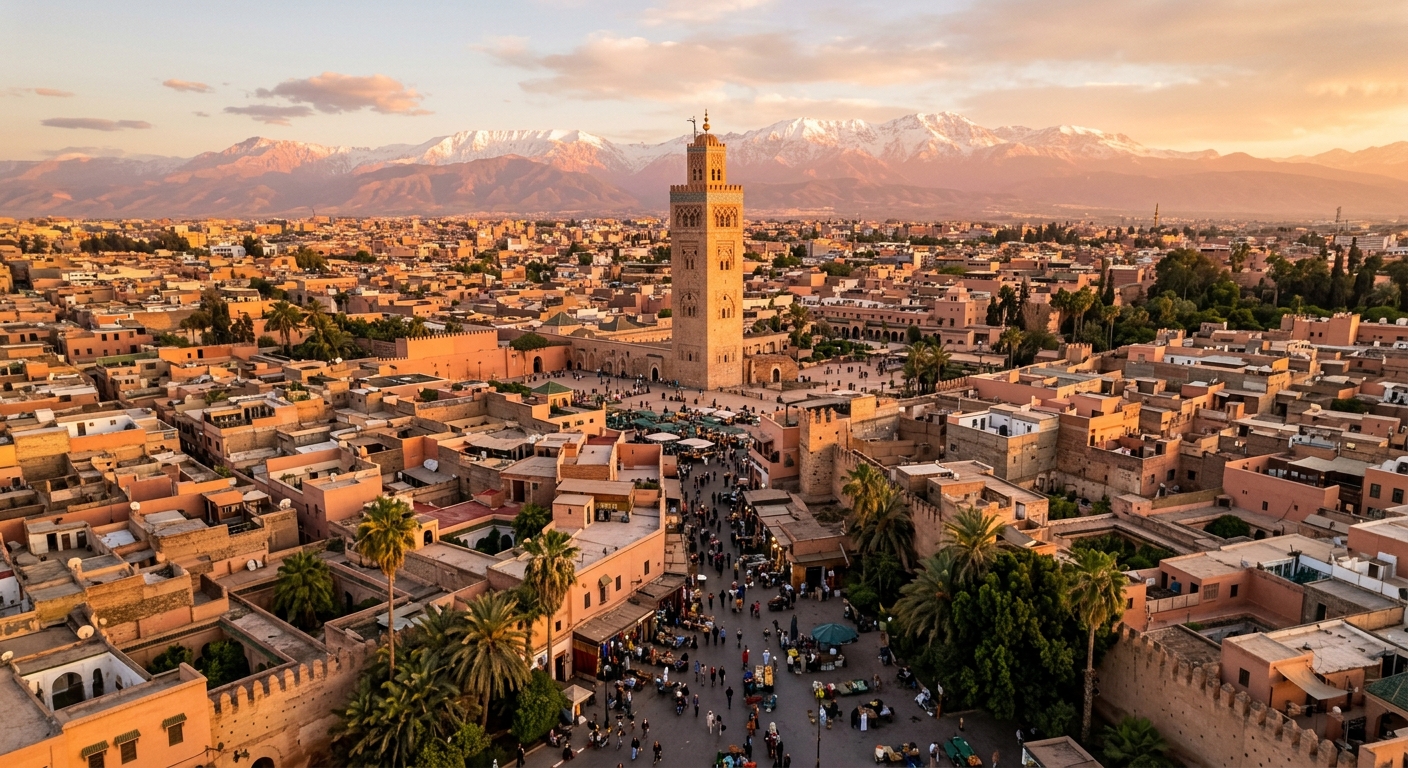
A Sweet Tradition Built on Almonds, Honey and Orange Blossom
Moroccan patisserie rests on a short list of noble ingredients used with extraordinary patience. Almonds, grown across the country and ground, fried, slivered or worked into paste, are the undisputed foundation. Honey provides gloss and preservation. Sesame seeds, toasted until nutty, bring depth. Orange blossom water and rose water perfume nearly everything, cinnamon warms, anise seeds punctuate, and thin pastry leaves called warqa, stretched by hand to translucency, provide the crackle. Butter and smen, the aged clarified butter, carry the richness.
The tradition draws on deep, documented currents: Amazigh (Berber) grain-and-honey confections, Arab and Andalusi almond pastry arts carried across the Strait after the fall of Al-Andalus, and Ottoman and French influences absorbed more recently at the edges. Cities developed distinct reputations, with Fez and Tetouan historically celebrated for refined almond work, and family recipes are guarded and passed down through generations of women for whom pastry skill is genuine social capital.
What makes Moroccan sweets culturally distinct is their occasionality. Everyday meals end with seasonal fruit or mint tea, not cake. The great pastries appear when something matters: the Ramadan table, the Eid tray, the wedding gift procession, the welcome of an important guest, the celebration of a birth. Each major sweet has its season and its role, which is why Moroccans feel a jolt of specific emotion at the smell of chebakia frying, the way others do at pine trees in December.
The craft economy around sweets is huge and living. Every city has its famous patisseries and its neighborhood women who take commissions before holidays, producing thousands of pieces in home kitchens. In the weeks before Ramadan and the Eids, markets overflow with sesame, almonds and honey, and the collective production of chebakia and sellou becomes a national activity. Understanding the sweets is therefore understanding the Moroccan calendar itself, which is how this guide is organized.
Sweetness also has deep roots in Moroccan economic history. Sugar cane was cultivated and refined in southern Morocco centuries ago, and in the 16th century, under the Saadian dynasty, Moroccan sugar was a prized export traded across Europe; the ruins of old sugar refineries in the Souss region still testify to that era. Honey, meanwhile, has been harvested from the Atlas mountains and argan country since antiquity, with regional honeys, thyme, euphorbia, orange blossom, treated as distinct luxuries. When Moroccans lacquer a chebakia in honey or break sugar over tea, they are drawing on very old national habits.
A final orientation point: Moroccan sweets are made for company. Trays are assembled in dozens, boxes are bought by the kilo, and the correct unit of consumption is the gathering, not the individual. Even the smallest purchase from a patisserie window comes with the assumption that it will be opened among others, with tea. Keep that sociability in mind as you read, because every pastry that follows was designed to be handed to someone else first.

Chebakia: The Honeyed Rose of Ramadan
Chebakia is the sweet most tightly bound to a single season. This is the flower-shaped pastry that floods Moroccan markets in the weeks around Ramadan: strips of spiced dough folded and pinched into a rose, deep-fried, bathed while hot in honey perfumed with orange blossom water, then showered with toasted sesame seeds. The result is simultaneously crisp and chewy, floral and deeply toasty, and it keeps for weeks, which is precisely the point, because a Ramadan household needs a standing supply.
The dough itself is a spice cabinet: flour worked with toasted ground sesame, anise, cinnamon, saffron threads soaked in orange blossom water, a little vinegar and smen or butter, often tinted golden. Shaping is the skill that separates generations: the dough is rolled thin, cut into rectangles slashed with parallel lines, and the strips are threaded through one another and turned inside out to form the characteristic latticed rosette. Experienced hands shape one in seconds; beginners produce comedy. In many families, the pre-Ramadan chebakia session is a collective ritual where mothers, daughters, aunts and neighbors fold trays for hours together.
Chebakia's fixed partner is harira. Across Morocco, the iftar table that breaks each day's fast pairs the spiced tomato-lentil soup with dates and chebakia, the salty-savory and the honey-sweet taken together in alternating spoonfuls and bites. Nutritionally the pairing is shrewd, sugar and sesame delivering fast energy after the fasting day; culturally it is simply immovable, as fixed as turkey at an American Thanksgiving. Many Moroccans will tell you chebakia eaten outside Ramadan tastes strangely incomplete.
You will find chebakia year-round in patisseries and souk sweet stalls, sold by weight from great sticky pyramids, and quality varies with the honey: the best is glazed with real honey and generous sesame, the cheapest with plain syrup. Related honeyed fritters populate the same family across the Maghreb, including the knotted griwech of Algeria, but the sesame-saffron rosette dipped in orange-blossom honey remains Morocco's own signature, and its scent frying in a medina alley in Ramadan is one of the country's defining smells.
A note on names: spellings wander charmingly between chebakia, chebbakia, shebakia and mkharka, the older Fassi name for the same pastry, and vendors will understand all of them. What does not vary is the shape grammar. The rosette must show its open lattice, because the gaps are functional, letting hot honey penetrate every fold and drain evenly, so the pastry glazes without turning soggy. Form follows honey, in other words, and the flower that looks purely decorative is, like most things in Moroccan pastry, quietly practical.

Kaab el Ghazal: The Gazelle Horns
If Moroccan patisserie has an aristocrat, it is kaab el ghazal, known in French as cornes de gazelle, gazelle horns. The Arabic name literally means gazelle's ankles or heels, a reference to the pastry's slim, elegant curve. A whisper-thin shell of dough is wrapped around a rich filling of ground almonds, sugar, cinnamon and orange blossom water, then curved into a delicate crescent, pricked with a needle to prevent blistering, and baked only until barely blond. Overbaking is the cardinal sin; the shell should stay pale, tender and almost fragile.
The pastry is judged by criteria as strict as any French viennoiserie. The dough must be rolled so thin the almond paste shadows through. The crescent should be slender and tapered, never fat. The filling must be moist, perfumed but not soapy with flower water, the cinnamon present but discreet. Fez and Tetouan families are famous for their versions, and a plain, matte, hand-made gazelle horn from a good house outranks any glossy industrial imitation. A powdered-sugar-dusted variant and a version rolled in orange blossom water then sugar, sometimes called kaab mfenned, appear at the fanciest occasions.
Gazelle horns are celebration hardware. They anchor the sweet trays of weddings and engagements, appear at Eid alongside other almond pastries, and are served to honored guests with mint tea, the bitter-fresh tea and the perfumed almond crescent being one of the great pairings of world gastronomy. In the wedding tradition, trays of kaab el ghazal form part of the gifts exchanged between families, and their quality is quietly, mercilessly assessed by every aunt present.
The gazelle horn also travels as Morocco's pastry ambassador. It appears across the Maghreb and in North African patisseries worldwide, and it is usually the first Moroccan sweet a foreign visitor learns by name. Buy them fresh from a patisserie or a medina sweet seller, never boxed in a supermarket, and eat them within days; the almond filling is the point, and it waits for no one.
One pleasant myth deserves gentle correction: despite the romantic name, no gazelle is involved and never was. The crescent simply evokes the slender curve of the animal that has symbolized grace in Arabic poetry for centuries, gazelle being a standing metaphor for beauty in the tradition. Calling a pastry after the gazelle's ankle is, in effect, a compliment baked into the language, one more sign that these sweets were designed to flatter the guest they are offered to.

Sellou: The Roasted Powerhouse in a Bowl
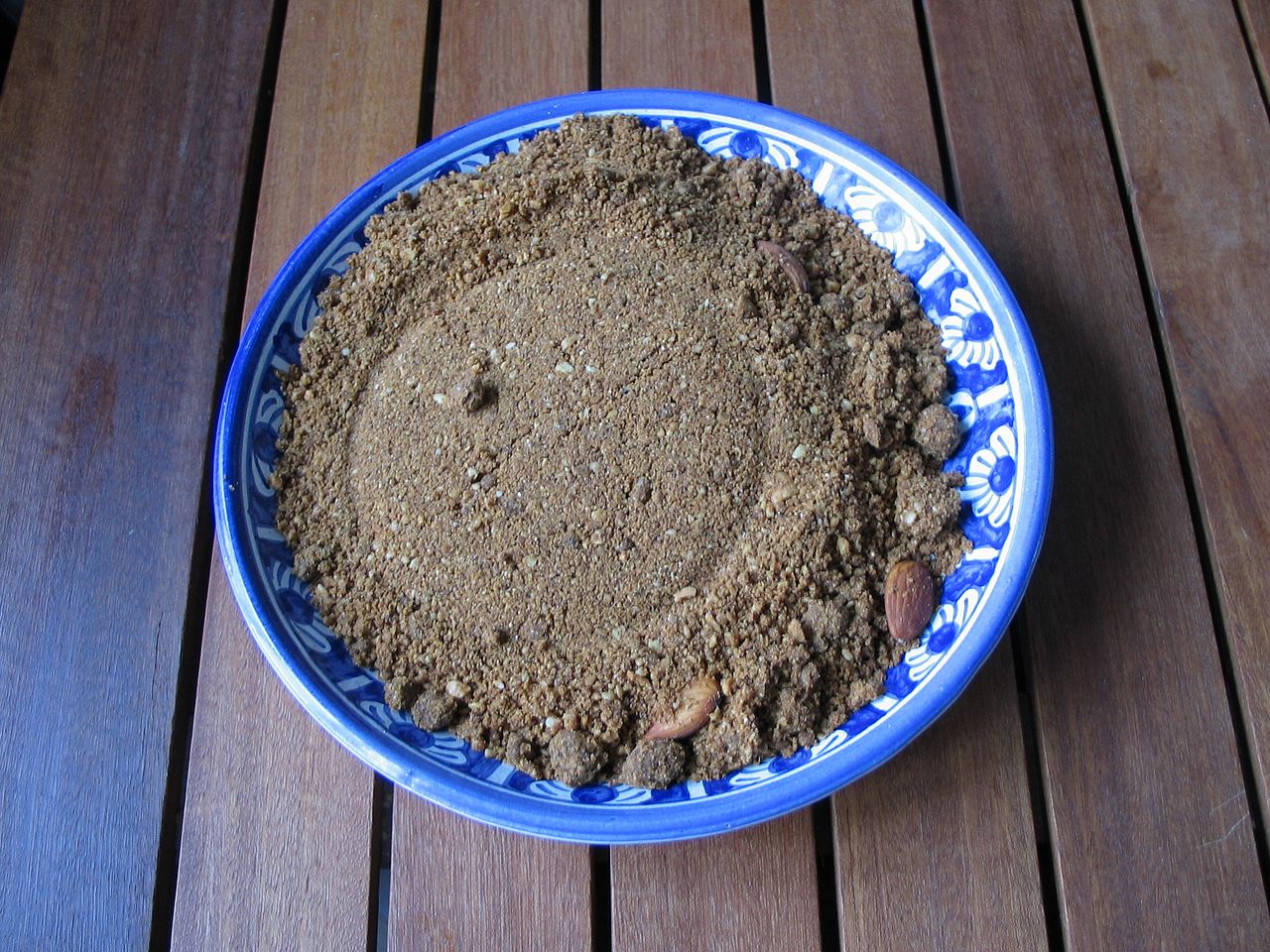
Sellou breaks every rule of what a pastry should be: it is not baked, not shaped, not even solid. Known also as sfouf or zmita depending on region, sellou is a rich, crumbly brown mixture served heaped in a bowl or pressed into a mound, eaten by the spoonful. The base is flour that has been toasted or oven-roasted until nutty and golden, folded together with fried almonds, toasted sesame seeds, butter or oil, honey or sugar, and a warm perfume of anise, cinnamon and sometimes fennel or gum arabic. Some families grind the almonds fine; others leave crunchy shards.
Sellou is Morocco's traditional energy food, and its two great constituencies reveal its purpose. First, Ramadan: because it is calorie-dense, stable for weeks and quickly revives a fasting body, bowls of sellou stand on iftar and suhoor tables all month, taken with milk or mint tea. Second, new mothers: sellou is the customary food of the postpartum period, prepared by female relatives and offered to women after childbirth to rebuild strength, often enriched further with extra almonds and honey. The same logic once fed travelers and field workers through long days.
Preparation is a pre-Ramadan event in itself. Households roast kilograms of flour, a step requiring constant vigilance because the line between toasted and burnt is thin, fry mountains of almonds, and toast sesame by the tray. The components are pounded, blended and tasted by committee. Because the recipe varies by family in ratio and spicing, sellou is fiercely comparative territory: everyone's mother makes the best one, and the debate is unwinnable by design.
For visitors, sellou is a revelation precisely because nothing about its appearance advertises how good it is. Ask for it at patisseries or in homes during Ramadan season, take it with a glass of milk or tea, and expect something between halva, praline and toasted cookie dough. It also keeps and travels beautifully, which makes a tub of good sellou one of the smartest edible souvenirs Morocco offers.
Briouat: Gold-Wrapped Triangles
Briouat are Morocco's little wrapped treasures: small parcels of warqa pastry, the tissue-thin leaves also used for the great pigeon pie bastilla, folded around a filling and fried or baked to shattering crispness. They come in two royal lines. The sweet briouat, folded into neat triangles or rolled into cigars, encloses a paste of ground almonds, sugar, cinnamon and orange blossom water; after frying, it is dipped in hot honey and sometimes sprinkled with sesame, emerging lacquered and glowing like a jewel.
The savory line is equally beloved and belongs to the same fold-and-fry craft: fillings of spiced minced meat with herbs and egg, shredded chicken with preserved lemon, tuna, cheese, or vermicelli and shrimp in coastal kitchens. Savory briouat headline the Ramadan iftar spread beside harira and dates, appear as starters at celebrations, and constitute a whole category of home entertaining, since trays can be folded in advance, frozen, and fried at the moment guests arrive.
The folding itself is inherited choreography. A strip of warqa is laid out, a spoon of filling placed at one end, and the strip is folded corner over corner into a tight triangle, the trailing edge glued with flour paste or egg. Speed and neatness mark the experienced hand, and pre-holiday briouat sessions, like chebakia sessions, are collective female workshops where technique and family news circulate together over the growing trays.
Order the honeyed almond briouat with mint tea in any patisserie and you understand instantly why the form endures: the contrast of crackling pastry, dense marzipan-like heart and floral honey is Moroccan dessert logic at its purest. If the gazelle horn is the tradition's aristocrat, the briouat is its brilliant, hard-working favorite child, equally at home at a wedding and in a paper bag on the walk home from the bakery.

M'hanncha and the Wider Sweet Family
M'hanncha, literally the snake, is the showpiece: a long cigar of warqa pastry filled with almond paste scented with cinnamon and orange blossom, coiled into a tight spiral like a resting serpent, baked golden, then finished with powdered sugar, cinnamon or warm honey and almonds. Served whole at the center of the table and cut into wedges, a single coil feeds a party, which is why m'hanncha appears at weddings, Eids and grand family occasions where a centerpiece is required. Done well, the pastry shatters while the filling stays moist and perfumed.
Around these headliners orbits a constellation every Moroccan knows by heart. Ghriba are domed cookies with characteristically cracked tops, made in almond, coconut, sesame and walnut versions; the almond ghriba bahla, chewy within its fissured shell, is a classic of the tea tray. Fekkas are twice-baked slices in the biscotti manner, studded with almonds and raisins or aniseed, built for dunking in tea and coffee. Sfenj doughnuts rule the street corner, and seasonal fritters like sfouf cousins and honeyed shapes fill out festival stalls.
The refined end of the table belongs to warqa architecture and milk. Bastilla au lait, also called jawhara, stacks crisp fried warqa rounds with orange-blossom pastry cream and toasted almonds into a dessert assembled at the last second. Almond-milk drinks perfumed with orange blossom accompany celebrations, and seasonal specialties appear for specific holidays, such as the honeyed sesame-and-almond pastes and stuffed dates that mark religious feasts. Trays of mixed petits fours in the Fassi style, tiny marzipan fruits and glazed almonds, complete grand occasions.
Two structural notes help outsiders decode the whole family. First, almost everything divides into warqa crafts (briouat, m'hanncha, bastilla au lait), almond paste crafts (gazelle horns, ghriba, stuffed dates) and fried-honeyed crafts (chebakia, sfenj and their cousins), plus the roasted category sellou owns alone. Second, sweetness levels are calibrated to mint tea: Moroccan pastries assume a bitter-fresh, barely sweetened or generously sweetened glass alongside, and they taste noticeably better in that intended context than eaten alone.
The Craft: Warqa, Almond Paste and the Hands Behind the Trays
Two master techniques underpin most of the repertoire, and both are spectacles worth seeking out. The first is warqa making. A soft, wet dough is held in the hand and rhythmically tapped, dabbed or swiped across a hot flat pan, each touch leaving a film that fuses into a single translucent sheet, peeled off whole. A skilled warqa maker produces sheet after identical sheet with hypnotic speed, and in medina workshops in Fez or Marrakesh you can still watch the craft performed to order, the stacks sold fresh to households and patisseries the same morning.
The second is almond paste. Blanched almonds are ground with sugar and bound with orange blossom water, sometimes enriched with butter or gum arabic, into a paste whose texture decides everything: too coarse and the pastry feels rustic, too oily and it deadens, exactly right and it melts while keeping a gentle bite. Regional schools disagree, productively, about fineness, sweetness and perfume. Fassi style leans refined and floral; country styles lean toasty and generous. Every filling in this article, from gazelle horns to m'hanncha, is a variation on this single foundation.
Behind the trays stand the maalmat, the acknowledged master craftswomen of Moroccan pastry. Some run commercial patisseries, but many work from home on commission, taking orders weeks before weddings and Eids, assisted by daughters, nieces and neighbors in production lines around the family table. The title is earned by reputation, plate by plate, and a neighborhood's leading maalma enjoys the kind of standing a star chef does elsewhere. This transmission chain, hand to hand and kitchen to kitchen, is the reason recipes have survived centuries without ever being fully written down.
Professional patisseries added a second ecosystem in the twentieth century, absorbing French technique and display culture while keeping the Moroccan canon at the center of the counter. In the big cities today, the glass cases run French mille-feuille and Moroccan gazelle horns side by side, and grand houses in Casablanca, Rabat and Fez ship holiday orders across the country and to the diaspora abroad. Competition is intense and openly discussed; Moroccans hold strong, detailed opinions about which house currently makes the definitive almond briouat.
What has not changed is the economics of care. The classic sweets are labor-dense by design: hours of folding chebakia rosettes, pinching crescents, tapping warqa sheets, roasting flour for sellou without burning a gram. Machines can imitate the shapes but not the tenderness of a hand-rolled shell, which is why hand-made remains the explicit gold standard and why the phrase made at home is the highest compliment a tray can receive. When a Moroccan host tells you the pastries are homemade, you are being shown love in its most labor-intensive local dialect.
Ramadan, Eid and Celebration: When Sweets Mean Something
The Moroccan sweets calendar pivots on Ramadan, the month of daytime fasting observed across the country. Every evening at sunset, the iftar table assembles its fixed cast: dates and milk to break the fast in the traditional manner, harira soup, boiled eggs, msemen and baghrir, savory briouat, and the sweet trinity of chebakia, sellou and honeyed briouat. The sweets are not dessert in the Western sense; they sit on the table from the first minute, their sugar and almonds part of the physiological logic of refueling after the fast.
The month's end explodes into Eid al-Fitr, sometimes called the sweet Eid across the Muslim world precisely because pastry is its language. Families visit in rounds, and every house presents its sweet tray with mint tea: gazelle horns, ghriba, fekkas, m'hanncha wedges and the last of the chebakia. Children collect coins and cookies; adults compare and diplomatically praise each household's production. New clothes, full trays and open doors define the day, and patisseries work through the preceding nights to meet demand.
Weddings mobilize the tradition at industrial scale. Moroccan weddings traditionally feature sweet gift exchanges between the families, trays of almond pastries carried in decorated procession, and a sweets table where gazelle horns, m'hanncha and marzipan work signal the families' generosity. Births bring sellou and rfissa to the new mother; religious feast days, the Prophet's birthday and Ashura each carry their own sweet customs, with dried fruits and nuts central to Ashura in many regions. Even funerals are attended by sweetness, with dates and pastries offered to mourners alongside tea.
Hospitality is the thread through all of it. The sweet tray with mint tea is the standard honor shown any guest, and declining everything outright can disappoint a host who has, by custom, put the best of the house on that tray. The practical etiquette is easy: accept the tea, take at least one pastry, praise it specifically, and understand that the second and third offerings are sincerity, not pressure. In Morocco, sugar is a form of respect.
For travelers, this calendar is opportunity. Visit during Ramadan and the sweet markets are at maximum theater, with chebakia pyramids and sellou mountains everywhere after dusk, though daytime cafe life pauses. Come at any season and patisseries and medina sweet stalls in Fez, Marrakesh, Rabat and Tetouan sell the full canon by weight. A mixed box of gazelle horns, briouat and ghriba, chosen by pointing, costs a few dozen dirhams and constitutes the single most reliable gift you can carry into any Moroccan home, or back out of the country.
Buying, Tasting and Bringing Moroccan Sweets Home
Where you buy matters. The hierarchy runs roughly: home production by a known grandmother at the summit, commissioned trays from neighborhood women next, established city patisseries close behind, then medina sweet stalls, and finally supermarket boxes at the bottom. As a visitor you will mostly shop patisseries and stalls, and quality signals are consistent: matte hand-made surfaces rather than machine gloss, real honey scent rather than plain syrup sweetness, visible sesame and almond density, and stock that turns over fast during holiday seasons.
Taste methodically and you learn the styles quickly. Try a gazelle horn first for the almond-paste standard, then chebakia for the honey-sesame register, then a spoon of sellou for the roasted register, then an almond briouat for warqa crunch, and finish with a ghriba against a glass of mint tea. That five-piece flight covers the tradition's main axes and costs less than a cinema ticket. In cafes, pastries are ordered alongside tea by pointing at the display; nobody expects vocabulary.
Bringing sweets home is a Moroccan science, because the diaspora has road-tested every option. Sellou and fekkas travel best, being dry and stable for weeks. Chebakia survives well sealed, its honey acting as preservative. Gazelle horns and fresh almond pastries are the most fragile, best eaten within days, and m'hanncha prefers not to fly at all. Patisseries will pack boxes for travel on request, taping and layering with practiced efficiency, and a sealed box of mixed almond sweets is a customs-friendly gift almost everywhere.
The deeper souvenir, though, is the grammar of the tradition itself: almonds, honey, sesame, orange blossom, warqa, patience, occasion. Moroccan sweets are not engineered novelty; they are a stable, confident repertoire refined over centuries and attached to the most important moments of life. Learn to recognize the rose of chebakia, the crescent of the gazelle horn, the coil of m'hanncha and the humble brown bowl of sellou, and you can read a Moroccan table like a calendar, which is exactly what these pastries have always been. Season by season, tray by tray, the calendar keeps turning, and the sweets keep telling you precisely where in Moroccan life you are standing.
Frequently asked
What is chebakia and when is it eaten?
Chebakia is a Moroccan pastry of spiced sesame-anise dough folded into a rose shape, deep-fried, glazed in honey with orange blossom water and sprinkled with toasted sesame. It is overwhelmingly a Ramadan sweet, served nightly at iftar alongside harira soup and dates, though patisseries sell it by weight year-round.
What are gazelle horns (kaab el ghazal)?
Kaab el ghazal, cornes de gazelle in French, are crescent-shaped pastries with a very thin dough shell wrapped around a filling of ground almonds, sugar, cinnamon and orange blossom water, baked until just barely colored. The Arabic name literally means gazelle's ankles. They are Morocco's signature celebration pastry, essential at weddings, Eids and honored-guest tea trays.
What is sellou (sfouf) made of?
Sellou, also called sfouf or zmita, is an unbaked sweet made from flour toasted until nutty, mixed with fried almonds, toasted sesame seeds, butter or oil, honey or sugar, and spices like anise and cinnamon. It is served as a crumbly mound eaten by the spoon, prized during Ramadan and traditionally given to new mothers for strength.
What is the difference between sweet and savory briouat?
Both are small parcels of thin warqa pastry, usually folded into triangles or cigars. Sweet briouat are filled with almond paste scented with cinnamon and orange blossom, fried and dipped in honey. Savory briouat hold spiced minced meat, chicken with preserved lemon, cheese, tuna or seafood, and are a staple starter at iftar tables and celebrations.
What is m'hanncha, the snake cake?
M'hanncha, literally 'the snake', is a long tube of warqa pastry filled with orange-blossom almond paste, coiled into a spiral, baked golden and finished with powdered sugar, cinnamon or honey and almonds. Served whole and cut into wedges, it is a centerpiece dessert for weddings, Eid gatherings and large family occasions.
Why are Moroccan sweets so associated with Ramadan?
During Ramadan, Moroccans fast from dawn to sunset, and the evening iftar table is designed to refuel the body quickly: honey, sesame, almonds and sugar deliver dense, fast energy. Chebakia, sellou and briouat are stable enough to prepare in bulk before the month begins, so families produce huge quantities in advance and serve them nightly with harira, dates and mint tea.
What is warqa pastry?
Warqa is Morocco's tissue-thin pastry leaf, traditionally made by tapping a soft dough ball onto a hot pan to build up a translucent sheet. It is the wrapper for briouat, the coiled m'hanncha and the great bastilla pie, giving Moroccan pastries their signature shattering crispness, comparable to but thinner and stronger than filo.
Are Moroccan pastries eaten as everyday dessert?
Not traditionally. Daily meals usually end with seasonal fruit or mint tea, and the classic pastries are reserved for occasions: Ramadan, the Eids, weddings, births and the arrival of guests. That occasionality is central to their meaning; the sweet tray with mint tea is a formal gesture of hospitality and celebration.
What sweets are served at Moroccan weddings?
Weddings feature lavish sweet trays and gift exchanges of pastries between the families: gazelle horns, m'hanncha, honeyed briouat, ghriba cookies and marzipan work are standard, often carried in decorated procession. The quality and abundance of the almond pastries traditionally signal the families' generosity and the importance of the occasion.
Which Moroccan sweets travel best as souvenirs?
Sellou and fekkas (twice-baked biscuits) are the most durable, staying good for weeks. Chebakia also keeps well because its honey glaze preserves it. Fresh almond pastries like gazelle horns are more fragile and best eaten within days, while m'hanncha travels poorly. Patisseries will pack travel boxes on request.
What is ghriba?
Ghriba are Moroccan domed cookies famous for their cracked, fissured tops, made in many versions: almond, coconut, sesame and walnut among them. The almond ghriba bahla, chewy inside its crackled shell, is a fixture of tea trays and Eid platters, and pairs naturally with Moroccan mint tea.
Where can visitors buy the best Moroccan pastries?
Established patisseries in cities like Fez, Rabat, Marrakesh and Tetouan, plus busy medina sweet stalls that sell by weight, are the best accessible options; the very best pastries come from home kitchens and commissioned neighborhood cooks. Look for matte hand-made finishes, real honey aroma, dense almonds and sesame, and fast stock turnover, especially before Ramadan and the Eids.
- Wikipedia — Chebakia ↗
- Wikipedia — Sellou ↗
- Wikipedia — Briouat ↗
- Wikipedia — Mhancha ↗
- Wikipedia — Pastilla ↗
- Wikipedia — Moroccan cuisine ↗
Video via official YouTube embeds; photos via Wikimedia Commons under their stated licenses. All rights belong to the respective owners; 212 Daily claims no ownership.