Moroccan Street Food: The Complete Guide from Msemen to Babbouche
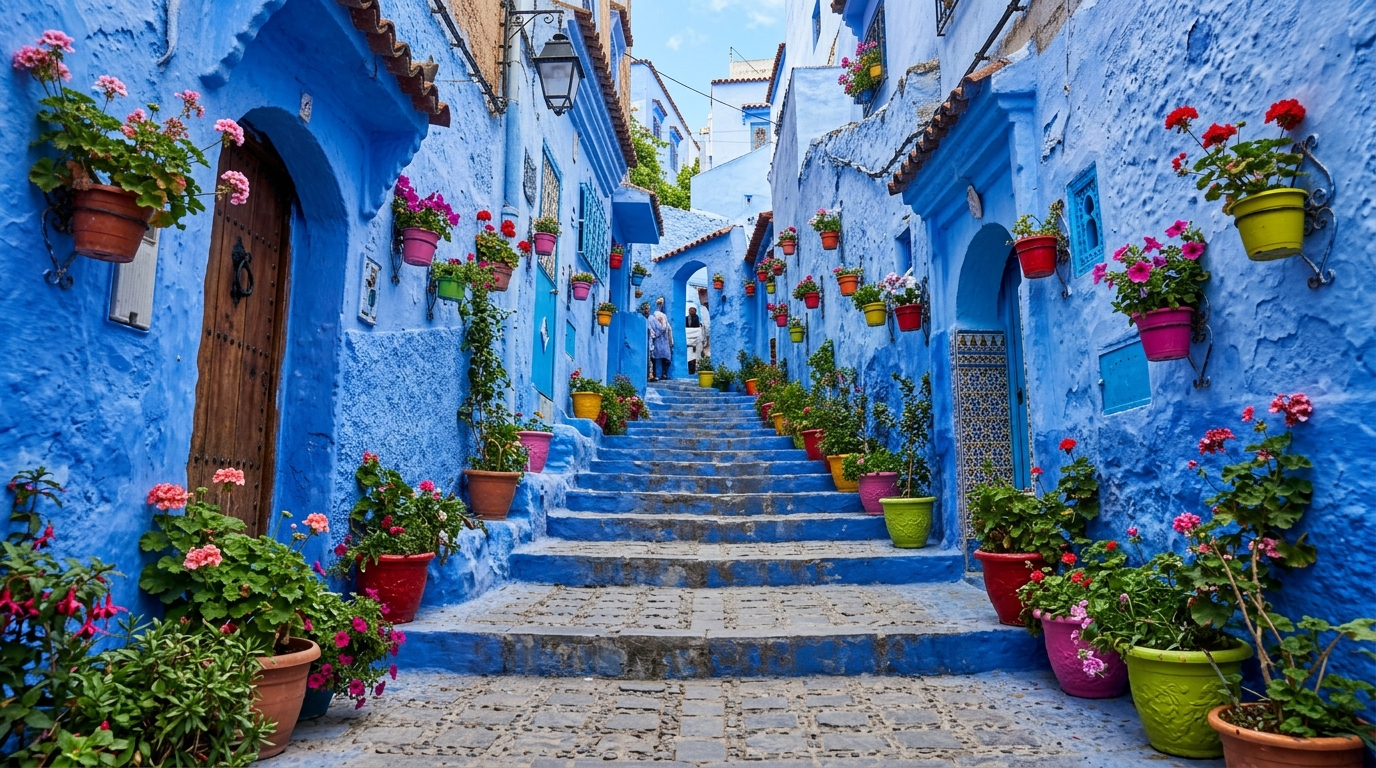
Street Food as a Way of Life
Street food in Morocco is not a trend or a tourist attraction bolted onto the culture; it is simply how much of the country eats. Workers grab msemen and coffee on the way to the job, students queue for bowls of b'ssara at lunchtime, families stroll medina lanes at night grazing on grilled meats and sweets, and every market day in every small town brings its ring of food stands. The economics are honest: fresh ingredients, high turnover, small margins and recipes refined across generations.
The geography of Moroccan street food follows the rhythm of the medina, the old walled city at the heart of every Moroccan town. Food vendors cluster near mosque entrances, market gates, bus stations and squares, wherever people pass in numbers. Many stalls specialize in exactly one thing, a single soup, a single pastry, a single cut of grilled meat, and have sold that one thing for decades. That specialization is your quality guarantee: a cart that has made nothing but snail broth for thirty years has had thirty years of customers voting daily.
Seasons and the religious calendar shape the menu. Ramadan evenings transform every street corner into a soup and sweets economy, with harira, dates, chebakia and boiled eggs everywhere at sunset. Winter is soup weather, especially the fava bean b'ssara in the north. Summer coastal towns run on grilled sardines. Friday, the day of communal prayer, is couscous day in homes, so the street trade shifts to snacks around it. Understanding this rhythm means you eat what the city itself is eating, which is always the best move.
For visitors, street food is also the cheapest ticket into Moroccan social life. Sharing a stand-up counter with strangers, watching your food cooked in front of you, exchanging a few words of Darija with a vendor who has run the same stall since before you were born: this is contact with the country that no restaurant can stage. The dishes below are the canon, the things Moroccans themselves would tell you not to miss.
Msemen and the Breakfast Griddle
Morning street food in Morocco belongs to the griddle, and the king of the griddle is msemen. Msemen is a square, flaky flatbread made from a dough of flour, fine semolina, water and salt, flattened paper-thin, oiled and butter-smeared, folded into layers and folded again, then cooked on a hot plate until the outside crisps and the inside stays chewy and laminated. Watching a skilled maker stretch the dough to translucency with oiled palms, fold it in seconds and slap it onto the griddle is one of the great small spectacles of a Moroccan morning.
Msemen is eaten plain and hot, dragged through honey, spread with soft cheese, or drizzled with a mix of melted butter and honey; a savory version stuffed with onion, tomato, spices and fat is a meal in itself. Its round, spongier cousin baghrir, the thousand-hole pancake whose surface pits with bubbles as it cooks on one side, drinks up honey and butter like no other bread. Harcha, a golden semolina disc cooked in butter, crumbly like polenta cake, completes the classic trio, often split and filled with cheese or jam.
Then there is sfenj, Morocco's street doughnut: an airy, chewy ring of unsweetened leavened dough deep-fried to order, traditionally threaded onto a loop of palm fiber for carrying, and eaten scalding hot, plain or dunked in sugar. Sfenj makers, still called by the old artisan name sfenaj, fry beside a bubbling cauldron from early morning, and locals eat the rings with a glass of sweet mint tea or coffee. It is workers' food, children's treat and weekend ritual all at once, and it costs pocket change.
These breakfast items never disappear during the day; they simply change role, reappearing at the afternoon coffee pause and again at dusk. During Ramadan, msemen and baghrir migrate to the sunset table. For a traveler, the practical tip is simple: find the neighborhood griddle woman in the morning, note the line of locals, and join it. A hot msemen with honey and a glass of atay is quite possibly the best breakfast-per-dirham ratio on the African continent.

Harira: The Soup That Feeds a Nation
If Morocco has a national soup, it is harira: a thick, warmly spiced potage built on tomatoes, lentils and chickpeas, enriched with onion, celery, fresh coriander and parsley, fragrant with ginger and pepper, often carrying small pieces of lamb or beef, and finished with a flour-and-water or yeast liaison called tadouira that gives it its signature silky body. A squeeze of lemon at the table brightens the whole bowl. Vermicelli or rice sometimes joins the pot, and every household and every stall guards its own balance of spices.
Harira's most famous role is breaking the fast in Ramadan. Across Morocco, the cannon or the muezzin marks sunset and within minutes millions of tables carry the same trinity: a bowl of harira, sweet dates, and honey-glazed chebakia pastry, often with boiled eggs dusted in cumin and salt. The soup's mix of legumes, starch and gentle spice is exactly what a body wants after a day without food or water, which is why the pairing has survived for generations essentially unchanged.
But harira is not only for Ramadan. Year-round, soup vendors ladle it out from huge pots in medina stalls and market corners, especially in the cool months, usually for a handful of dirhams a bowl. In cities like Marrakesh and Fez, a harira stand with its stack of bowls and its squeeze bottles of lemon juice is standard street furniture. Late-night harira after a wedding or a long evening out is a Moroccan institution roughly equivalent to the post-party kebab elsewhere.
For the visitor, harira is also the safest possible introduction to street food: it is boiled continuously, served blistering hot, vegetarian-friendly in many versions, and instantly comforting. Try it once at a busy stall and you will understand why Moroccan expatriates list it, with mint tea and their mother's couscous, among the tastes of home they miss most.

B'ssara: The Humble Fava Bean Bowl
B'ssara, also spelled bessara or bissara, is the great working-class breakfast of northern Morocco: dried split fava beans simmered to collapse with garlic, then blended into a thick, pale golden puree or soup, seasoned with cumin and salt, and finished at the table with a generous pour of olive oil and a shake of paprika or chili. It is served scalding, with fresh khobz bread for scooping, and it costs almost nothing, which is exactly why it has fed masons, porters, students and market traders for generations.
The dish is at its best in the cold months and in the north. Fez is particularly associated with b'ssara, where tiny hole-in-the-wall shops sell nothing else all morning, ladling from a cauldron into rough bowls at a counter three tiles wide. Tangier, Tetouan, Chefchaouen and the Rif towns all share the tradition. In Casablanca and points south you will find it too, though locals will tell you, with regional pride, that the true bowl belongs to the north wind.
B'ssara sits somewhere between soup and dip depending on the cook's water ratio, and the same fava base appears across the wider region: Egypt has its own bessara tradition, and dried fava beans have been Mediterranean staple food since antiquity. The Moroccan street version's genius is the finishing: the raw olive oil melting into the hot puree, the cumin, the optional chili, the hot bread. It is vegan by construction, protein-rich and absurdly satisfying.
Order it like a local: stand at the counter, ask for extra oil and cumin, tear the bread, scoop, and chase it with sweet mint tea. A full breakfast of b'ssara, bread and tea in a Fez medina doorway remains one of Morocco's perfect cheap meals, and vendors are used to curious visitors; pointing at the pot and smiling is a complete transaction.
Babbouche: Snail Soup from the Cart
Of all Moroccan street foods, none tests and rewards visitors quite like babbouche, snail broth. Small land snails, the petit-gris type gathered from fields and sold by the sack in markets, are cleaned and simmered for hours in a dark, heady broth built from a famously long spice list: recipes commonly include anise seed, caraway, thyme, licorice root, wild mint, orange peel, chili and a dozen other aromatics, in combinations each vendor keeps proudly personal. The result smells like a spice souk in liquid form.
The serving ritual is fixed. The snail man ladles a bowl from the steel cauldron mounted on his cart, hands you a toothpick or pin for winkling the snails from their shells, and you drink the broth straight from the bowl afterwards. Moroccans widely consider the broth the real prize, a folk tonic credited with warming the body, aiding digestion and chasing off colds; on winter evenings, men cluster around snail carts drinking the liquor like consomme.
Snail stalls are everywhere once you learn to spot the steaming cauldron: around market entrances in Casablanca and Rabat, in the squares of Fez and Meknes, and most photogenically among the numbered food stalls of Jemaa el-Fnaa in Marrakesh, where babbouche is one of the square's signature offerings. A small bowl costs a few dirhams, a large one not much more, making it among the cheapest hot street snacks in the country.
First-timer's advice: start with a small bowl, take the toothpick, and commit. The snails themselves are mild, chewy and earthy, closer to mushrooms than to anything alarming; the broth carries all the drama. Choose a busy cart where the pot is visibly boiling and turnover is fast. Many travelers arrive skeptical and leave ranking babbouche among their favorite discoveries in Morocco, which is exactly the kind of conversion story street food exists to produce.

Sardines and the Taste of the Coast
Morocco's Atlantic coast delivers one of the world's great cheap seafood traditions, and its emblem is the humble sardine. Morocco is among the world's leading producers and exporters of sardines, with the fishery centered on ports like Safi, Essaouira, Agadir and Dakhla, and that abundance translates directly to the street: sardines grilled whole over charcoal at portside shacks, dusted with salt and cumin, served with khobz, tomato salad and a wedge of lemon for a price that barely registers.
The refined street version is the sardine sandwich stuffed with chermoula, the great Moroccan marinade of fresh coriander, parsley, garlic, cumin, paprika, lemon and oil. Butterflied sardines are sandwiched in pairs around a smear of chermoula, flour-dusted and fried, then folded into bread with hot sauce. In Casablanca, Rabat and Essaouira, sardine stands compete on the freshness of the morning catch, and lunchtime queues tell you exactly who is winning that day.
Beyond sardines, coastal street food runs to fried whiting, calamari and shrimp by the paper cone, grilled mackerel, and seafood bastilla in fancier settings. The port scene at Essaouira, where you choose fish straight from the boats and have it grilled on the spot, has become semi-famous with travelers; agree on the price per weight before cooking and it remains one of Morocco's memorable meals. Inland cities eat the sea too: fried-fish counters in Marrakesh and Fez truck in the Atlantic catch daily.
Sardines carry cultural weight beyond the plate. The fish is a staple of the working-class table, a canning industry export that reaches supermarkets worldwide, and a point of national culinary pride: Moroccans will tell you, correctly, that a sardine pulled from cold Atlantic water and grilled within hours tastes like a different species from the tinned version. Eat them by the harbor with your fingers, and you will agree.
If your itinerary allows only one coastal food stop, make it a fishing port at late morning, when the boats land and the grills fire up for the first service. Order by pointing, add the tomato-onion salad, ask for extra cumin salt, and take the plastic stool facing the water. The entire meal, fish, bread, salad, tea, will cost less than the parking at most European beaches, and it will be the freshest fish most visitors have ever eaten.

Khobz and the Culture of Bread
No Moroccan street meal makes sense without khobz, the round, slightly flattened crusty loaf that serves as plate, fork and food all at once. Made from wheat flour or blends with semolina, barley or whole grain, khobz is torn into pieces and used to scoop soups, pinch up grilled meat, drag through olive oil and amlou, and wrap around fried fish. Bread is so fundamental that Moroccan Arabic wraps it in reverence: dropped bread is traditionally picked up, kissed and set aside rather than left underfoot, and wasting it is frowned upon.
The old urban tradition of the communal oven, the ferran, still lives in Moroccan medinas. Households mix and shape their dough at home, stamp it with a family mark or track it by a wooden board, and send it, often with a child, to the neighborhood oven, where the ferran master bakes dozens of families' loaves for a small fee and recognizes each household's bread on sight. The ferran belongs to the classic quintet of medina neighborhood institutions alongside the mosque, the hammam, the fountain and the Quranic school.
Street vendors sell khobz from carts and market tables everywhere, still warm in stacks, alongside country variations: thick barley loaves, semolina-crusted rounds, and rustic breads baked in clay. Bread also anchors the sandwich economy of every Moroccan town, where a half khobz stuffed with grilled kefta, liver, tuna and olives, or fried potato and egg, is the standard cheap lunch of students and workers, dressed with cumin, salt and fiery harissa to taste.
For travelers, the bread rules are simple and pleasant: it arrives automatically with everything, it is essentially never charged at street level, and using it in place of cutlery is not just accepted but correct, right hand preferred in traditional settings. Watching the afternoon procession of boards and cloth-covered trays flowing to and from a working ferran remains one of the loveliest free spectacles in any Moroccan medina.
Jemaa el-Fnaa: The Greatest Food Square on Earth
Every discussion of Moroccan street food ends up in one place: Jemaa el-Fnaa, the vast irregular square at the heart of the Marrakesh medina. By day it hums with juice stalls, dried fruit pyramids, herbalists, musicians and storytellers. At dusk, a small city of numbered food stalls assembles from nothing: steel counters, benches, strings of lights and roaring grills, and by nightfall the square is a canopy of smoke and lamplight that ranks among the most extraordinary open-air dining rooms anywhere.
The square's cultural importance is formally recognized. UNESCO proclaimed the cultural space of Jemaa el-Fnaa a Masterpiece of the Oral and Intangible Heritage of Humanity in 2001, and it was inscribed on the Representative List of the Intangible Cultural Heritage of Humanity in 2008, the concept of intangible heritage having been championed in part to protect precisely this square's mix of storytelling, music, performance and popular tradition. The food stalls are inseparable from that living heritage: eating here is participation, not spectating.
The classic Jemaa el-Fnaa food crawl runs roughly like this: start with a glass of freshly squeezed orange juice from the numbered juice carts, move to a bowl of harira or babbouche snails, then commit to a grill stall for skewers of kefta and lamb, merguez sausage, grilled peppers and tomato salad scooped with khobz. The adventurous continue to the specialist stalls serving tanjia, the Marrakshi urn-cooked meat, or steamed sheep's head, a beloved delicacy the stall men will cheerfully demystify for you. Dessert is a slab of sweets or a spiced tea from the ginger-and-cinnamon vendors.
Navigating the square takes light humor: touts for each stall perform comic sales pitches in six languages, and the correct response is a smile and either a seat or a firm no thanks. Prices should be visible or agreed before eating, and the busiest stalls with high local turnover are, as always, the best bets. Piles of fresh ingredients on display, food cooked to order in front of you, crowds of Marrakshi families: follow those signals and the square will feed you magnificently for a modest handful of dirhams.
What makes Jemaa el-Fnaa matter beyond the food is continuity. Markets and performers have animated this square for centuries, and the nightly assembly and disassembly of the food city continues a tradition of popular urban culture that has outlasted dynasties. Plenty of places in the world sell grilled meat outdoors at night; almost nowhere else does dinner come wrapped in a living monument.

Beyond the Classics: Grills, Sandwiches and Market Snacks
The everyday backbone of Moroccan street eating is the charcoal grill. Kefta, minced beef or lamb worked with onion, parsley, cumin and paprika, is pressed onto skewers and grilled to order, then folded into khobz with tomato, onion and harissa. Alongside it come brochettes of marinated lamb, beef or chicken, spicy merguez sausage, and, for the committed, skewers of liver, heart and other offal beloved by connoisseurs. The grill man's counter, with its smoke column and rhythmic fanning, is the reference point of any Moroccan market street at lunchtime.
Rotisserie chicken shops, an urban fixture, spin rows of birds over gas flames all afternoon and sell them whole, half or quarter with bread, olives and cumin-salt. Fried food has its own counters: potato cakes called maakouda, eaten solo or crushed into a sandwich with harissa, chickpea-flour squares, hard-boiled eggs sold by criers with paper cones of cumin, and paper bags of fried fish inland and on the coast alike. In Tangier and the north, look for kalinte, a peppery baked chickpea-flour tart sold in warm slices, a legacy of the region's shared history with Andalusia.
The snack economy between meals is a genre of its own. Carts sell steamed chickpeas and fava beans dressed with cumin and salt, roasted corn charred over coals, grilled or boiled sweet potatoes in winter, and prickly pear cactus fruit peeled to order in summer for a coin apiece. Dried fruit and nut pyramids, olives in twenty preparations, and preserved lemons crowd the market tables. Around school gates, vendors do brisk business in sunflower seeds, candied peanuts and sesame brittle.
Juice completes the picture. Morocco's orange juice carts, squeezing glasses to order from mountains of fruit, are justly famous, with the Jemaa el-Fnaa carts practically a monument in themselves. Seasonal stands blend sugarcane, pomegranate and avocado; the avocado-almond-milk smoothie, sometimes fortified with dates, is a meal in a cup from dedicated juice bars called mahlaba, the milk-bar institution found in every city. In the evening, spiced coffee vendors and sellers of hot sahlab and bissap-style infusions take over the same corners.
None of this is written down anywhere official, which is precisely the charm: the repertoire lives in muscle memory and morning routines, varying subtly from Tangier to Agadir. A traveler who eats only in restaurants can visit Morocco; a traveler who works through the grill counters, juice carts and snack vendors has actually been there. The street menu above is your syllabus, and the tuition is loose change.
How to Eat Street Food in Morocco: Practical Wisdom
The universal rules of street food apply in Morocco and work reliably. Eat where locals queue; crowds mean turnover and turnover means freshness. Favor food that is cooked hot in front of you, grilled, fried or ladled boiling from a pot, over anything sitting prepared. Busy morning griddles, roaring lunchtime fry stations and steaming soup cauldrons are self-sanitizing by design. Peeled fruit, washed salads and tap water are where sensitive stomachs should exercise normal traveler judgment.
Money and manners are easy to master. Street eating is a cash economy of small coins; keep 5, 10 and 20 dirham pieces handy, check posted prices or ask before ordering at tourist-heavy spots, and know that most classic snacks cost mere pocket change. Eat with the right hand in traditional company, accept that sharing benches with strangers is normal, and greet vendors with a salam; five words of Darija and a smile visibly improve both portions and conversations.
Timing multiplies pleasure. Morning belongs to msemen, sfenj and b'ssara; lunch to sandwiches, fried fish and rotisserie chicken; late afternoon to sweets and juice; night to the grills and soups. In Ramadan, respect the daytime fast, and then join the extraordinary sunset street feast when the whole country eats at once. On Fridays many small food businesses pause around midday prayer and couscous; plan around it as Moroccans do.
Finally, treat curiosity as the entrance fee. The dishes in this guide, msemen, harira, b'ssara, babbouche, sardines, khobz and the Jemaa el-Fnaa repertoire, are the shared vocabulary of Moroccan streets, and every one of them comes with vendors happy to show a newcomer how it is eaten. Arrive hungry, point at what smells good, and let the street do the rest. It has been feeding people this way, superbly, for a very long time.
And remember that the scene rewards repetition. The vendor who served you msemen on Monday will remember you on Wednesday, wave you over on Friday, and by the end of a week will be correcting your Darija and asking about your family. Moroccan street food is transactional for exactly one visit; after that it becomes relational, which is the real secret of why the same carts and counters survive for generations in the same spots. The food is excellent, but the welcome is the recipe that never changes.
Frequently asked
What is the most famous Moroccan street food?
The flaky griddled flatbread msemen is probably Morocco's most universal street food, eaten at breakfast and tea time nationwide, while harira soup and the food stalls of Jemaa el-Fnaa in Marrakesh are the most internationally famous icons of the scene. Grilled sardines rule the coast and babbouche snail broth is the classic adventurous choice.
What is msemen and how is it eaten?
Msemen is a square, layered flatbread made from flour and semolina dough that is stretched thin, oiled, folded and cooked on a hot griddle until flaky. It is eaten hot, plain or with honey and butter, spread with cheese, or stuffed with a savory onion-tomato-spice filling, typically alongside mint tea or coffee at breakfast.
What is in Moroccan harira soup?
Harira is a thick soup of tomatoes, lentils and chickpeas with onion, celery, coriander and parsley, spiced with ginger and pepper, often containing small pieces of lamb or beef, and thickened with a flour liaison called tadouira. It is famously served with dates and chebakia to break the fast during Ramadan, and sold at street stalls year-round.
What is babbouche, the Moroccan snail soup?
Babbouche is a broth of small land snails simmered for hours with a long list of aromatics such as anise, caraway, thyme, licorice root, wild mint and orange peel. Vendors serve it from cauldron-topped carts: you pick the snails out with a toothpick, then drink the spiced broth, which Moroccans prize as a warming folk tonic.
Is Moroccan street food safe for tourists?
Generally yes, if you follow the standard rules: choose busy stalls with high turnover, eat food that is cooked hot in front of you (grilled, fried or boiled), and be more cautious with raw salads, unpeeled fruit and tap water. Boiling soups like harira and babbouche and hot griddle breads are among the safest choices.
What is b'ssara and where is it best?
B'ssara is a thick puree-soup of dried split fava beans cooked with garlic and cumin, finished with olive oil and paprika, and eaten with fresh bread. It is a beloved cheap breakfast in northern Morocco, with Fez especially famous for tiny shops that sell nothing else, and it is naturally vegan and very filling.
Why are the food stalls at Jemaa el-Fnaa famous?
Every evening, dozens of numbered food stalls assemble from scratch on Marrakesh's central square, creating a vast open-air dining scene of grills, soups, snails and juice carts. The cultural space of Jemaa el-Fnaa was proclaimed a UNESCO Masterpiece of Oral and Intangible Heritage in 2001 and inscribed on the Representative List in 2008, making dinner there part of a recognized living heritage.
What should I try first at Jemaa el-Fnaa?
A classic crawl: fresh orange juice from the numbered carts, then a bowl of harira or babbouche snails, then kefta and lamb skewers with tomato salad and khobz at a busy grill stall, finishing with sweets or a spiced ginger tea. Adventurous eaters add tanjia (urn-cooked meat) or steamed sheep's head, both local specialties.
What is khobz and why is bread so important in Morocco?
Khobz is the round crusty Moroccan loaf that accompanies virtually every meal and often replaces cutlery: pieces are torn to scoop soups, salads and grilled meat. Bread is treated with near-sacred respect, and many medina households still send home-shaped dough to a communal neighborhood oven (ferran) where each family's loaves are recognized on sight.
Are grilled sardines really a Moroccan specialty?
Yes. Morocco is among the world's leading sardine producers and exporters, and ports like Essaouira, Safi and Agadir grill the morning catch over charcoal at portside stands. The signature street version stuffs butterflied sardines with chermoula, a coriander-garlic-cumin-paprika marinade, then fries them into a sandwich.
How much does street food cost in Morocco?
Very little by international standards. Breads like msemen and sfenj, bowls of b'ssara, harira or babbouche, and sardine sandwiches typically cost only a few dirhams each, small change in euro or dollar terms. Even a full grill-stall meal at Jemaa el-Fnaa is usually cheaper than a fast-food combo in Europe; just confirm prices before ordering at tourist-heavy stalls.
Can vegetarians eat well from Moroccan street stalls?
Comfortably. B'ssara is vegan by construction, many harira versions are meatless, and the griddle breads (msemen, baghrir, harcha), sfenj doughnuts, olives, fresh juices, boiled chickpeas, roasted corn and egg sandwiches are all widely available. Just ask whether soups contain meat, as some stalls enrich them with lamb or beef.
- Wikipedia — Msemen ↗
- Wikipedia — Harira ↗
- Wikipedia — Bessara ↗
- Wikipedia — Jemaa el-Fnaa ↗
- UNESCO — Cultural space of Jemaa el-Fna Square ↗
- Wikipedia — Moroccan cuisine ↗
Video via official YouTube embeds; photos via Wikimedia Commons under their stated licenses. All rights belong to the respective owners; 212 Daily claims no ownership.