Ras el Hanout: Inside Morocco's "Head of the Shop" Spice Blend
What "ras el hanout" actually means
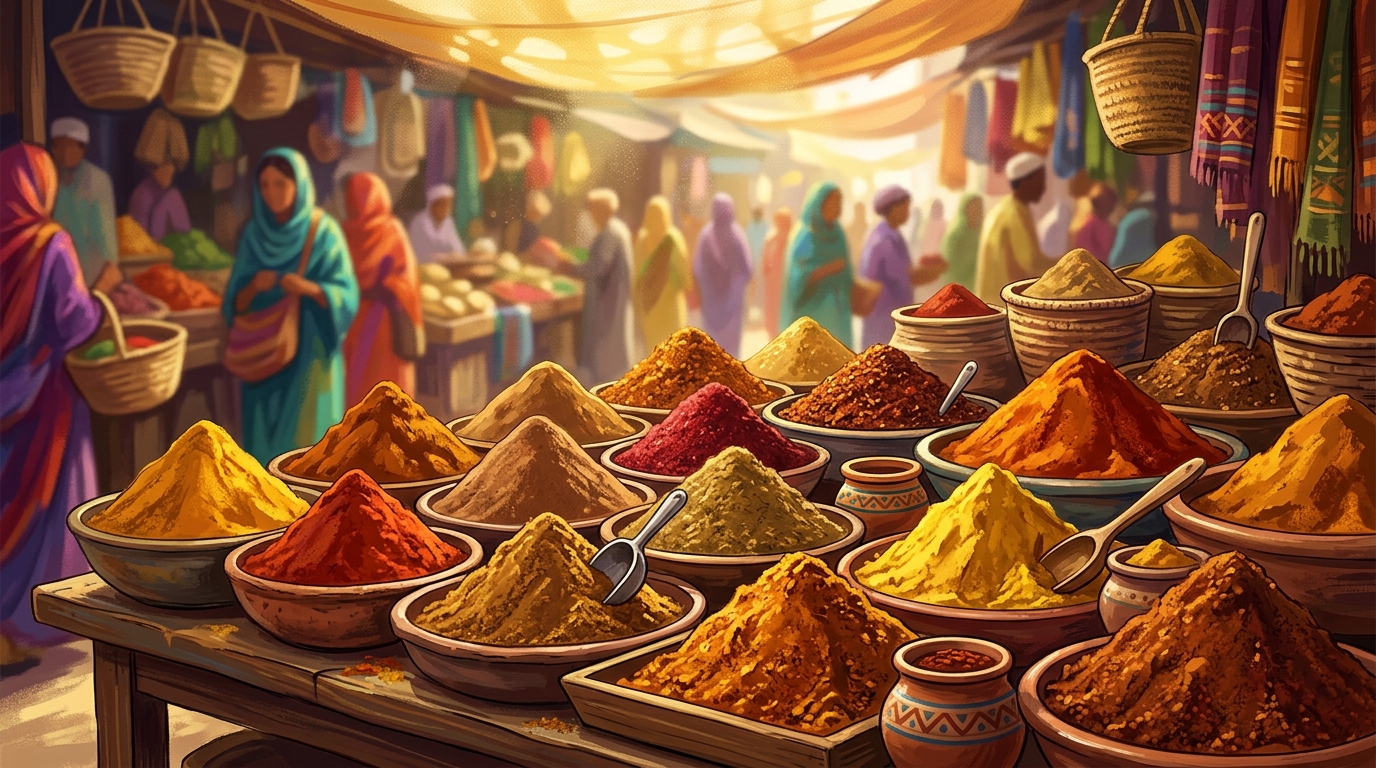
In Arabic, ras el hanout translates roughly to "head of the shop" — sometimes rendered "top of the shop" — and the phrase describes a practice rather than a fixed product. A hanout is a small shop, and when a customer asked a spice merchant for ras el hanout, they were asking for the very best the seller had on hand: a personal, one-off combination of the finest spices in the stall, mixed specifically for that customer on that day.
That origin explains why the term never settled into a single standardized formula the way, say, curry powder eventually did in Britain. Ras el hanout is found across Morocco, Algeria and Tunisia in varying forms, and it functions less like a packaged product and more like a category — a statement of quality and generosity from merchant to customer, built anew each time from whatever prized spices that particular hanout stocked.
That is also why the blend carries such prestige at Moroccan tables. Serving a dish seasoned with ras el hanout was historically a way of signaling that no expense had been spared — the blend shows up in festive tagines, rich meat and game dishes, and special-occasion cooking rather than everyday seasoning, precisely because of the cost and rarity of assembling a genuinely complex version.
No fixed recipe: why every blend is different
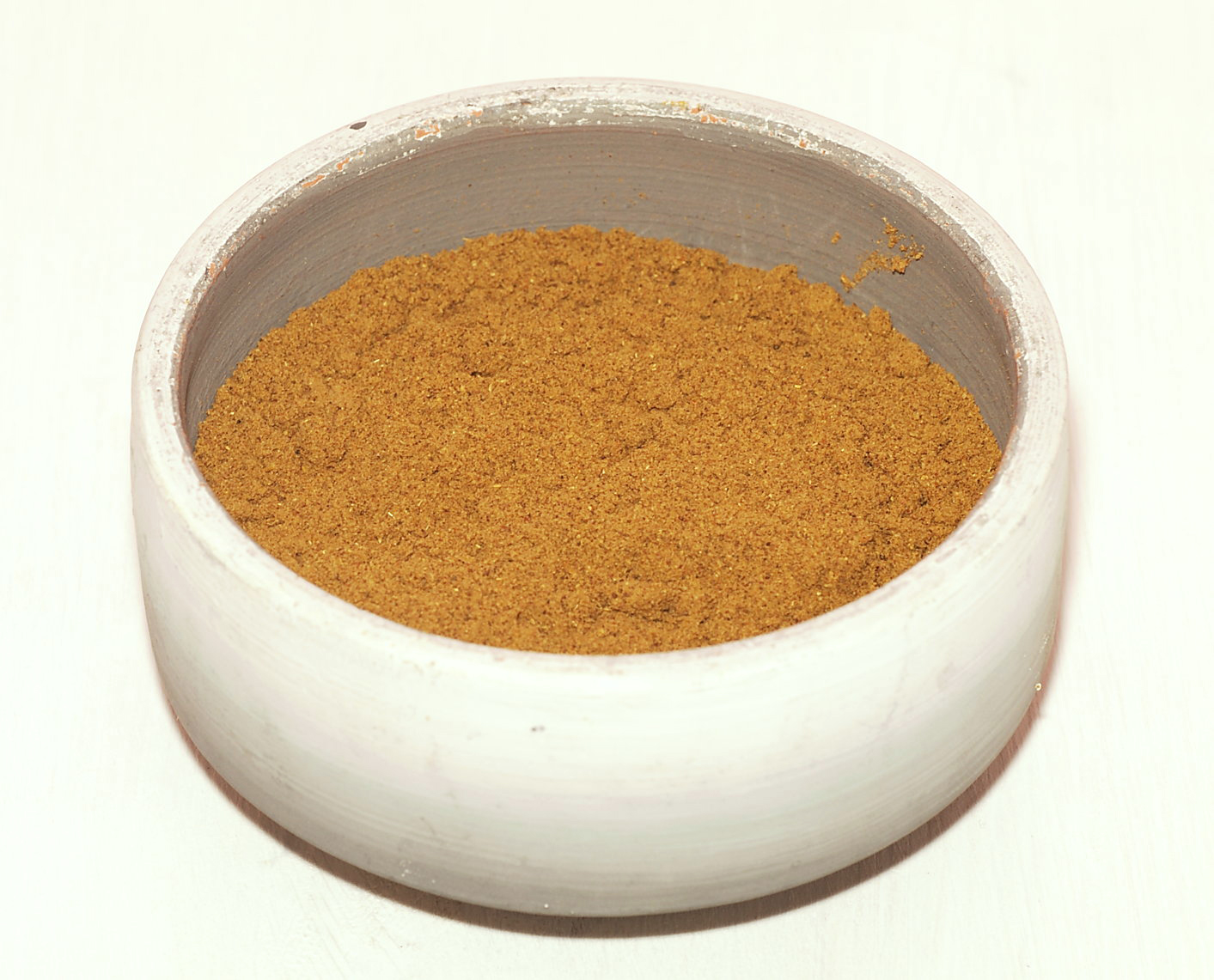
Ask ten Moroccan spice merchants for their ras el hanout and you will likely get ten different jars. There is no definitive composition, and each shop, family or spice house guards its own combination, adjusted by proportion rather than a shared master list. What unites them is scale and ambition: a proper ras el hanout usually contains well over a dozen spices, and some traditional versions are said to run to several dozen ingredients, with a handful of elaborate old-style blends claiming as many as a hundred components.
The common core tends to include warm, sweet-leaning spices — cardamom, cumin, cloves, cinnamon, nutmeg, mace, allspice, dried ginger, coriander seed, black peppercorn, sweet and hot paprika, fenugreek and turmeric — toasted and ground or pounded together, sometimes with dried chili for heat. From there, individual blends branch out into rarer, more regional additions: grains of paradise (a peppery, citrusy West African seed related to cardamom), cubeb pepper, dried rosebuds, orris root, galangal, long pepper, monk's pepper and mountain ash berries, each contributing a different note of bitterness, floral perfume or pungency.
Older, more theatrical formulations occasionally went further still, folding in ingredients chosen for reputation as much as flavor — including, in some historical recipes, belladonna berries and cantharides (the dried "Spanish fly" beetle), both prized at the time for a supposed aphrodisiac effect rather than for taste. Modern ras el hanout has almost entirely dropped these hazardous extras; today's versions, whether hand-mixed in a souk or sold commercially abroad, stick to the aromatic spice core and skip the folklore.
Camel caravans and the spice road to Morocco
Morocco's spice culture did not grow in isolation — it grew at the end of one of history's great trade networks. From roughly the 8th century until the early 1600s, the trans-Saharan trade linked North Africa to West and Central Africa by camel caravan, moving gold and salt in vast quantities: gold north from goldfields in what is now Senegal and Guinea, and slabs of Saharan salt south from mines like Taghaza and Taoudenni. Caravans of camels — often numbering in the hundreds, occasionally into the thousands — made the crossing, anchored at desert trading posts.
Sijilmasa, in southeastern Morocco, was one of the great termini of that network, reaching its peak in the 11th and 12th centuries under the Almoravid dynasty, when its access to gold let it mint its own currency. From Sijilmasa, goods fanned out to Fes, Marrakech and on to Mediterranean ports — and increasingly, those goods included spices arriving from far beyond the Sahara: saffron carried in from Iran, cardamom from India, cloves from Indonesia, ginger from China, alongside West African peppers like grains of paradise. Marrakech itself was founded in 1070 by the Almoravids specifically as a meeting point between sub-Saharan trade and the Mediterranean world.
That confluence of long-distance goods is precisely what made a blend as extravagant as ras el hanout possible in the first place. A merchant's "best of the shop" could only be as impressive as the caravan trade allowed — layering Asian, Indian, Middle Eastern and West African spices into a single Moroccan mixture became a way of putting centuries of trade history into a single spoonful.
Inside the souks: Marrakech and Fes
That trading history still shapes how spices are bought and sold in Morocco's old medinas today. In Marrakech, the spice trade centers on Rahba Kedima — literally the "old square," also called Place des Épices — just off the Souk Semmarine, where stalls sell loose cones and baskets of spices alongside traditional herbal remedies, since many vendors there double as herbalists practicing a botanical medicine tradition that long predates modern pharmacies. Deeper into the medina runs Souk el Attarine, whose name comes from attar, meaning spice and perfume sellers, historically the domain of merchants trading in essential oils, incense and aromatics as much as cooking spices.
Fes has its own Souk el Attarine, near the Chouara Tannery in the Fes el Bali medina, where spice merchants have reportedly traded since the 13th century — one of the oldest continuously used commercial quarters in either city. In both Fes and Marrakech, the ritual of buying spices is still built around trust and personal relationships rather than fixed packaging: a regular customer builds a rapport with a specific merchant over years, and that merchant, in turn, may mix a private blend for them the way ras el hanout was always meant to be sold.
That personal, made-to-order character is part of why ras el hanout resists being pinned down by outsiders looking for "the" authentic recipe. It was never meant to be one recipe. It was meant to be a relationship between a shopkeeper and a customer, repeated across generations of hanouts in Marrakech, Fes and every Moroccan market town in between.

Ras el hanout's neighbors: chermoula, harissa and tabil
Ras el hanout is Morocco's most famous spice mixture, but it is far from the only one, and it is worth separating it clearly from its North African relatives. Chermoula, unlike ras el hanout, is a fresh wet marinade rather than a dry spice blend: cilantro and parsley (in ratios that vary by family and region), garlic, cumin, sweet paprika, olive oil and the tang of preserved or fresh lemon, traditionally used on fish and seafood, though it turns up on chicken and vegetables too. Where ras el hanout is about dried, roasted, long-shelf-life spices, chermoula is about brightness and acidity meant to be used within days.
Harissa, meanwhile, is not Moroccan at all in origin — it is Tunisia's national condiment, a chili paste built from dried Baklouti peppers, olive oil, coriander, caraway and garlic, developed in Tunisia's Cape Bon region after chili peppers arrived via the Columbian Exchange during the period of Spanish rule over Hafsid Tunisia in the 1500s. Its importance to Tunisian food culture was formally recognized by UNESCO in 2022. Moroccan cooks use their own milder chili pastes, but harissa proper belongs to Tunisia and neighboring Algeria and Libya, not to Morocco's ras el hanout tradition.
Tabil rounds out the picture as a third distinct mixture, again from Tunisia and Algeria rather than Morocco: a simpler, drier blend built mainly from ground coriander, caraway, garlic and chili, sometimes with rose petal, cumin or clove added. The name itself comes from the Tunisian Arabic word for coriander. Set side by side, the three blends map out how differently North African cooking layers flavor — Morocco's ras el hanout for aromatic complexity, Tunisia's harissa for concentrated heat, and tabil for a leaner, coriander-forward seasoning base.
Ras el hanout on the modern table
In Moroccan kitchens today, ras el hanout still shows up mostly in ambitious, slow-cooked dishes — lamb or chicken tagines, rich couscous, hearty stews and holiday cooking — where its dozens of spice notes have time to bloom into the sauce. It is less common as an everyday seasoning than simpler combinations of cumin, paprika and ginger, precisely because a serious version remains labor-intensive and comparatively expensive to assemble properly.
Outside Morocco, ras el hanout has become one of the most exported symbols of Moroccan cuisine, sold pre-mixed by spice companies worldwide, though commercial jarred versions are almost always simplified — a reliable dozen-or-so spices rather than the wilder forty-plus-ingredient blends a Fes or Marrakech herbalist might still hand-mix for a loyal customer. That gap between the souk original and the supermarket version is, in a sense, the whole story of ras el hanout: a blend invented specifically to resist standardization, now sold across the world in standardized jars.
Even so, the idea behind the name has traveled intact. Whether it is mixed to order behind a stall in Rahba Kedima or bought off a shelf abroad, ras el hanout still carries its original promise: not a fixed formula, but the best a shop has to give.
Frequently asked
What does ras el hanout mean?
Ras el hanout is Arabic for "head of the shop" (sometimes translated "top of the shop"). It refers to a merchant's personal best blend of spices, historically mixed to order for a customer rather than sold as a fixed, packaged product.
What spices are in ras el hanout?
There is no single fixed recipe. Common ingredients include cardamom, cumin, cloves, cinnamon, nutmeg, mace, allspice, dried ginger, coriander, black pepper, paprika, fenugreek and turmeric, often with regional additions like grains of paradise, cubeb pepper, dried rosebuds, orris root or galangal. Blends can run from a dozen spices to several dozen depending on the merchant.
Is ras el hanout the same in every shop?
No. Each spice merchant, family or shop traditionally keeps its own proprietary mix and proportions, which is central to the blend's identity. Two jars labeled ras el hanout from different Moroccan hanouts can taste noticeably different.
Did old ras el hanout recipes really include aphrodisiac ingredients?
Some historical formulations reportedly included belladonna and cantharides (dried Spanish fly beetles), added for their reputed aphrodisiac properties rather than flavor. These hazardous ingredients have been dropped from virtually all modern ras el hanout, whether hand-mixed in Morocco or sold commercially.
Where can you buy authentic ras el hanout in Morocco?
The classic spice markets are Rahba Kedima (also called Place des Épices) and the nearby Souk el Attarine in Marrakech's medina, and Fes's own Souk el Attarine near the Chouara Tannery, where spice trading is reported to date back to at least the 13th century.
How did trans-Saharan trade shape Moroccan spice culture?
From roughly the 8th to early 17th century, caravan routes carried gold and salt across the Sahara through hubs like Sijilmasa in Morocco, which by the 11th and 12th centuries under the Almoravids also channeled spices from further afield — saffron from Iran, cardamom from India, cloves from Indonesia, ginger from China — into Moroccan markets, feeding the raw ingredients that later made blends like ras el hanout possible.
What is the difference between ras el hanout and chermoula?
Ras el hanout is a dry, roasted spice blend used mainly in slow-cooked tagines and stews. Chermoula is a fresh wet marinade of herbs (cilantro and parsley), garlic, cumin, paprika, olive oil and lemon, used mostly on fish and seafood. They are used differently and are not interchangeable.
Is harissa a Moroccan spice blend?
No. Harissa is Tunisia's national chili condiment, developed in the Cape Bon region after chili peppers reached Tunisia during the Spanish occupation of Hafsid Tunisia in the 1500s and 1600s. It is common across Algeria and Libya too, but it is not part of Morocco's ras el hanout tradition, and Moroccan cooking generally uses milder chili pastes.
What is tabil and how does it differ from ras el hanout?
Tabil is a Tunisian and Algerian spice mix built mainly from ground coriander, caraway, garlic and chili — its name comes from the Tunisian Arabic word for coriander. It is far simpler and drier than ras el hanout, which can include dozens of aromatic spices without one dominant flavor.
Why does ras el hanout appear mostly in special-occasion Moroccan dishes?
Because a genuine version requires sourcing and blending many costly, sometimes rare spices, ras el hanout has traditionally been reserved for festive tagines, rich meat dishes and holiday cooking rather than everyday seasoning, where simpler spice combinations are used instead.
- Wikipedia — Ras el hanout ↗
- Wikipedia — Harissa ↗
- Wikipedia — Tabil ↗
- Wikipedia — Trans-Saharan trade ↗
- Slow Morocco — The Trans-Saharan Trade ↗
- Taste of Maroc — Moroccan Chermoula Recipe ↗
Video via official YouTube embeds; photos via Wikimedia Commons under their stated licenses. All rights belong to the respective owners; 212 Daily claims no ownership.