20 Moroccan Slang Words to Sound Like a Local
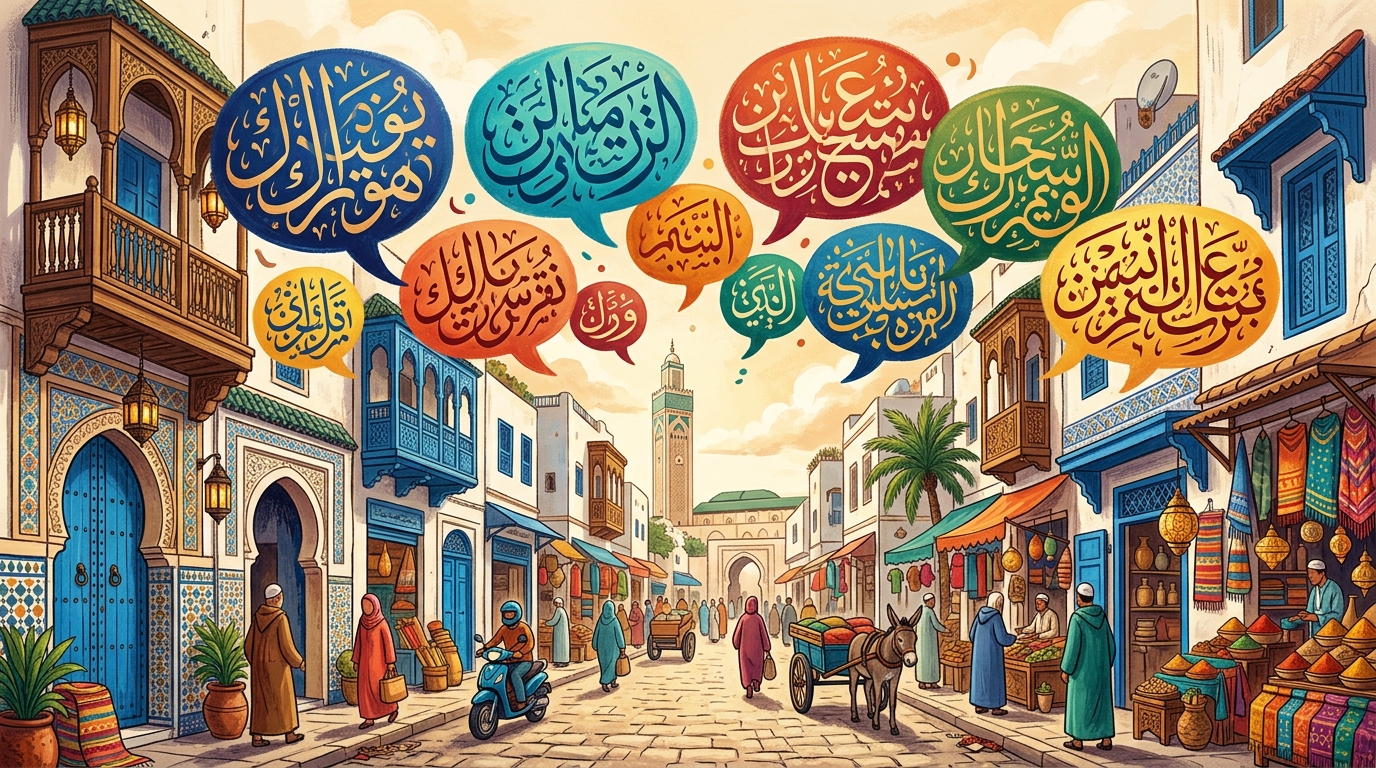
The Essentials You'll Hear Everywhere
Start with the four words you will hear within minutes of arriving. Wakha (واخا) means 'OK,' 'alright' or 'agreed,' the universal Moroccan word of consent that ends almost any negotiation. Safi (صافي) means 'enough' or 'that's it,' perfect in the souk when you have finished bargaining: 'safi, choukran.'
Then there is bezzaf (بزاف), meaning 'a lot' or 'very,' one of Darija's most-used intensifiers. Say 'choukran bezzaf' for 'thank you very much' or 'ghaliya bezzaf' to tell a vendor something is 'very expensive.' Pair these with zwin (زوين), meaning 'nice,' 'pretty' or 'good,' and you can already compliment a place, a meal or a person like a local.
Feelings and Reactions
Moroccans pepper their speech with reactions, and the most important is hamdullah, 'thanks be to God,' said constantly to express gratitude, relief or simply that things are fine. Ask someone how they are and the answer is almost always 'hamdullah.' Inshallah, 'God willing,' is its forward-looking twin, attached to any plan or hope for the future.
When something is great, say mezyan, meaning 'good' or 'well,' often stretched out for emphasis. If you are amazed, a drawn-out 'waaah' does the job. And when you are fed up, Moroccans might mutter to themselves; learning to read tone matters as much as vocabulary, because Darija is delivered with expressive gestures and rhythm that carry half the meaning.
Street and Souk Survival Words
Bargaining has its own vocabulary. Bshhal means 'how much,' the single most useful question in any market, and ghali means 'expensive,' your polite opening to negotiate downward. Add the numbers and a smile and you are equipped for any transaction in the medina without reaching for a phrasebook.
To call someone over you might hear 'aji,' meaning 'come,' while 'sir' means 'go.' A friendly term you will hear is 'sahbi' for a male friend, roughly 'my buddy.' Vendors and taxi drivers use these constantly, and dropping one yourself instantly signals that you are not a first-day tourist, which often earns warmer service and fairer prices.
Polite Words and Goodbyes
Courtesy goes a long way. Afak (or 'aafak') means 'please,' choukran means 'thank you,' and 'la choukran' is a gentle 'no thank you' to decline an offer without offense. Greetings start with 'salam' or the fuller 'salam alaikum,' and a warm 'labas?' asks 'are you well?' to which 'labas, hamdullah' is the standard reply.
When it is time to leave, 'bslama' means 'goodbye,' and 'tbarkallah' is a lovely phrase used to admire something or someone while warding off the evil eye, a bit like saying 'well done' and 'bless you' at once. Master a handful of these and you will find Moroccans open up quickly; effort in Darija is met with genuine delight almost everywhere you go.
Frequently asked
What is Darija?
Darija is Moroccan Arabic, the spoken dialect used in everyday life in Morocco. It differs significantly from Modern Standard Arabic, drawing on Berber, French, Spanish and Andalusian influences, so it has its own slang and pronunciation.
What does 'wakha' mean in Moroccan Arabic?
Wakha means 'OK,' 'alright' or 'agreed.' It is the universal Moroccan word of agreement and one of the first slang words travelers pick up.
How do you say thank you in Darija?
You say 'choukran' for thank you, or 'choukran bezzaf' for 'thank you very much.' To say please, use 'afak,' and 'la choukran' politely declines an offer.