Top Moroccan Singers & Pop Artists 2026
Morocco's pop landscape today
Moroccan pop sits at a crossroads of styles: mainstream Arabic pop, modern urban and R&B, and traditional genres like chaabi, Gnawa and Amazigh music. This variety gives artists a wide palette and helps Moroccan songs travel across the Arab world and the diaspora.
Streaming has reshaped the market, so a single viral release can lift an artist from local recognition to regional stardom. As a result, 2026's biggest names mix established stars with fast-rising newcomers.
Saad Lamjarred, the global hitmaker
Saad Lamjarred is among the most-streamed Arabic-language artists anywhere, with multiple music videos passing hundreds of millions of views. His polished, catchy pop is built for mass appeal across the Middle East and North Africa.
His commercial scale makes him a benchmark for Moroccan pop, and his releases routinely top regional charts and trend on YouTube.
Manal and the modern Darija sound
Manal Benchlikha, known as Manal, has become one of the leading female voices in Moroccan music by fusing pop, R&B and urban influences sung in Darija. She is credited with helping modernise the image of Moroccan female artists.
Her style appeals strongly to younger listeners and sits comfortably alongside the country's thriving rap and trap scene.
Diaspora crossover stars
Dystinct, a Moroccan-Belgian singer, has become a major crossover success, blending Arabic, French and English in tracks that perform well across Europe. His rise shows how the diaspora is now a powerful engine for Moroccan music.
Artists based in France, Belgium and the Netherlands frequently collaborate with stars in Morocco, creating a connected scene that spans the Mediterranean.
Traditional and chaabi favourites
Alongside modern pop, traditional chaabi remains hugely popular at weddings and celebrations. Singers such as Zina Daoudia keep this festive, rhythmic style central to everyday Moroccan life.
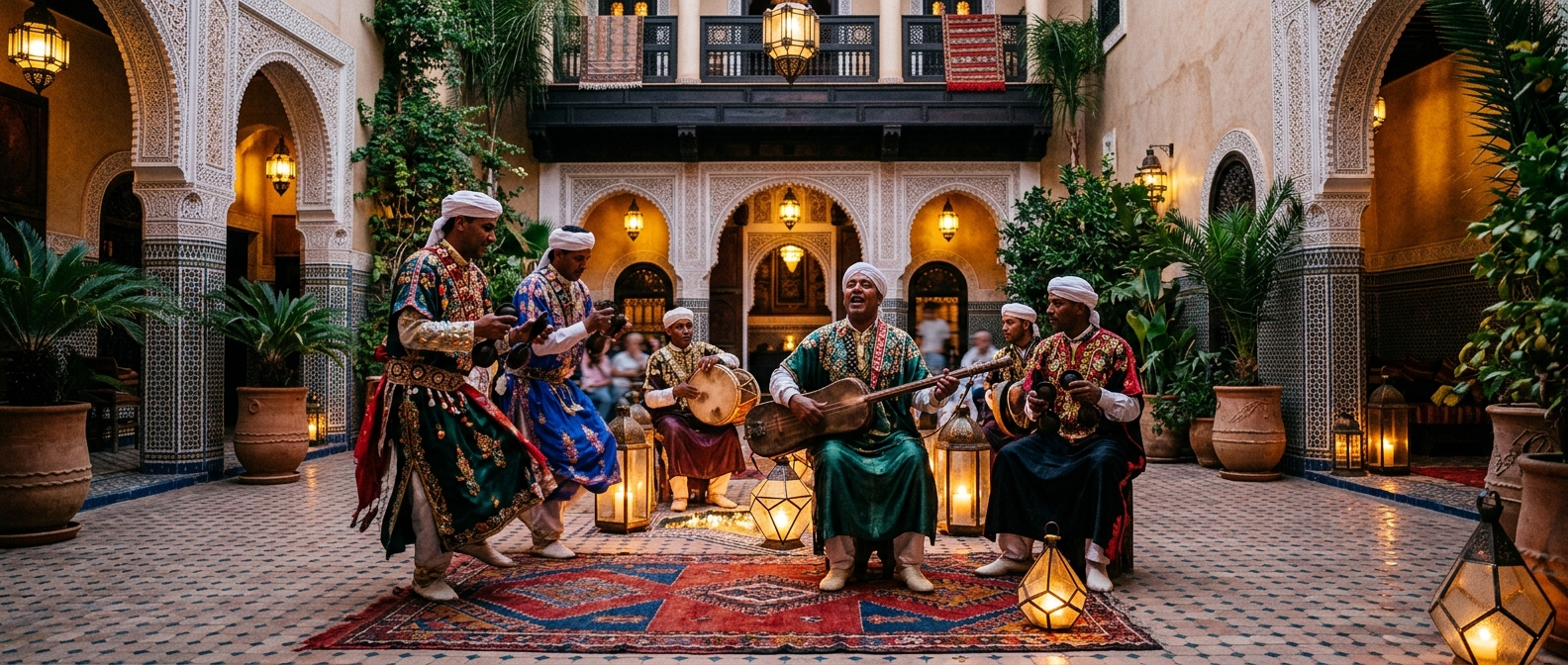
Gnawa and Amazigh music also enjoy strong followings, and fusion projects regularly bring these traditions into contemporary pop and world-music settings.
Where to follow new releases
YouTube is the primary platform for Moroccan music videos and premieres, while Spotify and Apple Music carry the major artists and curated regional playlists. Instagram and TikTok are the best places to catch new singles and behind-the-scenes content.
Because many artists work across languages and borders, following the Moroccan pop scene means encountering Darija, Arabic, French and English in a single playlist.
| Artist | Style | Notes |
|---|---|---|
| Saad Lamjarred | Arabic pop | Hundreds of millions of views |
| Manal | Pop/urban/R&B | Leading modern female voice |
| Dystinct | Pop/Arabic-fusion | Moroccan-Belgian crossover |
| Zina Daoudia | Chaabi | Festive traditional favourite |
Leading Moroccan singers and their styles in 2026
FAQ
Who is the biggest Moroccan pop singer?
Saad Lamjarred is the most commercially dominant, ranking among the most-streamed Arabic-language artists with several videos exceeding hundreds of millions of views.
What styles define Moroccan pop?
It blends mainstream Arabic pop, urban R&B and traditional genres like chaabi, Gnawa and Amazigh music, usually sung in Moroccan Darija.
Are diaspora artists part of the Moroccan scene?
Yes. Singers like Dystinct, based in Europe, are major stars and frequently collaborate with artists in Morocco, linking the diaspora and home scenes.
Where can I stream Moroccan pop music?
YouTube is best for videos and premieres, while Spotify and Apple Music carry the major artists and curated North African playlists.
Loved this? Useful? React below — your feedback helps other readers.