Moroccan Salads & Starters
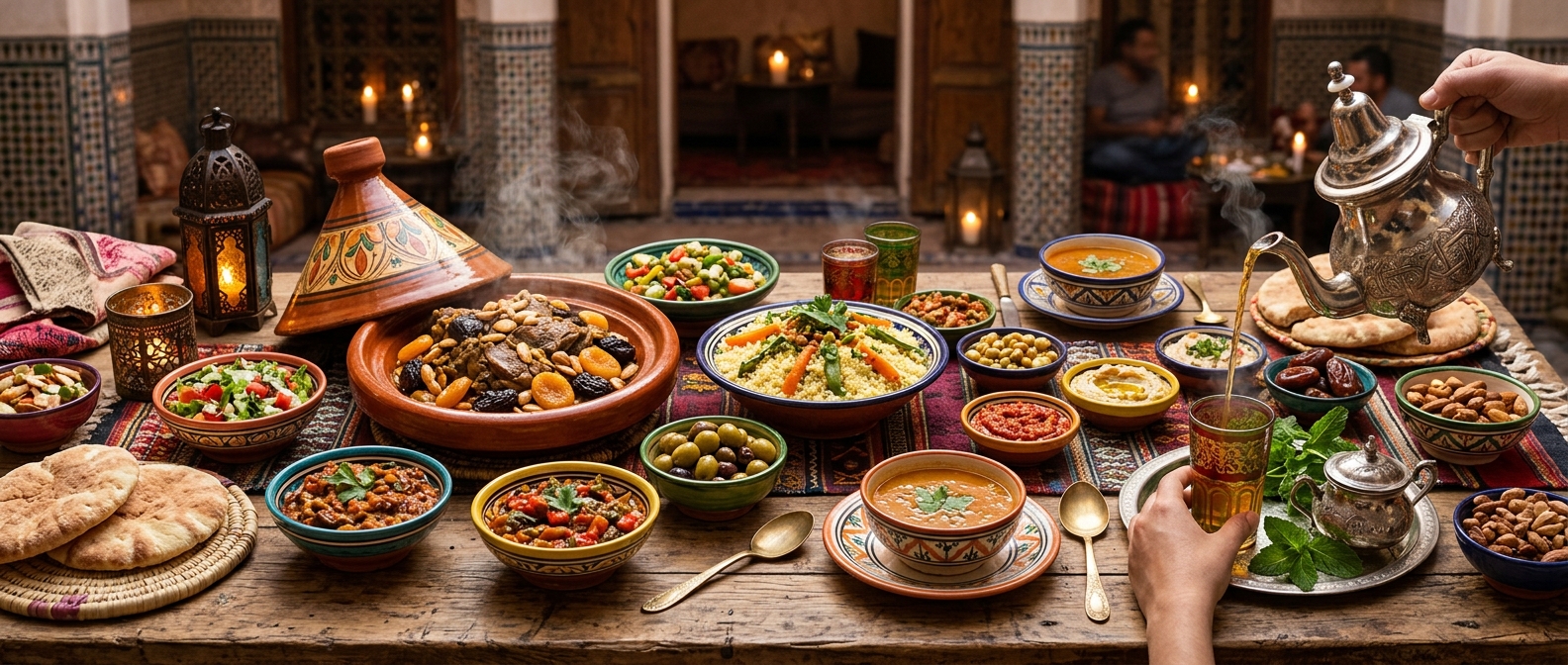
The Moroccan Salad Course
In Morocco, salads are not an afterthought but a celebrated opening course. A festive table often begins with an array of small dishes, both hot and cold, that diners scoop up with bread before the main tagine or couscous arrives.
These salads (often called salat or by the catch-all mezze) showcase the Moroccan love of layered spice and balance. Many are cooked rather than raw, blurring the line between salad and dip and offering deep, comforting flavors.
Zaalouk: Smoky Eggplant Salad
Zaalouk is one of Morocco's best-loved cooked salads. Roasted or simmered eggplant is mashed with tomatoes, garlic, cumin, paprika and olive oil into a smoky, soft, almost jam-like dip.
Served warm or at room temperature and scooped with khobz, zaalouk is rich, garlicky and deeply satisfying. It is a staple of family meals and a perfect example of how Moroccan salads turn humble vegetables into something memorable.
Taktouka: Pepper and Tomato
Taktouka is a cooked salad of grilled green peppers and tomatoes, slow-stewed with garlic, paprika and cumin until thick and sweet. The charred peppers give it a gentle smokiness that pairs beautifully with bread and grilled meats.
Often served alongside zaalouk, taktouka is colorful, slightly spicy and full of summer flavor. It is especially common in the north and is a versatile companion to fish, eggs or kefta.
Fresh Salads: Moroccan Salad and Beyond
Not all Moroccan salads are cooked. The classic Moroccan salad is a finely diced mix of tomato, cucumber and onion, dressed simply with lemon, olive oil and herbs, a fresh counterpoint to heavier dishes.
Other raw options include shlada (orange and radish salad sweetened and dusted with cinnamon), beet salad and carrot salads dressed with orange juice, cumin or cinnamon. These bright plates balance the richness of the cooked starters.
Bakoula and Cooked Greens
Bakoula (or khoubiza) is a cooked salad of mallow leaves or other wild greens, simmered with garlic, preserved lemon, olives, cumin and olive oil. It is nutritious, savory and a beloved traditional dish.
Spinach versions and other slow-cooked greens follow the same template, transforming humble leaves into a tangy, garlicky, olive-studded delicacy. These dishes show the resourceful, vegetable-forward side of Moroccan home cooking.
How Salads Are Served
Moroccan starter salads are typically presented together in a colorful spread of small bowls, encouraging diners to graze. Bread, not cutlery, is the main tool, and a piece of khobz folded into a scoop is the proper way to eat.
The salad course doubles as a measure of hospitality: the more varied and abundant the spread, the warmer the welcome. Many of these dishes also keep well and make excellent leftovers eaten cold the next day.
| Salad | Main ingredient | Cooked or raw |
|---|---|---|
| Zaalouk | Eggplant and tomato | Cooked |
| Taktouka | Peppers and tomato | Cooked |
| Moroccan salad | Tomato, cucumber, onion | Raw |
| Shlada (orange-radish) | Orange and radish | Raw |
| Bakoula | Mallow or wild greens | Cooked |
Common Moroccan salads and starters
FAQ
What is the difference between zaalouk and taktouka?
Zaalouk is a smoky cooked salad based on mashed eggplant and tomato, while taktouka is based on grilled green peppers and tomato. Both are seasoned with garlic, cumin and paprika and scooped with bread.
Are Moroccan salads served hot or cold?
Both. Cooked salads like zaalouk, taktouka and bakoula are served warm or at room temperature, while fresh salads such as Moroccan tomato-cucumber salad and orange-radish salad are served cold.
How are Moroccan starter salads eaten?
They are served as a spread of small bowls at the start of a meal and eaten with pieces of bread rather than cutlery, with diners sharing and grazing across the plates before the main course.
Loved this? Useful? React below — your feedback helps other readers.