Religious Coexistence in Morocco
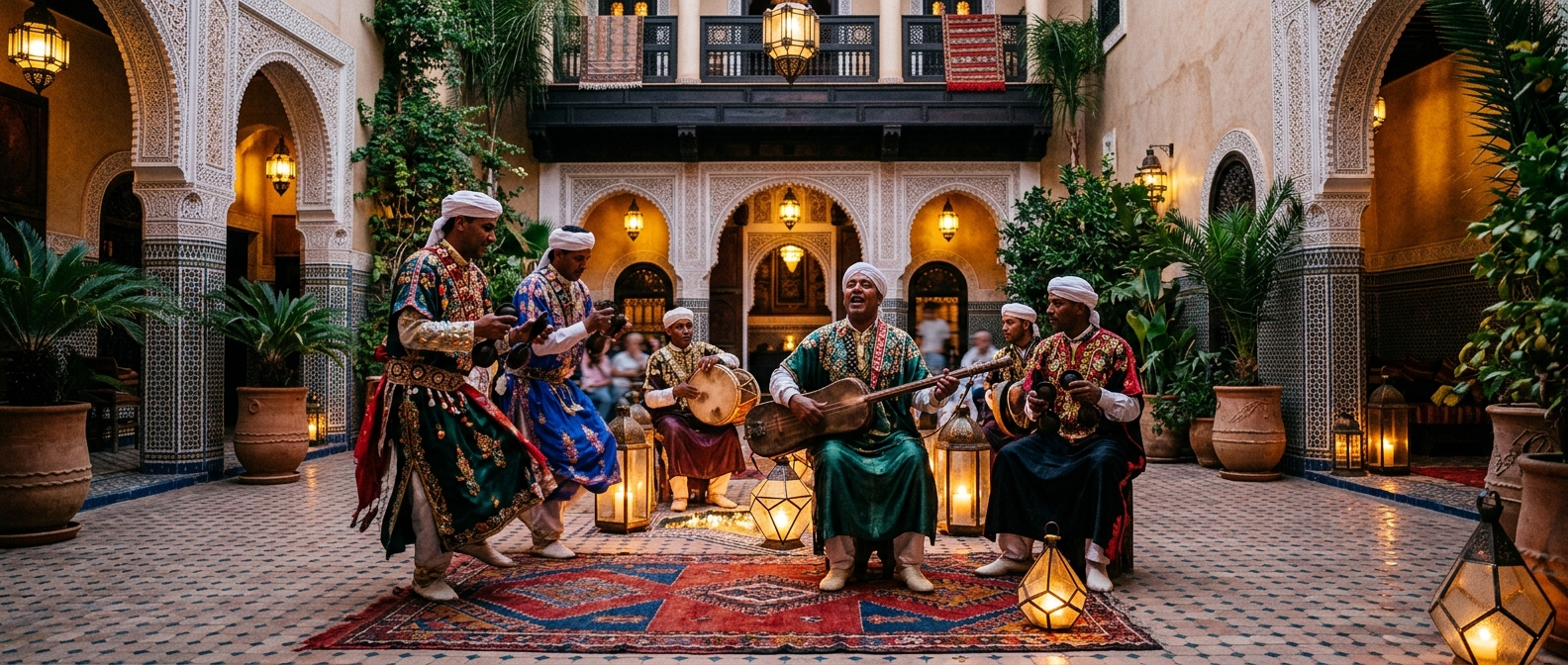
A Plural Heritage
Morocco's identity has been shaped by multiple peoples and faiths over many centuries. While Islam is the religion of the overwhelming majority and the official faith of the state, the country also carries deep Jewish roots and historic ties to Christianity and the wider Mediterranean world.
This plural heritage is reflected in the nation's culture, language, and cities. The coexistence of these influences has long been part of how Morocco understands itself, blending Arab, Berber, Andalusian, Jewish, and African strands into a single national fabric.
Centuries of Muslim-Jewish Coexistence
For more than two thousand years, Jews lived alongside Muslims in Morocco, forming one of the oldest Jewish communities in the world. While their legal and social status was distinct, Jews were integral to Moroccan commerce, crafts, and culture, and the monarchy historically extended them protection.
This long coexistence was not without tension, but it produced a remarkable record of shared life, intertwined traditions, and mutual exchange. The memory of this relationship continues to inform Morocco's self-image as a land of tolerance and cohabitation.
The Constitution and National Identity
Morocco's 2011 constitution offers a notable statement of plural identity. It describes the nation as forged from Arab-Islamic, Berber (Amazigh), and Saharan-Hassani components, enriched by African, Andalusian, and Hebraic influences as well as Mediterranean ties.
This explicit recognition of a Hebraic component is unusual in the region and signals an official embrace of the country's diverse heritage. While affirming Islam as the state religion, the constitution frames Moroccan identity as the product of many converging traditions.
The Monarchy and Moderate Islam
The Moroccan monarchy, with the king holding the title Commander of the Faithful, plays a central role in shaping religious life. The state actively promotes a vision of moderate, tolerant Islam, overseeing the training of religious leaders and discouraging extremism.
This approach combines respect for tradition with an emphasis on coexistence and social harmony. The king's religious authority gives the monarchy a stabilizing influence and allows it to position Morocco as a model of measured, inclusive religious governance.
Religious Life for Minorities Today
Today a small Jewish community remains, mainly in Casablanca, maintaining synagogues and religious life with state support. There is also a foreign Christian presence, including expatriates and sub-Saharan migrants, who worship in churches in major cities.
Public religious life is centered on Islam, and conversion away from Islam or proselytizing remains sensitive. Nonetheless, the practice of other faiths by their communities is generally accommodated, and historic synagogues, churches, and cemeteries are preserved as part of the national heritage.
Coexistence as a National Narrative
Morocco actively presents religious coexistence as a defining feature of its identity, both domestically and on the world stage. Restored synagogues, the museum of Moroccan Judaism, interfaith initiatives, and cultural festivals all reinforce this narrative.
While the reality is nuanced, with Islam firmly at the center of public life, the country's emphasis on tolerance and its preservation of minority heritage make it a distinctive example in its region. Coexistence is woven into how Morocco tells its own story.
| Component | Description |
|---|---|
| Arab-Islamic | Core religious and linguistic heritage |
| Amazigh (Berber) | Indigenous North African roots |
| Saharan-Hassani | Southern desert and Hassani traditions |
| Hebraic | Recognized Jewish heritage |
| African, Andalusian, Mediterranean | Broader regional and historical influences |
Components of Moroccan identity in the 2011 constitution
FAQ
Is Morocco religiously tolerant?
Morocco is a Muslim-majority country that emphasizes coexistence, preserves Jewish heritage, and recognizes a plural national identity, though Islam remains central to public life.
Does the constitution recognize Jewish heritage?
Yes. The 2011 constitution explicitly lists a Hebraic component among the strands that make up Moroccan national identity.
Can other religions be practiced in Morocco?
The small Jewish community and foreign Christian residents worship with general accommodation, though public religious life centers on Islam and proselytizing remains sensitive.
Loved this? Useful? React below — your feedback helps other readers.