Morocco's Religious Festivals
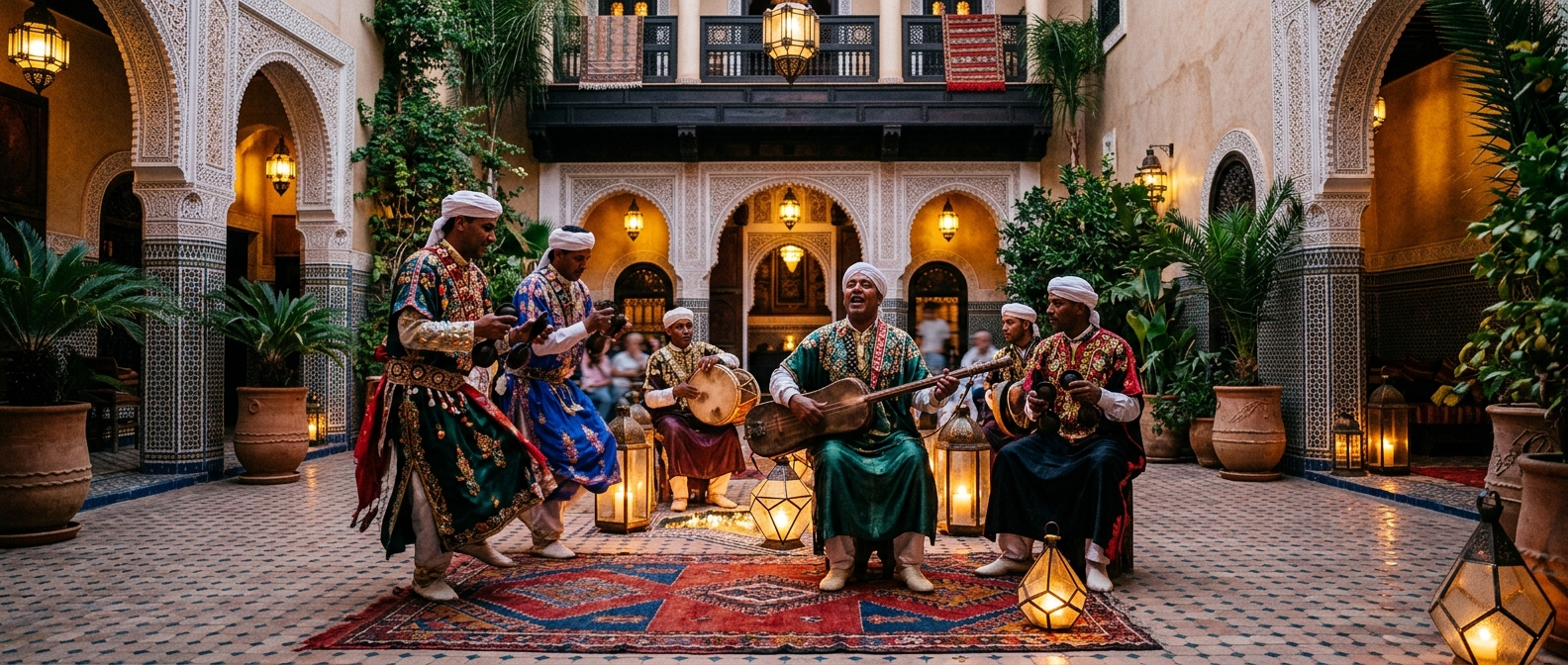
Festivals Rooted in the Islamic Calendar
Morocco's major religious festivals follow the lunar Islamic calendar, which shifts roughly eleven days earlier each year relative to the Western calendar. As a result, the dates of these celebrations move through the seasons over time.
These festivals mark the central moments of the Muslim year and are observed throughout the country with prayer, family gatherings, special foods, and acts of charity. They give rhythm to the year and bind communities together in shared devotion and joy.
Ramadan: The Month of Fasting
Ramadan is the holiest month of the Islamic year and the most transformative period in Moroccan daily life. From dawn until sunset, Muslims abstain from food, drink, and other physical needs, devoting themselves to prayer, reflection, and self-restraint.
Each evening the fast is broken with iftar, traditionally beginning with dates and the hearty soup called harira. The pace of life shifts, with quieter days and lively nights, special markets, and extended evening prayers at mosques. It is a time of heightened spirituality and togetherness.
Eid al-Fitr
The end of Ramadan is celebrated with Eid al-Fitr, the festival of breaking the fast. It begins with a special morning prayer, often followed by visits to family and friends, the giving of gifts, and the sharing of sweets and festive meals.
Eid al-Fitr is also a time for charity, with donations given so that everyone can partake in the celebration. People dress in their finest clothes, and the atmosphere is warm and joyful as communities mark the successful completion of a month of fasting.
Eid al-Adha
Eid al-Adha, the festival of sacrifice, commemorates the willingness of the prophet Ibrahim to obey God. It is one of the most important holidays of the year and is marked by the ritual sacrifice of a sheep, with the meat shared among family, neighbors, and those in need.
Known in Morocco simply as Eid el-Kebir, the great feast, it brings families together for large gatherings. The holiday emphasizes generosity, gratitude, and devotion, and the days surrounding it are filled with cooking, sharing, and celebration.
Mawlid and Ashura
Mawlid, the birthday of the Prophet Muhammad, is celebrated with recitations, religious songs, special sweets, and family gatherings. In some towns it is marked with particular fervor, including processions and devotional ceremonies.
Ashura, observed in the first month of the Islamic year, has its own Moroccan customs. It combines religious significance with folk traditions, including the giving of gifts to children, the preparation of special foods and dried fruits, and in some places bonfires and water games.
Moussems: Local Festivals of the Saints
Beyond the universal Islamic holidays, Morocco is rich in moussems, annual festivals honoring local saints. These events blend pilgrimage and prayer with markets, music, and celebration, and each region has its own cherished gatherings.
Famous moussems include those honoring Moulay Idriss and Moulay Abdullah, the latter known for its dramatic displays of horsemanship. These local festivals add a vivid, communal dimension to Morocco's religious calendar, rooted in the veneration of saints.
| Festival | Significance |
|---|---|
| Ramadan | Month-long dawn-to-sunset fasting and reflection |
| Eid al-Fitr | Celebration marking the end of Ramadan |
| Eid al-Adha | Festival of sacrifice honoring the prophet Ibrahim |
| Mawlid | Birthday of the Prophet Muhammad |
| Ashura | Observance with religious and folk customs |
| Moussems | Local festivals honoring revered saints |
Major religious festivals in Morocco
FAQ
What are the main religious festivals in Morocco?
The main festivals are Ramadan, Eid al-Fitr, Eid al-Adha, Mawlid (the Prophet's birthday), and Ashura, along with numerous local moussems honoring saints.
What happens during Ramadan in Morocco?
Muslims fast from dawn to sunset, breaking the fast each evening with iftar, traditionally dates and harira soup, while devoting the month to prayer and reflection.
What is Eid al-Adha?
Eid al-Adha, known in Morocco as Eid el-Kebir, is the festival of sacrifice commemorating the prophet Ibrahim, marked by sharing the meat of a sacrificed sheep with family and the needy.
Loved this? Useful? React below — your feedback helps other readers.