Moroccan Ramadan Meal Plan
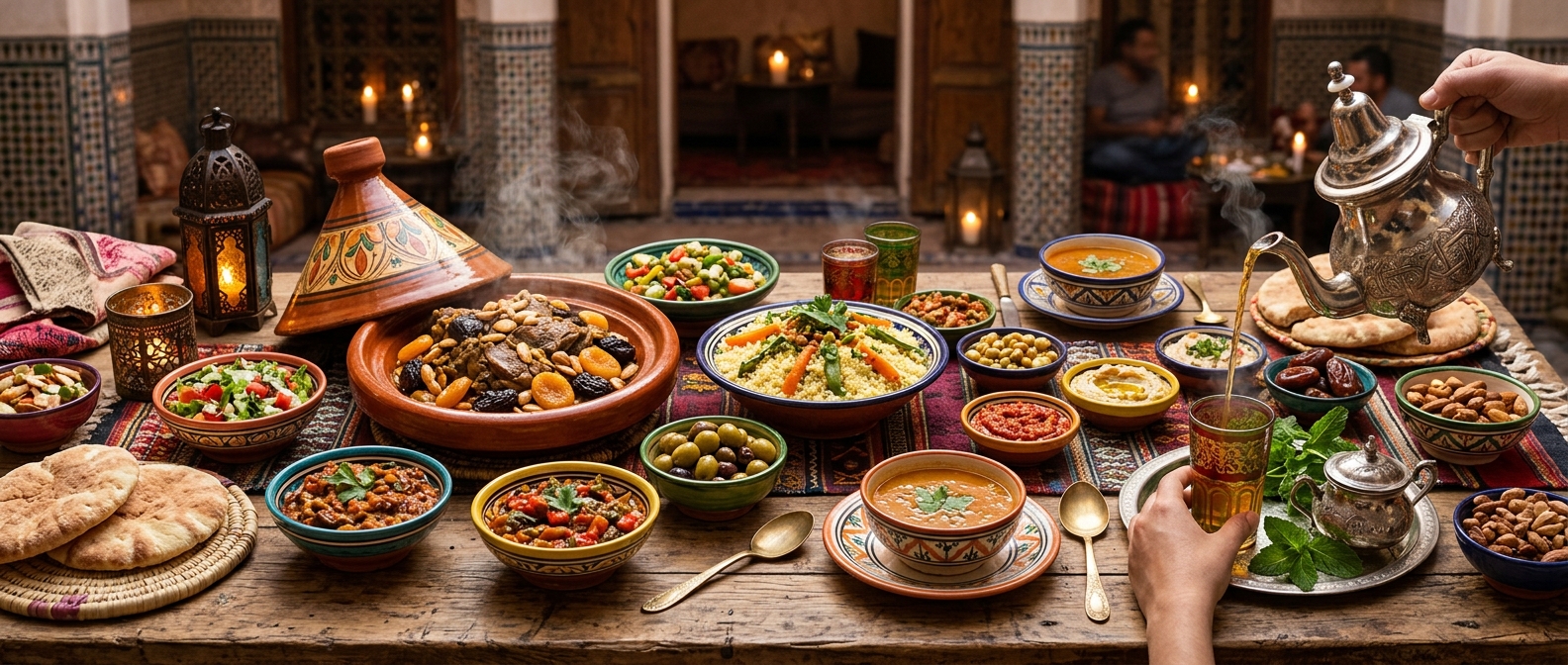
Ramadan and Fasting in Morocco
Ramadan is the holy month when observant Muslims fast from dawn until sunset, abstaining from food, drink, and smoking during daylight hours. In Morocco the rhythm of daily life shifts dramatically, with quieter days, shortened working hours, and lively evenings centred on the breaking of the fast.
Eating is concentrated into two main meals: iftar at sunset to break the fast, and suhoor before dawn to prepare for the day ahead. The month carries deep spiritual significance and is also a time of family gathering, charity, and shared traditional foods.
Breaking the Fast: The Iftar
Iftar begins at sunset, signalled by the call to prayer or a cannon in some cities. Following tradition, the fast is broken with dates and water or milk, a practice rooted in custom that gently reintroduces food and provides quick energy after a long day.
The centrepiece of a Moroccan iftar is harira, a hearty soup of tomatoes, lentils, chickpeas, herbs, and often meat, thickened and richly spiced. It is filling, nourishing, and deeply associated with Ramadan evenings across the country.
Traditional Iftar Foods
Alongside harira, the iftar table is laden with sweet and savoury treats. Chebakia, sesame-coated pastries folded into flower shapes and dipped in honey, are a Ramadan signature and pair perfectly with the soup. Sellou or sfouf, an energy-dense mix of toasted flour, almonds, and sesame, is also common.
Savoury pastries such as briouats (filled triangles), msemen, harcha, boiled eggs, dates stuffed with nuts, and fresh juices round out the spread. The combination provides hydration, sugars for quick energy, and protein to recover from the fast.
The Pre-Dawn Meal: Suhoor
Suhoor is the meal eaten before dawn to sustain the body through the day's fast. It tends to be lighter and focuses on slow-releasing energy and hydration, with foods that keep hunger and thirst at bay for as long as possible.
Typical suhoor items include bread, eggs, dairy such as yoghurt or fermented milk, dates, slow-digesting carbohydrates, and plenty of water. Some people eat leftover harira or a simple warm dish, prioritising foods that provide lasting fullness rather than heavy, salty meals.
A Sample Daily Plan
A typical Ramadan day might start with suhoor before dawn featuring eggs, bread, yoghurt, dates, and water, followed by the daytime fast. At sunset, iftar opens with dates and milk, then harira soup, chebakia, briouats, msemen, and juice or milk.
After the evening prayers, families often share a fuller dinner later in the night, which can include tagine, couscous, or grilled dishes, especially on weekends or for gatherings. Hydration between iftar and suhoor is important to compensate for the daytime fast.
Tips for Travellers During Ramadan
Non-Muslim travellers are not expected to fast, but should avoid eating, drinking, or smoking in public during daylight out of respect. Many restaurants close during the day and reopen for iftar, while tourist areas usually keep some options available.
Experiencing an iftar, whether at a restaurant, with a local family, or in a public celebration, is a memorable highlight of visiting Morocco during Ramadan. The festive evening atmosphere, special foods, and sense of community make the month a unique time to travel, with some patience for adjusted schedules.
| Meal | Timing | Typical foods |
|---|---|---|
| Iftar | At sunset | Dates, milk, harira, chebakia, briouats |
| Late dinner | After evening prayers | Tagine, couscous, grilled dishes |
| Suhoor | Before dawn | Bread, eggs, dairy, dates, water |
Moroccan Ramadan meals at a glance
FAQ
What do Moroccans break their fast with?
Traditionally with dates and milk or water, followed by harira soup and sweets like chebakia, which provide quick energy and hydration after the day's fast.
What is suhoor?
Suhoor is the lighter pre-dawn meal eaten to sustain the body through the day's fast, focusing on slow-releasing energy and hydration like bread, eggs, dairy, and water.
Can tourists eat during the day in Ramadan?
Tourists are not expected to fast but should avoid eating, drinking, or smoking in public during daylight out of respect; tourist areas usually keep some options open.
Loved this? Useful? React below — your feedback helps other readers.