Foods Moroccans Eat During Ramadan
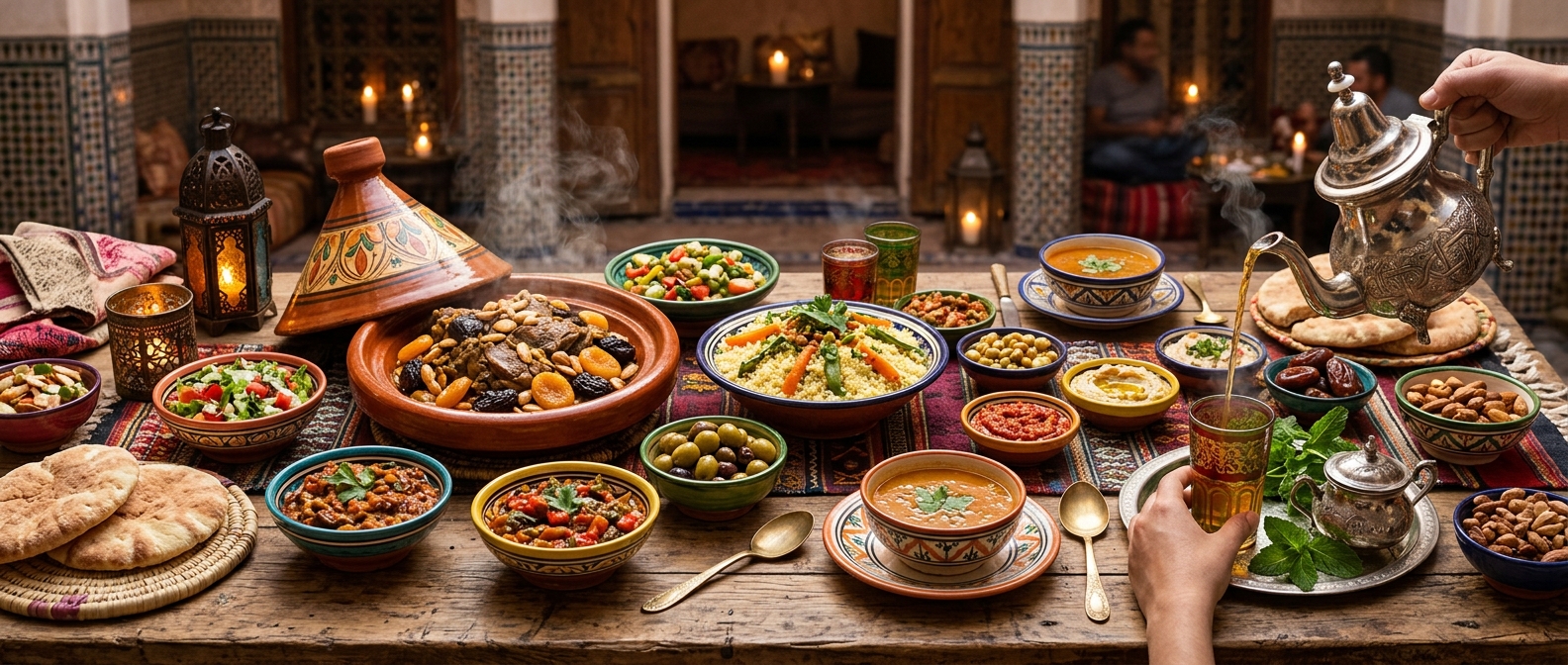
Ramadan in Morocco
Ramadan is the holy month when Muslims fast from dawn to sunset, and in Morocco it transforms daily life and food traditions. Families gather each evening to break the fast together, markets fill with seasonal treats, and certain dishes appear almost exclusively during this month.
Beyond the food, Ramadan emphasises prayer, reflection, generosity and charity (such as giving to those in need). Sharing meals with family, neighbours and the less fortunate is a cherished part of the season.
Breaking the Fast (Iftar)
The fast is traditionally broken at sunset (ftour or iftar) with dates (tmar) and water or milk, following the practice of the Prophet, before moving to the main spread. The centrepiece is harira, a rich soup of tomatoes, lentils, chickpeas, herbs and sometimes meat, thickened and warmly spiced.
Alongside harira, tables hold hard-boiled eggs, msemen or harcha (griddle breads), and a sweet to balance the savoury. The first iftar bite of a date after a long fast is a moment many Moroccans treasure.
Iconic Ramadan Sweets and Savouries
Chebakia is the signature Ramadan sweet: flower-shaped fried dough soaked in honey and sprinkled with sesame, often eaten with harira. Sellou (also called sfouf), an energy-dense blend of toasted flour, almonds, sesame and honey, is another beloved treat that sustains fasters.
Savoury briouats, crispy filled triangles or cigars of warqa pastry stuffed with meat, cheese or almonds, are popular too. Sweet mint tea and freshly squeezed juices round out the iftar, making the meal as much a celebration as a refuelling.
The Pre-Dawn Meal (Suhoor)
Suhoor (s'hour) is the meal eaten before dawn to sustain the body through the fasting day. It tends to be lighter and gentler than iftar, favouring foods that release energy slowly and keep one hydrated.
Typical suhoor foods include eggs, bread with cheese or honey, dairy like yoghurt and milk, dates, and sometimes leftover harira. Many people deliberately avoid very salty or sugary dishes at suhoor so they feel less thirsty during the day.
Family, Charity and the Rhythm of the Month
Ramadan reshapes the daily rhythm: cooking ramps up in the afternoon, the streets quieten near sunset, and life becomes lively again after iftar with visits, sweets and tea late into the night. The shared effort of preparing and breaking the fast strengthens family bonds.
Generosity is woven through the month, with many families sharing food with neighbours and the needy. The month culminates in Eid al-Fitr, the festive celebration that marks the end of fasting.
| Food | Type | When eaten |
|---|---|---|
| Dates (tmar) | Fruit | First bite at iftar |
| Harira | Soup | Iftar centrepiece |
| Chebakia | Honey sweet | With harira at iftar |
| Briouats | Savoury pastry | Iftar |
| Sellou | Energy sweet | Throughout the month |
| Eggs, bread, dairy | Light foods | Suhoor |
Common Ramadan foods in Morocco
FAQ
What do Moroccans eat to break the fast?
They traditionally break the fast (iftar) with dates and water or milk, then eat harira soup, often accompanied by chebakia, briouats, eggs and griddle breads.
What is chebakia?
Chebakia is a flower-shaped fried dough soaked in honey and coated with sesame seeds. It is a signature Ramadan sweet, commonly eaten alongside harira soup.
What is eaten at suhoor in Morocco?
Suhoor, the pre-dawn meal, is lighter and often includes eggs, bread with cheese or honey, dairy such as yoghurt, dates, and sometimes leftover harira.
Loved this? Useful? React below — your feedback helps other readers.