Moroccan Pastilla (Bastilla) Recipe
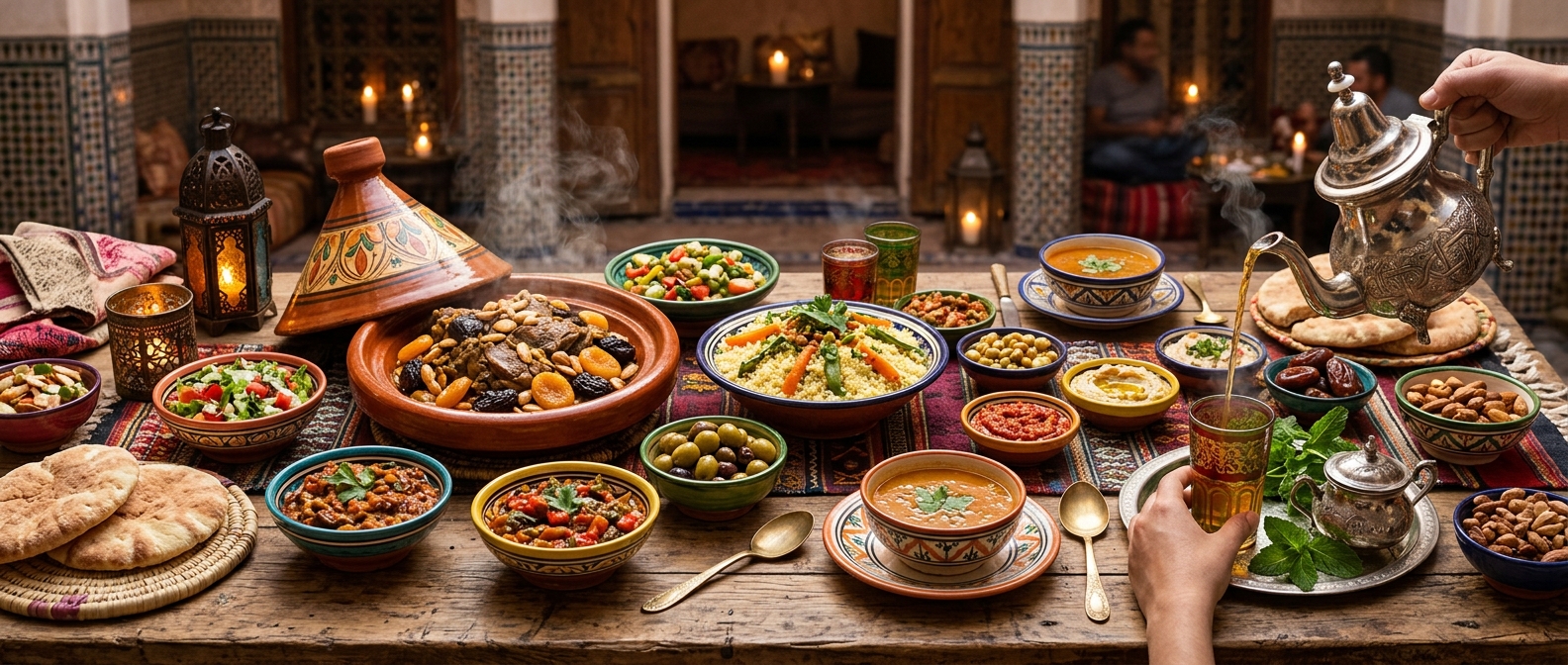
A Dish Fit for Celebrations
Pastilla is the crown jewel of Moroccan festive cuisine, a dish whose contrast of crisp pastry, tender meat and a snow of sugar and cinnamon astonishes first-time eaters. It traces back to Andalusian roots, brought to Morocco when Muslims and Jews left medieval Spain.
Traditionally made with pigeon (squab), it is now most often prepared with chicken, while seafood pastilla has become popular along the coast. No Fez wedding or major celebration is complete without one at the heart of the table.
Understanding Warka Pastry
Warka is a paper-thin Moroccan pastry similar to phyllo but made by dabbing a wet dough onto a hot griddle in overlapping circles. Making warka by hand is a skilled art, so most home cooks today substitute store-bought phyllo or spring-roll wrappers.
The pastry must be brushed with melted butter between layers so it bakes into shattering, golden sheets. Several layers go on the bottom, the filling is mounded in the center, and more layers fold over the top to seal the pie.
The Three Filling Layers
A classic pastilla has three distinct fillings. The first is poultry slow-cooked with onions, ginger, saffron and cinnamon until it falls apart and is then shredded.
The second is a creamy layer of eggs scrambled into the reduced cooking sauce, and the third is toasted almonds ground with sugar, cinnamon and orange-flower water. Layering these separately is what gives each forkful its complex sweet-savory balance.
Assembling and Baking
Butter the pan and fan out overlapping pastry sheets so they overhang the edges. Spread the almond mixture, then the egg layer, then the shredded poultry, and fold the overhanging sheets back over the top, adding a final couple of buttered layers.
Bake until deeply golden and crisp, around 35 to 40 minutes, then invert if needed for an even color. The finishing touch is a generous dusting of powdered sugar with cinnamon piped or sprinkled in a lattice pattern across the top.
Sweet, Savory and Why It Works
The hallmark of pastilla is the deliberate collision of savory and sweet, an idea that can surprise Western palates but is central to Moroccan festive cooking. The sugar and cinnamon are not a garnish but an integral seasoning that lifts the spiced meat beneath.
Orange-flower water in the almond layer adds a floral perfume that ties the elements together. When done well, no single flavor dominates; instead each bite shifts from sweet to savory to nutty.
Modern Variations
Seafood pastilla, popular in Casablanca and coastal cities, swaps poultry for shrimp, calamari and white fish in a vermicelli and tomato sauce, and skips the sugar topping. It is a savory cousin rather than a sweet-savory pie.
Smaller individual pastillas are increasingly served as elegant starters at restaurants and dinner parties. The technique stays the same, only the size and presentation change to suit a multi-course meal.
| Ingredient | Quantity | Layer |
|---|---|---|
| Chicken thighs | 1 kg | Poultry layer |
| Onions | 3 large | Poultry layer |
| Eggs | 6 | Egg layer |
| Blanched almonds | 250 g | Almond layer |
| Powdered sugar | 3 tbsp + topping | Almond layer / finish |
| Ground cinnamon | 2 tsp + topping | Almond layer / finish |
| Saffron and ginger | 1 pinch / 1 tsp | Poultry layer |
| Orange-flower water | 1 tbsp | Almond layer |
| Warka or phyllo sheets | 10 to 12 | Pastry |
| Melted butter | 150 g | Between pastry layers |
Pastilla ingredients (serves 8)
FAQ
Why is pastilla both sweet and savory?
The sweet-savory contrast is deliberate and central to Moroccan festive cuisine. The sugar and cinnamon season the spiced meat rather than just decorate it, creating pastilla's signature flavor balance.
Can I use phyllo instead of warka pastry?
Yes. Authentic warka is hard to make at home, so store-bought phyllo or spring-roll wrappers brushed with butter are common and effective substitutes.
Is pastilla traditionally made with pigeon?
Classic pastilla used pigeon (squab), but chicken is now the most common choice. Coastal Morocco also popularized a savory seafood pastilla.
When is pastilla served?
It is a celebration dish for weddings and feasts, traditionally offered early in the meal, before or around the main savory courses.
Loved this? Useful? React below — your feedback helps other readers.