Moroccan Pantry Essentials
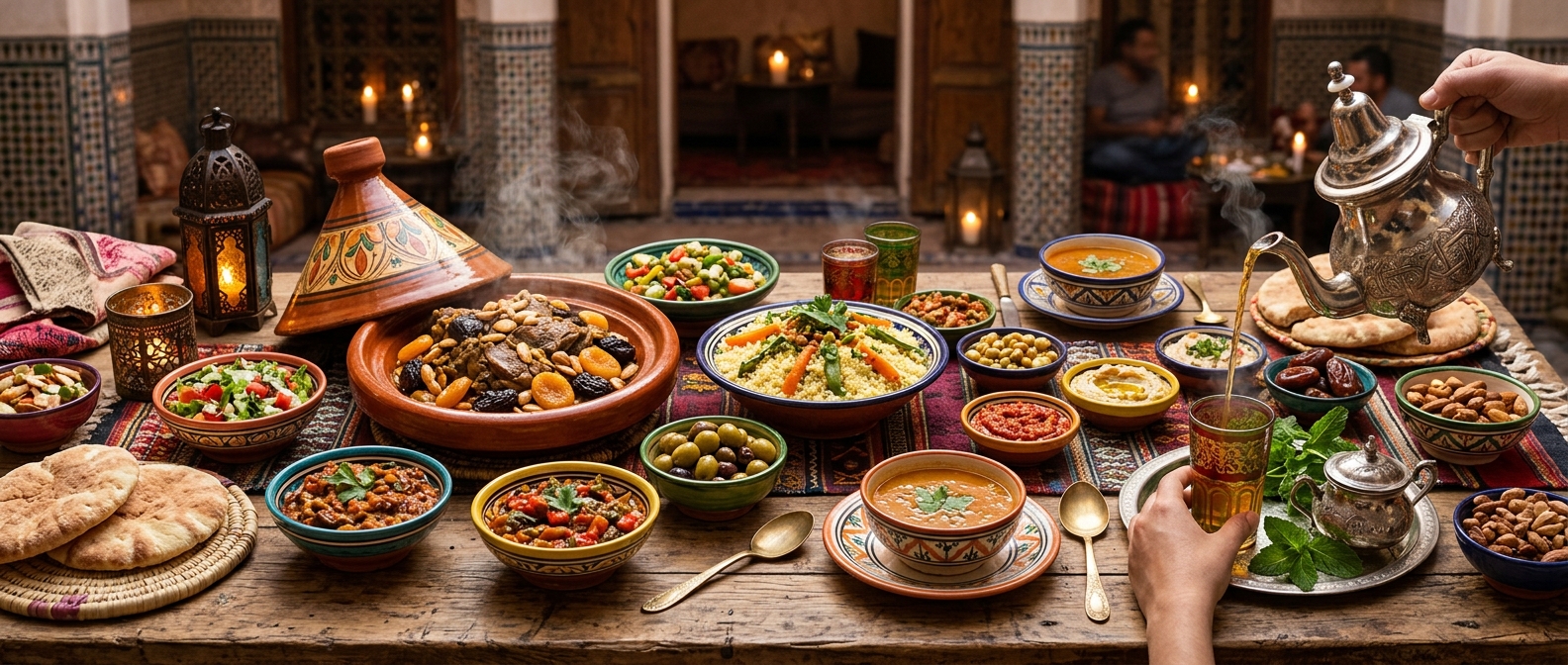
Building a Moroccan Pantry
Moroccan cooking relies on a relatively small set of staple ingredients used in countless combinations. Once your pantry is stocked, you can produce tagines, couscous, soups, and salads with ease. The cuisine balances warm, earthy spices with bright, salty, and sweet accents.
Many ingredients keep well, so an initial investment in spices and preserved items pays off over many meals. Building the pantry gradually around the dishes you want to cook is a practical approach for home cooks new to Moroccan food.
Essential Spices
The backbone spices are cumin, ginger, turmeric, sweet paprika, black pepper, and cinnamon. Cumin and paprika season meats and salads, ginger and turmeric flavour tagines, and cinnamon bridges savoury and sweet dishes. Coriander, caraway, and chili or cayenne round out the rack.
Saffron is the prized luxury spice, used sparingly in special tagines and rice for colour and aroma; affordable substitutes exist but lack its depth. Buying whole spices and grinding them fresh, and storing them airtight away from light, keeps flavours vivid.
Ras el Hanout and Spice Blends
Ras el hanout, meaning head of the shop, is the signature Moroccan spice blend, traditionally combining many spices that can include cinnamon, cumin, coriander, cardamom, clove, nutmeg, ginger, turmeric, pepper, and dried flowers. No two blends are identical.
It adds instant complexity to tagines, couscous, and grilled meats. While you can buy ready-made blends, making your own lets you tailor it to taste. Other useful mixes include a simple charmoula marinade base of herbs, garlic, cumin, paprika, and lemon for fish and meat.
Preserved Lemons, Olives, and Harissa
Preserved lemons, salted and fermented until soft, are essential for their intense, tangy, almost floral flavour, especially in chicken tagine with olives. Their rind is typically used. They are easy to make at home with lemons, salt, and time, or available jarred.
Olives, particularly green and purple Moroccan varieties, feature in tagines, salads, and as snacks. Harissa, a spicy chili paste, adds heat to couscous, stews, and marinades. These three ingredients deliver much of the salty, tangy, spicy character of Moroccan cooking.
Oils, Grains, and Legumes
Olive oil is used generously, while smen (fermented preserved butter) and regular butter enrich many traditional dishes; argan oil, with its nutty taste, is a specialty for drizzling and amlou. Stocking good olive oil and, optionally, argan oil covers most needs.
Couscous is the key grain, alongside rice and bread flour for baking khobz. Chickpeas and lentils are staples for soups like harira and for stews, and they store well dried or canned. These pantry basics underpin a huge range of everyday Moroccan meals.
Sweet and Aromatic Extras
Dates, dried apricots, raisins, and prunes add sweetness to tagines such as lamb with prunes and to snacks. Almonds, walnuts, and sesame seeds appear in pastries, salads, and garnishes, and honey is used in desserts and savoury-sweet dishes.
Orange blossom water and rose water lend the floral fragrance characteristic of Moroccan sweets and some drinks. With these aromatics, plus fresh ingredients like onions, garlic, tomatoes, herbs, and lemons bought as needed, your Moroccan pantry is complete.
| Category | Key items | Use |
|---|---|---|
| Spices | Cumin, ginger, turmeric, paprika, cinnamon, saffron | Tagines, couscous, salads |
| Blends | Ras el hanout, charmoula | All-purpose flavour |
| Preserved | Preserved lemon, olives, harissa | Tangy, salty, spicy notes |
| Staples | Couscous, chickpeas, lentils | Base of many meals |
| Aromatics | Dates, almonds, orange blossom water | Sweetness and fragrance |
Moroccan pantry essentials by category
FAQ
What is the single most important Moroccan spice blend?
Ras el hanout, a complex blend that can include a dozen or more spices and instantly adds depth to tagines, couscous, and grilled meats.
Can I make preserved lemons at home?
Yes, they are easily made with lemons, salt, and a few weeks of fermentation, or you can buy them jarred from specialty and Middle Eastern stores.
Do I need saffron to cook Moroccan food?
It is prized for special dishes but not essential for everyday cooking; many tagines rely mainly on cumin, ginger, turmeric, and paprika.
Loved this? Useful? React below — your feedback helps other readers.