Moroccan Olives & Preserved Foods
Why Preserving Matters
Long before refrigeration, Moroccan households preserved seasonal abundance through salting, fermenting, and drying. These methods are still central today, not for necessity alone but because the resulting flavours define the cuisine.
From the olive groves of Meknes to the lemon trees of every courtyard, preservation turns simple harvests into intense, concentrated ingredients that animate everyday cooking.
The Olives (Zaytoun)
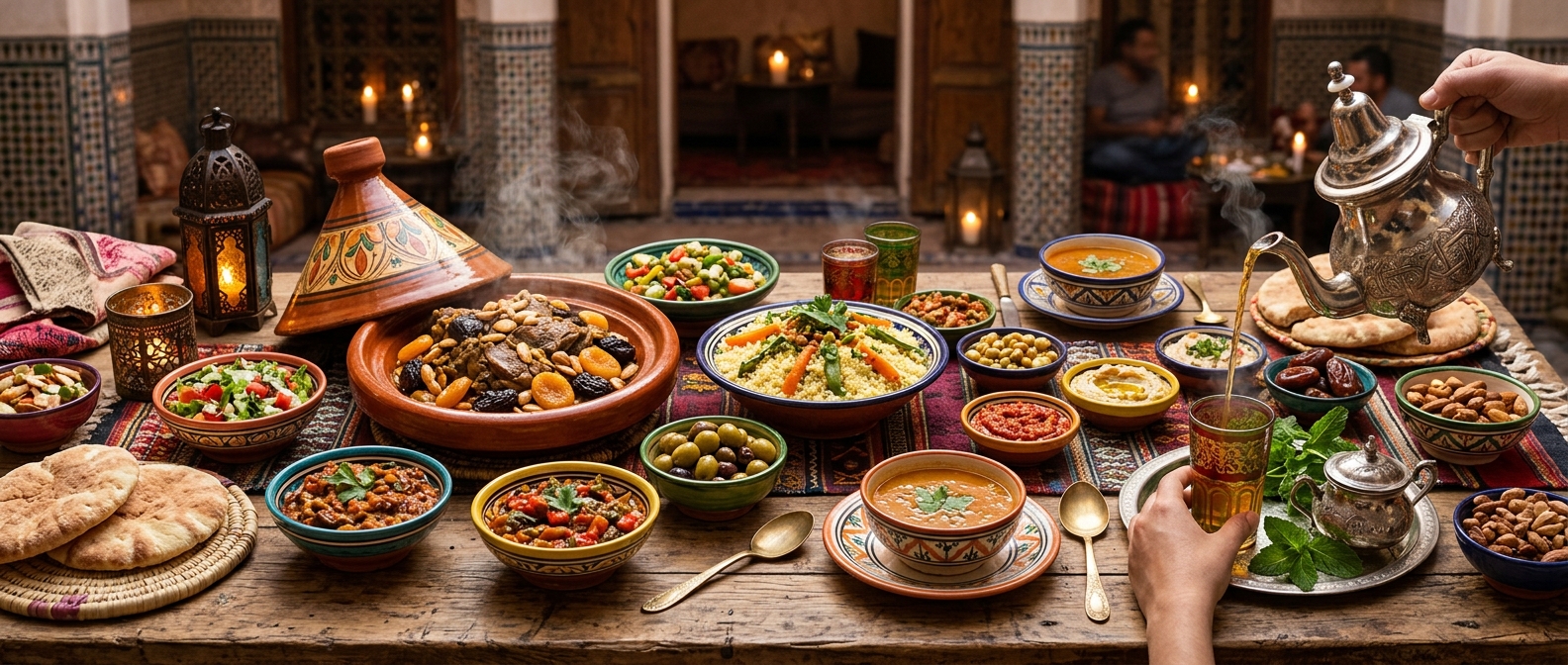
Morocco is one of the world's great olive countries, and souk stalls overflow with mounds of green, violet (pink-purple), and black olives, often marinated in garlic, chili, herbs, preserved lemon, and harissa.
Green olives are firm and tart, violet ones are mellower, and black olives are soft and rich. The cracked, herb-marinated green olives are especially common in cooking, while oil-cured black olives are a favourite snack with bread.
Preserved Lemons (Hamd Mraqad)
Preserved lemons are whole lemons packed in salt and their own juice for weeks until the rinds soften and develop a deep, fragrant, salty-sour flavour. The peel, not the pulp, is the prized part.
They are indispensable in chicken tagines with olives, in fish dishes, and in salads. A jar is easy to make at home with just lemons and salt, improving over a month of curing.
Smen and Aged Butter
Smen is salted butter aged for weeks, months, or even years until it develops a pungent, cheese-like funk. A spoonful enriches couscous, tanjia, and harira, lending a savoury depth nothing else provides.
Its intensity can surprise newcomers, but used sparingly it is transformative. In some families a pot of smen is buried and aged to mark a child's birth, opened years later at the wedding.
Khlea and Dried Meat
Khlea (or khlii) is sun-dried, spiced beef or lamb preserved in fat. Strips of meat are seasoned with garlic, cumin, coriander, and salt, dried, then cooked and stored submerged in rendered fat and oil.
It keeps for months and is fried with eggs for a hearty breakfast or added to tagines, lentils, and rice for instant savoury richness, especially valued in winter and after Eid al-Adha.
Bringing Them Together
A Moroccan pantry stocked with olives, preserved lemon, smen, and khlea can build deep flavour fast. A handful of olives and a sliver of preserved lemon finish a tagine; a spoon of smen lifts a pot of couscous.
These preserves are the seasoning logic of the cuisine: salty, tangy, fermented, and rich notes layered over fresh produce and slow cooking.
| Food | Darija | Made from | Used in |
|---|---|---|---|
| Olives | Zaytoun | Cured olives | Tagines, salads, snacks |
| Preserved lemon | Hamd mraqad | Salted lemons | Chicken & fish tagines |
| Aged butter | Smen | Fermented butter | Couscous, tanjia, harira |
| Dried meat | Khlea | Spiced dried beef | Eggs, tagines, lentils |
Key Moroccan preserved foods
FAQ
What part of a preserved lemon do you use?
Mostly the salty, softened rind, which carries the deep flavour. The pulp is often rinsed away or discarded.
What does smen taste like?
Smen is aged, salted butter with a pungent, cheese-like, fermented flavour. Used sparingly, it adds savoury depth to couscous and stews.
What is khlea used for?
Khlea is preserved spiced dried meat, fried with eggs for breakfast or stirred into tagines, lentils, and rice for rich, salty flavour.
Loved this? Useful? React below — your feedback helps other readers.