Moroccan Musicians & Artists to Know in 2026
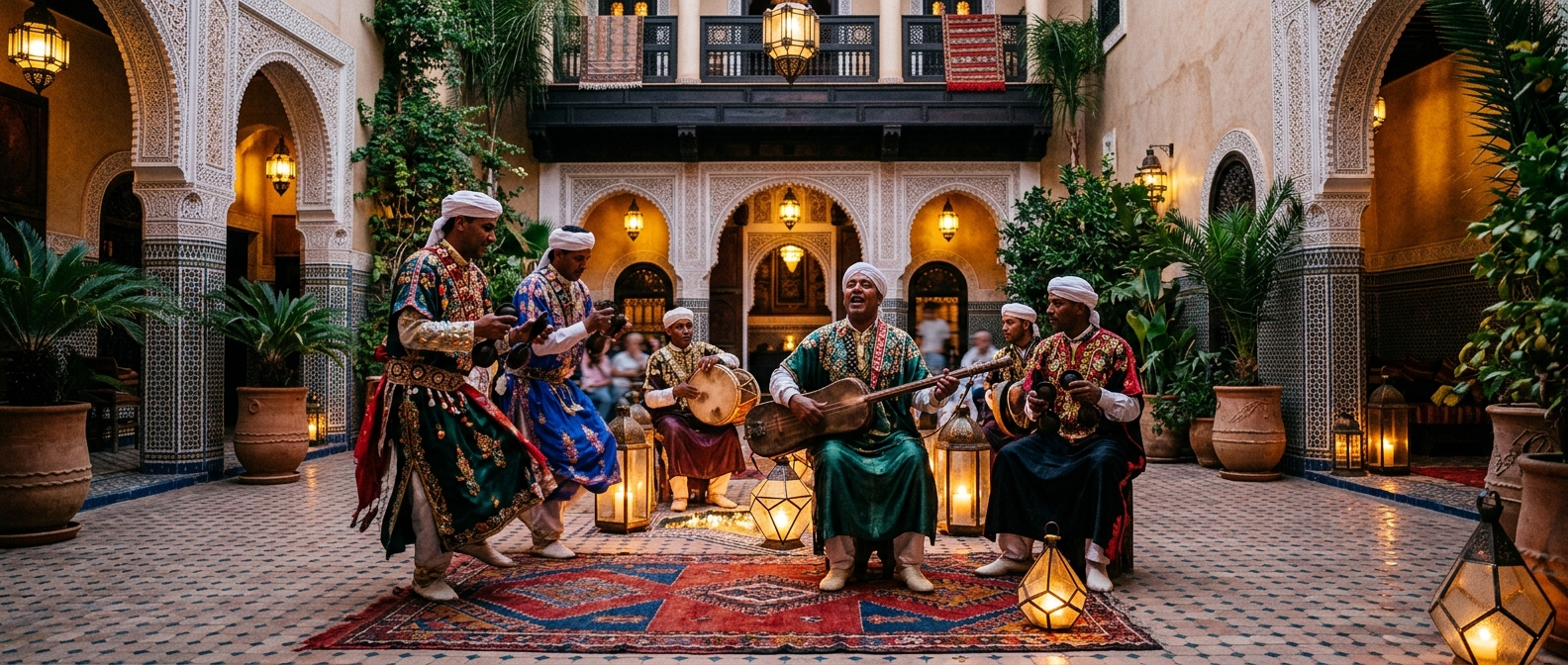
A Country of Many Sounds
Morocco's musical landscape is extraordinarily rich, shaped by Arab, Amazigh (Berber), African, Andalusian and Mediterranean currents. From the trance of Gnawa to the poetry of Andalusian classical music and the punch of modern rap, the range is vast.
In 2026 the scene is defined by a confident younger generation blending tradition with global pop, hip-hop and electronic music. Streaming and social media have given Moroccan artists unprecedented reach across the Arab world and the diaspora.
Guardians of Tradition
Legendary groups such as Nass El Ghiwane, often called the Rolling Stones of Africa, remain touchstones for their socially conscious lyrics and fusion of folk traditions. Their influence echoes through generations of musicians.
Gnawa maalems continue the spiritual guembri-driven tradition, especially around Essaouira, while Andalusian orchestras preserve a refined classical heritage. Chaabi, the popular folk-pop heard at every wedding, keeps traditional rhythms alive on the dance floor.
The Rap and Trap Boom
Moroccan hip-hop has exploded into the mainstream, with artists racking up tens of millions of streams and views. Stars like ElGrandeToto and Stormy have become regional heavyweights, rapping in Darija and mixing trap, rai and global sounds.
This urban wave gives voice to Moroccan youth, addressing everyday life, ambition and frustration with sharp wordplay. Its commercial success has reshaped what mainstream Moroccan music sounds like.
Rai, Pop and Fusion
Rai, the rebellious style shared with neighboring Algeria, retains a strong following, while pop singers blend Arabic melodies with modern production. Fusion acts splice Gnawa, jazz, reggae and electronica, often debuting at festivals like Gnaoua and Mawazine.
Amazigh artists keep regional languages and rhythms thriving, from the Rif to the Atlas and the south. This diversity means the Moroccan charts juxtapose ancient modes with cutting-edge beats.
Women in Moroccan Music
Female artists are increasingly visible across genres, from traditional and Amazigh singers to pop and even the male-dominated rap scene. Their growing presence reflects broader conversations about women's roles in Moroccan public life.
Veteran divas and rising young singers alike command large followings, and several represent Morocco at international events. Their work often blends advocacy with artistry.
Where to Hear Them Live
The best way to experience Moroccan music is at the country's festivals, including Mawazine in Rabat, Gnaoua in Essaouira, the Fez Festival of World Sacred Music and Timitar in Agadir. These events showcase both legends and newcomers.
Beyond festivals, weddings, cafes and live music venues in Casablanca, Marrakech and Rabat keep the scene buzzing year-round. Streaming playlists are an easy entry point for discovering new names before a trip.
| Style | Character | Notable names |
|---|---|---|
| Gnawa | Spiritual trance, guembri | Maalems of Essaouira |
| Chaabi | Popular folk-pop | Wedding favorites |
| Folk fusion | Socially conscious | Nass El Ghiwane |
| Rap / trap | Urban, Darija lyrics | ElGrandeToto, Stormy |
| Rai | Rebellious, Maghrebi | Cross-border stars |
| Amazigh | Regional languages | Rif, Atlas, Souss artists |
Moroccan music styles and key names
FAQ
Who are the biggest Moroccan rappers?
Artists like ElGrandeToto and Stormy are among the most popular, drawing tens of millions of streams by rapping in Darija and blending trap, rai and global sounds.
What is traditional Moroccan music?
It includes Gnawa spiritual music, chaabi folk-pop, Andalusian classical orchestras and Amazigh regional styles, each with distinct rhythms, instruments and languages.
Where can I see Moroccan musicians live?
Major festivals like Mawazine, Gnaoua, the Fez Festival of World Sacred Music and Timitar showcase top artists, while city venues and weddings keep the scene alive year-round.
Who is considered the most influential Moroccan group?
Nass El Ghiwane, often dubbed the Rolling Stones of Africa, is widely regarded as the most influential, shaping generations with socially conscious lyrics and folk fusion.
Loved this? Useful? React below — your feedback helps other readers.