Moroccan Musical Instruments
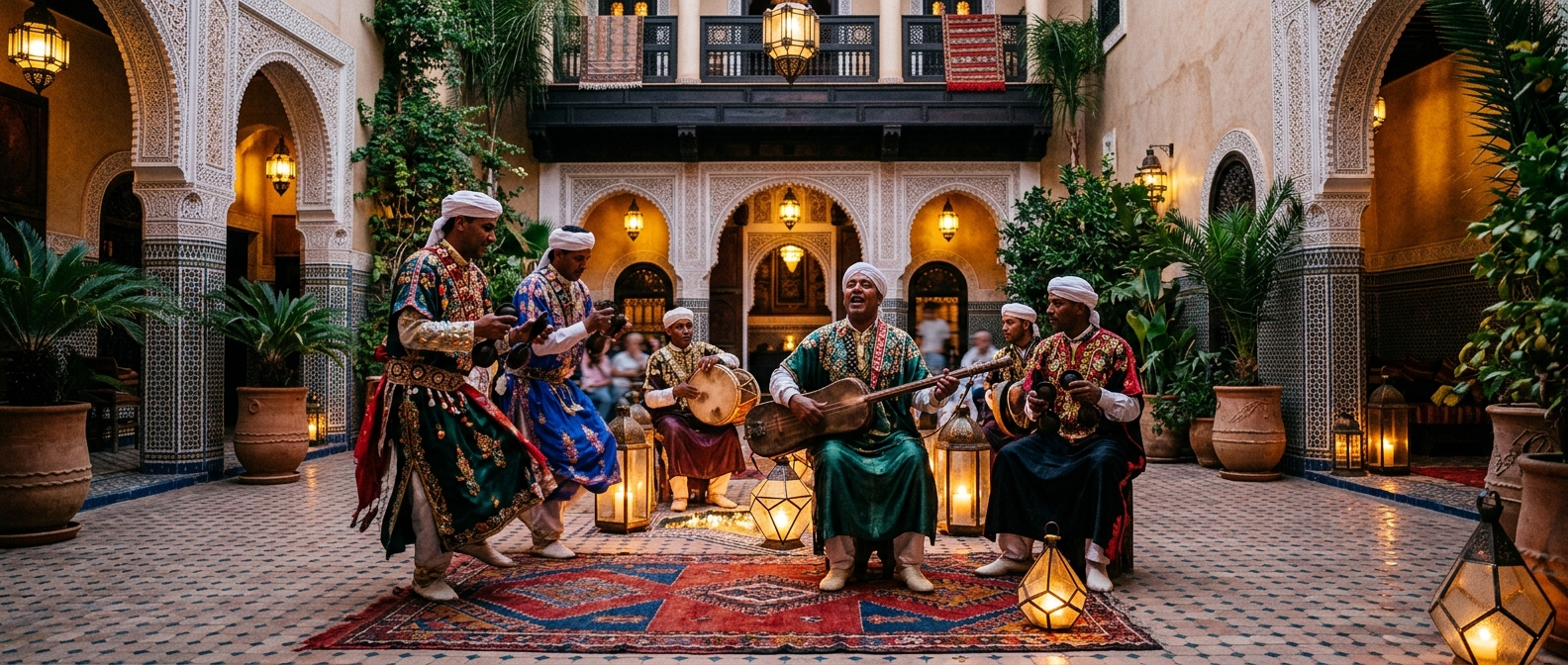
Morocco's Musical Heritage
Moroccan music blends Arab, Berber (Amazigh), Andalusian and sub-Saharan African influences. Different regions and communities maintain their own instruments and styles, from the trance music of the Gnawa to refined Andalusian orchestras.
Instruments are central to celebrations, religious ceremonies and festivals such as the Gnawa World Music Festival in Essaouira, where these traditions are showcased.
The Guembri
The guembri (also called sintir or hajhouj) is a three-stringed bass lute with a camel-skin soundboard, central to Gnawa music. Its deep, percussive sound drives hypnotic, trance-inducing rhythms.
Played by the lead Gnawa musician (maâlem), it doubles as both a bass and a percussion instrument, with players slapping the body for rhythm.
String Instruments: Oud and Rebab
The oud is a pear-shaped, fretless string instrument widely used across the Arab world and in Moroccan Andalusian music for its warm, melodic tone.
The rebab is a bowed string instrument with a haunting sound, also featured in Andalusian classical ensembles. Both require skill to play and are crafted by specialist luthiers.
Percussion Instruments
The bendir is a large frame drum with a snare made of gut strings, producing a buzzing resonance used in Berber and Sufi music. The darbuka (or tarija) is a goblet-shaped hand drum with a sharp, bright tone.
Qraqeb are large metal castanets clashed together to create the driving metallic rhythm of Gnawa music, and the tbel is a large double-headed drum used in processions.
Buying an Instrument
Souks and dedicated music shops in Marrakech, Essaouira and Fez sell instruments ranging from tourist souvenirs to playable, well-made pieces. Decorative versions may look attractive but sound poor.
If you intend to play, test the sound, check the build quality, and buy from a shop that specialises in instruments rather than a general souvenir stall.
Care and Travel Tips
Skin-headed drums and the guembri are sensitive to humidity and temperature changes, which can affect tuning and tone. Protect them with a case and avoid extreme conditions.
Check airline rules for carrying instruments, and ask the seller about packing fragile soundboards and strings for the journey home.
| Instrument | Type | Tradition |
|---|---|---|
| Guembri | Bass lute | Gnawa |
| Oud | String | Andalusian |
| Bendir | Frame drum | Berber, Sufi |
| Darbuka | Goblet drum | Popular, folk |
| Qraqeb | Metal castanets | Gnawa |
Common Moroccan instruments
FAQ
What instrument is central to Gnawa music?
The guembri, a three-stringed bass lute with a camel-skin soundboard, anchors Gnawa music along with the metallic qraqeb castanets.
Can I buy a playable instrument or just souvenirs?
Both exist; dedicated music shops in cities like Marrakech and Essaouira sell genuinely playable instruments, while many stalls sell decorative versions.
How should I transport a drum home?
Use a protective case, shield it from humidity and temperature extremes, and confirm your airline's rules for carrying instruments.
Loved this? Useful? React below — your feedback helps other readers.