Moroccan Music Genres: Gnawa, Chaabi & Rap
A Crossroads of Sounds
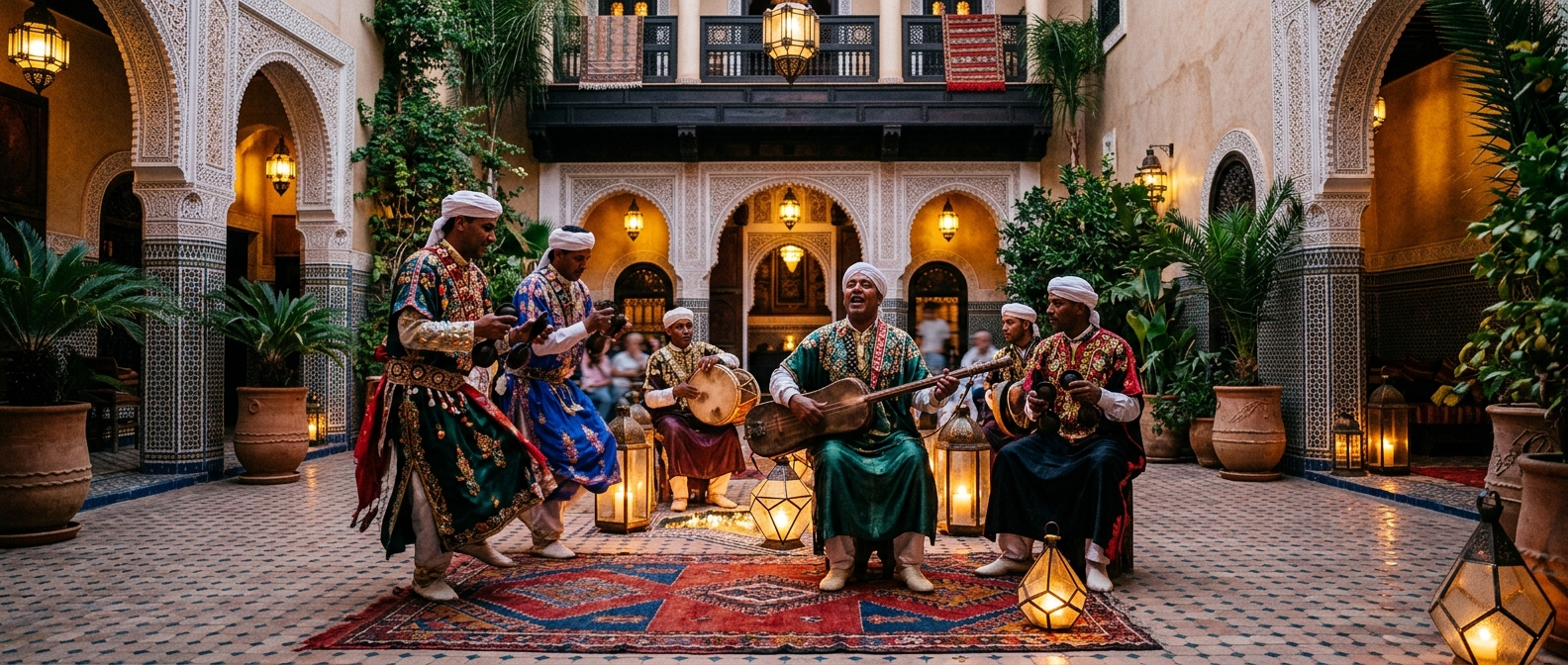
Morocco sits where Africa, the Arab world and Europe meet, and its music reflects that crossroads. Sub-Saharan rhythms, Arab melodies, Amazigh traditions and Andalusian heritage all blend into a soundscape that is unusually rich for one country.
This diversity means a single wedding might feature Chaabi for dancing, Gnawa for trance-like depth and a young DJ spinning rap. Understanding the main genres unlocks a deeper appreciation of Moroccan culture as a whole.
Gnawa: Spiritual Trance
Gnawa music traces its roots to sub-Saharan Africa, brought north centuries ago, and it carries deep spiritual significance. Built around the bass-heavy guembri lute, iron qraqeb castanets and call-and-response chanting, it is designed to induce trance in healing ceremonies called lila.
Today Gnawa has crossed into the global mainstream, most visibly through the famous Gnaoua World Music Festival in Essaouira, where Gnawa masters jam with jazz, blues and world musicians. It is Morocco's most internationally celebrated traditional sound.
Chaabi: The People's Music
Chaabi, meaning of the people, is Morocco's popular folk-pop music and the soundtrack of weddings, celebrations and street life. It is upbeat, danceable and endlessly adaptable, mixing traditional instruments with modern keyboards and drum machines.
Chaabi lyrics often comment on love, society and daily life, sometimes with humour or social bite. Its irresistible rhythms make it the genre most likely to get a Moroccan crowd on its feet.
Amazigh and Andalusi Heritage
Amazigh (Berber) music preserves the sounds of Morocco's indigenous people, varying by region from the Rif mountains to the Atlas and the south. It uses distinctive rhythms, the ahidous and ahwach communal dances, and lyrics in Amazigh languages.
Andalusi classical music, descended from medieval Muslim Spain, is Morocco's refined courtly tradition. Performed by orchestras with strings and ouds, its elaborate suites called nubas represent the country's most sophisticated musical heritage.
Rap, Trap and the New Wave
The biggest force in Moroccan music today is its rap and trap scene. Young artists rapping in Darija have built massive followings, racking up tens of millions of streams and views, and they speak directly to the realities of Moroccan youth.
This new wave has gone international, with Moroccan rappers collaborating across borders and racking up global numbers. Fuelled by short-form video and streaming, rap has become the dominant voice of a connected, ambitious generation.
Where to Hear Moroccan Music
Festivals are the best entry point. The Gnaoua World Music Festival in Essaouira, the Fez Festival of World Sacred Music and Mawazine in Rabat showcase the full spectrum from spiritual to global pop and rap.
Everyday life offers music everywhere too, from cafe radios and taxi speakers to street performers and weddings. Streaming platforms and YouTube make it easy to explore each genre and follow the artists shaping Morocco's evolving sound.
| Genre | Character | Key Element |
|---|---|---|
| Gnawa | Spiritual trance | Guembri lute & qraqeb |
| Chaabi | Popular party music | Danceable folk-pop |
| Amazigh | Indigenous heritage | Communal dance & rhythm |
| Andalusi | Classical courtly | Orchestral nuba suites |
| Rap / Trap | Youth voice | Darija lyrics & streaming |
Moroccan music genres at a glance
FAQ
What is Gnawa music?
Gnawa is a spiritual Moroccan genre with sub-Saharan African roots, built on the guembri bass lute, qraqeb castanets and call-and-response chanting. It is used in trance healing ceremonies and celebrated worldwide at the Essaouira festival.
What is Chaabi music?
Chaabi means of the people and is Morocco's popular folk-pop, the upbeat danceable music of weddings and street celebrations. It blends traditional instruments with modern keyboards and drum machines.
Is rap popular in Morocco?
Hugely. Moroccan rap and trap, performed in Darija, is the dominant sound of young Morocco, with artists earning tens of millions of streams and international collaborations driven by streaming and short-form video.
Where can I experience Moroccan music live?
Major festivals like the Gnaoua World Music Festival in Essaouira, the Fez sacred music festival and Mawazine in Rabat are the best showcases, alongside everyday weddings, cafes and street performances.
Loved this? Useful? React below — your feedback helps other readers.