Moroccan Mint Tea: The Ritual, History and Art of Atay
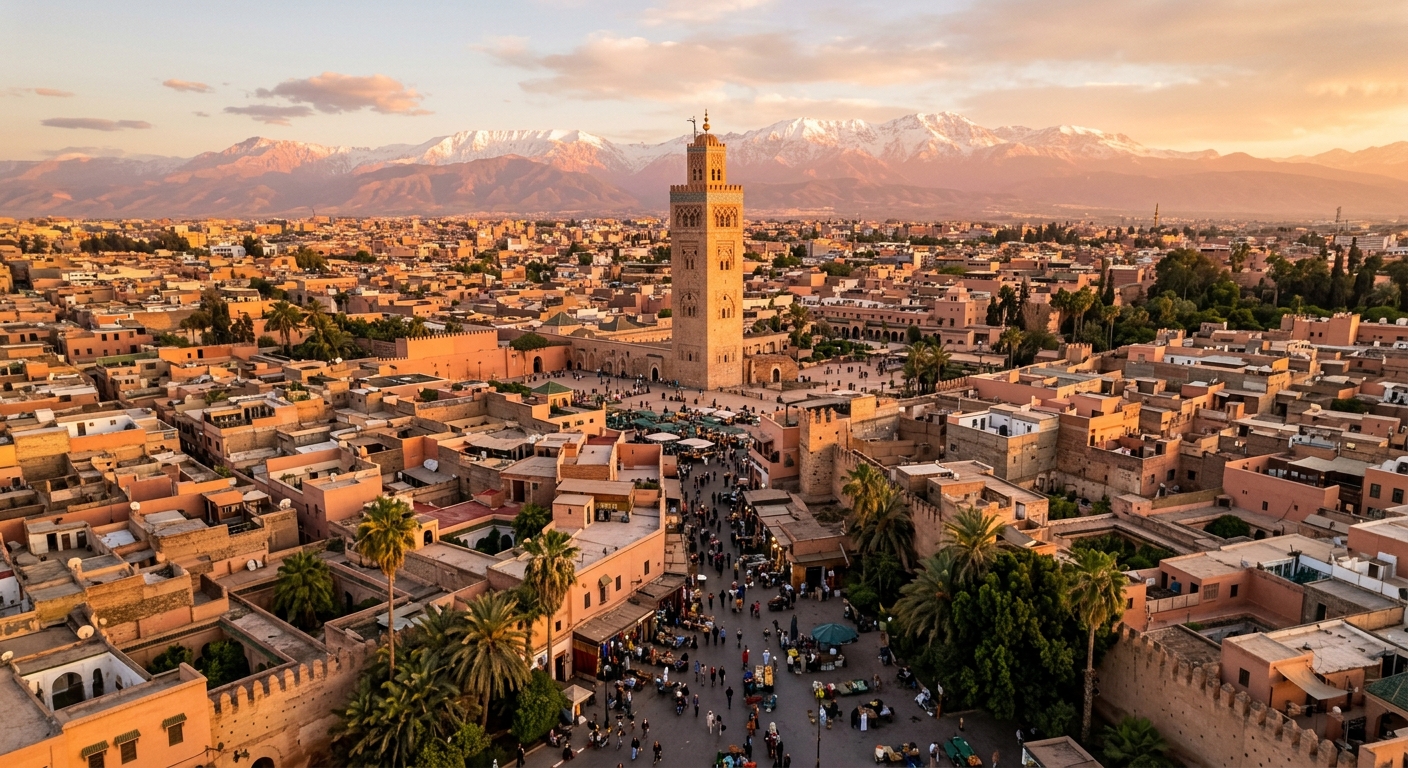
More Than a Drink: What Atay Means in Morocco
Walk into any Moroccan home, shop, office or roadside cafe and the odds are high that within minutes someone will offer you tea. Refusing outright can feel awkward, because the offer is not really about thirst. In Morocco, serving mint tea is the default gesture of welcome, the way a host says you are safe here, you are valued, sit down and stay a while. Business deals in the souk are discussed over tea, family disputes are smoothed over tea, engagements are celebrated with tea, and long desert journeys are punctuated by it.
Moroccans drink tea at practically every hour: with breakfast, after lunch, in the slow late afternoon, and deep into the evening. Estimates consistently place Morocco among the world's biggest importers of green tea, almost all of it destined for the mint tea ritual. The drink crosses every social boundary in the country. A construction worker on break sips the same style of sweet green tea as a government minister, and the gestures around it, the tray, the glasses, the pour, are recognizably the same.
The word most Moroccans use is atay, from Darija, the Moroccan Arabic dialect. You will also hear atay b'naanaa, tea with mint, or the affectionate description whisky marocain, Moroccan whisky, a joke that lands because Morocco is a majority Muslim country where alcohol is largely avoided, and tea fills the social role that wine or beer might play elsewhere. When Moroccans abroad feel homesick, it is very often the smell of fresh mint hitting hot green tea that they describe missing first.
Because the ritual is so central, the objects around it carry real cultural weight. Ornate teapots and engraved trays are traditional wedding gifts. Grandmothers pass down tea glasses. Cafes in Tangier, Fez and Marrakesh have built century-long reputations on little more than a good pour and a view. Understanding mint tea is genuinely one of the fastest routes into understanding Moroccan social life, which is why it belongs near the top of any cultural guide to the country.

A Surprisingly Recent History: How Green Tea Reached Morocco
Given how deeply tea is woven into Moroccan identity, many visitors assume the tradition is a thousand years old. It is not. Tea is a relatively recent arrival compared with Morocco's ancient culinary staples like bread, olives and couscous. Historians note that tea first appeared in Morocco around the 18th century, initially as a rare and prestigious product circulating in royal and diplomatic circles. Early accounts describe tea being presented as a gift to Moroccan sultans, who served it to honored guests as an exotic luxury.
The drink's transformation from palace curiosity to national obsession came in the mid-19th century, and trade was the engine. The most widely cited account holds that during the Crimean War in the 1850s, British merchants whose usual Baltic markets were disrupted redirected large cargoes of Chinese green tea to Moroccan ports such as Essaouira and Tangier. Whatever the precise mix of causes, customs records and travelers' reports agree that green tea imports into Morocco rose dramatically in that period, and the price fell far enough for ordinary households to adopt the habit.
What Moroccans did next made the drink their own. Rather than drinking Chinese green tea plain, they brewed it strong, sweetened it heavily with sugar from cone-shaped loaves, and packed the pot with fresh mint, a herb that already grew abundantly across the country and was long used in local infusions. The result was a genuinely new creation: Maghrebi mint tea, a style that later spread across North Africa and into the Sahel, but which remains most elaborately ritualized in Morocco itself.
By the early 20th century, tea had become a fixture of Moroccan life and a serious line item in the national economy. Today Morocco imports enormous quantities of Chinese green tea every year, and the state actively regulates quality standards for it. The historical irony is worth savoring: a leaf grown in Chinese provinces, carried by European traders, became one of the most recognizable symbols of Moroccan identity, so much so that most Moroccans and most visitors simply assume it was always there.
Painters and writers helped fix the ritual in the world's imagination. Orientalist artists of the 19th and early 20th centuries repeatedly chose the tea ceremony as their subject, capturing the gleaming pots and attentive gestures of the service. The Spanish painter Mariano Bertuchi, who spent much of his career in northern Morocco, painted a scene titled Serving Tea as early as 1899, evidence of how established and visually iconic the ceremony had already become by the close of the 19th century.

The Ingredients: Gunpowder Tea, Fresh Mint and Serious Sugar
The base of every pot of atay is Chinese gunpowder green tea. The name has nothing to do with flavor additives: gunpowder tea consists of leaves rolled into small tight pellets that resemble old-fashioned gun shot. The style has been produced in China for centuries, with Zhejiang province historically the best-known source. The tight rolling protects the leaves during long sea transport, which is exactly why it suited the 19th-century trade routes to Morocco, and the pellets unfurl dramatically in hot water, releasing a brisk, slightly smoky, assertive brew.
That assertiveness matters. Gunpowder tea is bold enough to stand up to two powerful partners: a fistful of fresh mint and a large quantity of sugar. Moroccans overwhelmingly prefer specific grades of gunpowder, and connoisseurs in the souk will discuss pellet size and harvest quality the way wine drinkers discuss vintages. The most common commercial grades sold in Morocco, such as those numbered 4011 or labeled extra gunpowder, are household names, stocked in every corner grocery in the country.
The soul of the drink is fresh spearmint, called naanaa in Moroccan Darija. The prized variety is a local spearmint, Mentha spicata, with intensely aromatic leaves; mint grown around Meknes and in market gardens across the country is particularly celebrated. Cooks insist the mint must be fresh, never dried, with whole sprigs pushed generously into the pot until they nearly fill it. In winter or in the north, some households add other herbs alongside or instead of mint: chiba, which is wormwood or absinthe leaf, adds a bitter warming note, while verbena, sage or wild geranium appear regionally.
Then there is the sugar, and there is no polite way to undersell it: traditional Moroccan mint tea is very sweet. Historically sugar came in a dense conical loaf called a qaleb, broken up with a small hammer, and chunks of sugar loaf are still used ceremonially today. Sweetness is not an afterthought but part of the drink's architecture, balancing the tannic bite of strong gunpowder tea and amplifying the cooling perfume of the mint. That said, health awareness is changing habits, and it is now common, especially in cities, to ask for tea with little or no sugar.
Water and fire complete the recipe. Traditionalists swear the best tea is made with good spring water and brewed over a charcoal brazier called a mijmar, which keeps the pot gently simmering rather than violently boiling. In the Sahara, tea is still routinely prepared over embers in the sand. Modern kitchens use gas rings and kettles, but the principle survives: the tea is not simply steeped like a European cup, it is genuinely cooked, returned to the heat so the tea, sugar and mint fuse into a single rounded flavor.
The Equipment: Berrad, Siniya and the Little Glasses
The Moroccan teapot, the berrad, is instantly recognizable: a bulbous metal body, a long curved spout, a hinged pointed lid, often standing on little feet. Traditional pots are made of stainless steel, silver-plated brass or, in luxurious versions, solid silver, frequently engraved with arabesques. The metal construction is functional, not just decorative, because the pot must sit directly on a flame or brazier during brewing. A well-made berrad pours a thin, precise stream, which is essential for the famous high pour.
The pot travels on a siniya, a round metal tray, often raised on its own legs, engraved and polished to a shine. The tray defines the ceremonial space: the host arranges the pot, the glasses, the box of tea, the sugar and the fresh mint on it, and performs the entire preparation in front of the guests. Hiding the process in a kitchen would defeat the purpose, because the theater of preparation is itself part of the hospitality. In many families the finest tray and pot come out only for guests, exactly like heirloom china elsewhere.
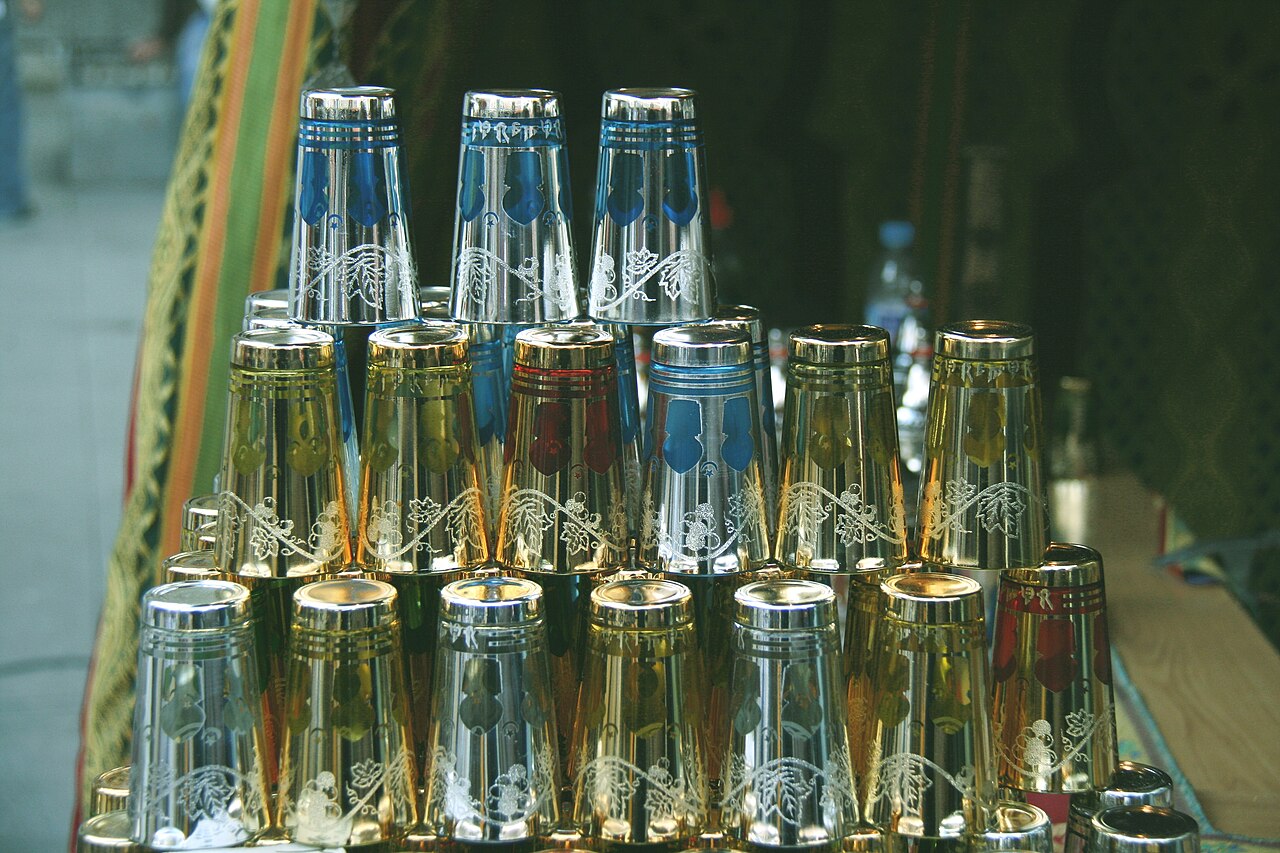
The tea is drunk from small glasses, not cups, typically holding a few sips more than an espresso. They range from plain tempered glass in a workers' cafe to jewel-colored, gold-painted sets sold in every medina. Glasses are filled only two-thirds to three-quarters full, partly so they can be held comfortably at the rim without burning fingers, and partly, as the saying goes, to leave room for the foam. A full-to-the-brim glass is actually a small breach of style.
Completing the kit are a lidded box or pair of boxes for storing the gunpowder tea and sugar, sometimes a matching set called a rbaia, plus a small hammer for the sugar loaf and the charcoal brazier. In Moroccan craft markets, tea equipment is one of the great artisan categories, with hammered brass and silver from Fez particularly sought after. For many visitors, a teapot and a set of glasses is the single most popular souvenir to carry home, precisely because it packages the whole ritual.

How Atay Is Made: The Classic Preparation, Step by Step
Every family has its own tweaks, but the classical method follows a clear sequence. First, a spoonful or two of gunpowder pellets goes into the berrad. The host adds a splash of boiling water, swirls it briefly and pours this first water off into a glass, keeping it aside. This quick rinse, often called awakening the tea, washes dust from the tightly rolled pellets and softens them. Many tea makers keep that first pour, considered to hold the spirit of the tea, and return it to the pot later.
A second short rinse is often done and discarded entirely, which strips out some bitterness and any residue. Then the pot is filled with boiling water and set back on the heat to brew properly, several minutes on a gentle flame. Only after the tea has developed its strength do the fresh mint sprigs and the sugar go in, whole branches of naanaa pressed down into the pot, followed by what looks to outsiders like an alarming quantity of sugar. Adding mint too early or boiling it too hard is said to turn the brew bitter and stewed.
Now comes the step that separates a competent tea maker from a respected one: mixing without a spoon. The host pours a glass of tea and returns it to the pot, then pours and returns again, typically two or three times. This cycling blends the sugar evenly and aerates the brew. Stirring with a spoon would work mechanically, but it is considered graceless; the pour-and-return is the traditional signature of someone who knows what they are doing.
Before serving, the host tastes. A small amount is poured into their own glass and sampled, and the pot is adjusted, more sugar, more mint, another minute on the flame, until it is right. Only then are the guests' glasses filled. This tasting step is not rudeness but quality control and courtesy combined: no guest should ever receive an unbalanced glass. When the host finally lifts the pot high and fills the row of glasses in one continuous motion, the ceremony reaches its small daily climax.
A single preparation traditionally yields several rounds from the same leaves, with water, sugar and sometimes fresh mint replenished between rounds. Each infusion tastes different, the first strong and brisk, the later ones softer and sweeter. A famous Maghrebi saying captures this progression in three glasses: the first is gentle as life, the second is strong as love, the third is bitter as death. Versions of the proverb vary from region to region, but the idea is constant, and accepting all three glasses is a compliment to your host.
The High Pour: Technique, Foam and Etiquette
The most photographed moment of Moroccan tea service is the pour. The host raises the berrad high above the glass, often thirty centimeters or more, sometimes a full arm's length, and directs a thin unbroken stream precisely into the small glass below. Done well, it looks effortless. Done badly, it scalds someone. The skill is genuinely practiced, and children in tea-loving households grow up watching parents and grandparents until the motion becomes muscle memory.
The high pour is not showing off, or not only showing off. Dropping the tea from height aerates it, cooling the stream slightly and, crucially, raising a crown of foam on the surface of each glass. That foam, called the turban or crown in various tellings, is the visual proof of a proper pour and a well-made pot. In traditional settings a glass without foam could be politely teased as flat, and desert tea makers in particular take enormous pride in producing a thick head of bubbles from repeated high pours.
Etiquette around the service is real but warm rather than stiff. The tea is traditionally prepared and poured by the head of the household or by whoever is being honored with the role, and it is common for the eldest man or woman, or the designated tea maker of the family, to officiate. Glasses are offered with the right hand and received with the right hand. Guests are served first, and it is gracious to murmur thanks or a blessing as you take the glass.
For visitors, a few practical rules cover almost everything. Accept the tea if you possibly can, because refusing the first offer outright can read as rejecting the welcome itself; if you truly cannot drink it, decline gently and with visible gratitude. Do not gulp, atay is sipped and conversation is the point. Slurping slightly is normal, as the tea is hot. If you are full, leaving your glass discreetly unfinished after the second or third round signals you are done more politely than repeated verbal refusals. And complimenting the tea maker is always correct.
Hospitality, Ceremony and Social Life Around the Glass
Moroccan culture places hospitality near the summit of its values, and tea is its everyday sacrament. A guest in a Moroccan home is traditionally treated with almost ceremonial generosity, and the tea tray is the opening move of that generosity. It appears before you have finished sitting down, usually accompanied by whatever the house can offer: almonds, dates, msemen, honey-dipped pastries or simple bread with olive oil. To share tea is to establish, however briefly, a relationship.
The ritual structures commerce as much as friendship. In the souks, carpet sellers and antique dealers famously offer tea as negotiations begin, and the shared pot slows the transaction to a human pace. Accepting the glass does not obligate you to buy, despite what nervous tourists sometimes fear; it is simply the correct opening. Deals in offices and farms across the country follow the same rhythm, and turning up at any Moroccan gathering, from a birth celebration to a funeral vigil, you will find the berrad already working.
In the Moroccan Sahara and among Sahrawi and Tuareg communities of the wider desert, the tea ceremony reaches its most elaborate form. Tea is prepared slowly over coals, often by a designated tea maker whose skill is a point of honor, and the three ritual rounds can stretch across an entire evening of talk. Desert hospitality codes treat the ceremony as near-sacred: a traveler who arrives at a camp is offered tea before any questions are asked. The slow tempo is the point, an act of resistance against hurry itself.
Tea also anchors Morocco's cafe culture, which is among the liveliest in Africa. Legendary establishments like Cafe Hafa in Tangier, terraced into a cliff above the Strait of Gibraltar since 1921, have served mint tea to generations of locals along with famous visitors, writers and musicians drawn to the city. In every town, the corner cafe with its rows of chairs facing the street functions as a social parliament, and the default order, decade after decade, remains a glass of atay.
Finally, tea marks the calendar of family life. It is served to seal engagements and to welcome a bride, poured for guests at Eid after prayers, and offered to neighbors who drop in unannounced. During Ramadan, sweet mint tea appears after the evening iftar meal alongside chebakia and other pastries. There is no Moroccan celebration, and honestly no ordinary Moroccan Tuesday, without it, which is why locals say the pot is never really cold.

Regional Styles and Modern Variations
Mint tea is national, but it has accents. In northern Morocco, around Tangier, Tetouan and Chefchaouen, winter pots are perfumed with chiba, the local wormwood, which gives a bracing bitter edge prized in cold weather. In the south and the Sahara, tea is typically brewed stronger, sweeter and longer, with the multi-round ceremony taken most seriously. In the Souss region, some households add a drop of argan country flair with wild herbs, while orange blossom water, sage or lemon verbena appear in pots from Fez to Essaouira depending on season and taste.
The urban scene keeps evolving. Upscale Moroccan restaurants now present tea service as fine dining theater, and modern cafes in Casablanca and Rabat offer atay alongside espresso, with sugar-free and light versions on the menu as diabetes awareness grows nationally. Bottled and instant imitations exist, and Moroccan-mint flavored green tea has become a standard offering of global tea brands, a small export of the ritual itself. Purists roll their eyes at teabag versions, since fresh mint and the cooked method are, to them, non-negotiable.
The diaspora carries the ceremony worldwide. In Moroccan communities across France, Spain, Belgium, the Netherlands and North America, the berrad and glasses come out for every gathering, and mint tea has become the flagship of Moroccan restaurants abroad. Meanwhile at home, tea remains a genuinely daily practice rather than a heritage performance: whatever changes in Morocco, the afternoon glass has not budged. For travelers heading to Morocco for any occasion, from a medina holiday to a major football tournament, learning to accept, praise and eventually pour atay is the single most useful cultural skill to pack.
If you want to try it at home, the honest version requires only gunpowder green tea, a big bunch of the freshest spearmint you can find, sugar to your conscience, and patience. Rinse the tea, brew it properly on the stove, add mint and sugar, mix by pouring back into the pot rather than stirring, taste, adjust, and pour from as high as your courage allows into small glasses. It will not match a grandmother's pot in Fez on your first attempt, but the smell alone will explain why an entire nation organized its social life around this drink.
A Visitor's Guide: Where and How to Drink Atay in Morocco
Every Moroccan city offers a slightly different tea experience worth seeking out. In Tangier, take a cliffside glass at a historic cafe overlooking the strait and watch the ferries cross to Spain. In Fez, tea in a restored riad courtyard comes with the sound of fountains and the scent of cedar wood. In Marrakesh, rooftop cafes ringing Jemaa el-Fnaa serve endless pots as the square's food stalls light up at dusk below. In the Sahara around Merzouga and Zagora, camp tea prepared over embers after sunset is, for many travelers, the single most memorable glass of the whole trip.
Prices are refreshingly democratic. A glass of mint tea in an ordinary neighborhood cafe typically costs only a handful of dirhams, while even scenic tourist terraces rarely charge more than the price of a European espresso. A whole pot for two or three people remains one of the cheapest pleasures in Moroccan travel. Tipping small change is appreciated but never demanded, and lingering for an hour over a single pot is not just tolerated, it is the entire point of the institution.
A few phrases raise smiles instantly. Atay afak means a tea, please; bla sukkar means without sugar; sukkar shwiya means just a little sugar; bssaha, roughly to your health, is the toast you may hear as glasses are raised, with the reply Allah y'atik saha. Even mangled pronunciation is rewarded warmly, because attempting Darija over a shared pot is precisely the kind of gesture the tea ritual exists to encourage.
If you are invited to a home, a small gift is gracious, pastries or sugar being traditional choices, and you should expect the tea to arrive with an avalanche of accompaniments even if you just ate. Praise the pour, accept refills when you can, and do not rush to leave the moment the glasses are empty; the after-tea conversation is part of the visit. When you eventually stand to go, do not be surprised if a final round is proposed to delay you a little longer. That, too, is tradition.
One last note on authenticity: hotels and airport lounges sometimes serve a quick teabag-and-mint-leaf approximation. It is fine, but it is not atay. If you want the real experience, look for the metal pot that has visibly been on a flame, the tray, the small glasses, and above all the pour from height with its crown of foam. Where you find those, you have found the genuine ceremony, and with it, usually, the best conversation in the neighborhood.
Frequently asked
What is Moroccan mint tea made of?
Traditional Moroccan mint tea combines three core ingredients: Chinese gunpowder green tea, generous sprigs of fresh spearmint (called naanaa in Moroccan Arabic), and a substantial amount of sugar, traditionally broken from a cone-shaped sugar loaf. The tea is brewed strong on the stove, then mint and sugar are added and the pot is returned briefly to the heat so the flavors fuse.
Why is it called gunpowder tea?
Gunpowder tea is a Chinese green tea whose leaves are rolled into small, tight pellets that resemble old-fashioned lead shot, which is how the English name arose. The rolling protected the leaves during long sea voyages, one reason this style dominated the 19th-century tea trade to Morocco, and the pellets unfurl in hot water to give a strong, brisk brew.
How did tea become popular in Morocco?
Tea appeared in Morocco around the 18th century as a luxury exchanged in royal and diplomatic circles. It became a mass habit in the mid-19th century, when British merchants redirected large cargoes of Chinese green tea to Moroccan ports such as Essaouira and Tangier, notably when the Crimean War disrupted their usual markets. Prices fell, imports soared, and Moroccans made the drink their own by adding fresh mint and sugar.
Why do Moroccans pour tea from so high?
The high pour serves a real purpose: dropping the tea thirty centimeters or more into the glass aerates the liquid and raises a crown of foam on the surface, which is considered proof of a properly made and properly poured tea. It also cools the stream slightly and displays the tea maker's skill, so it functions as both technique and hospitality theater.
What is the meaning of the three glasses of tea?
Tea leaves are traditionally infused several times, and a famous Maghrebi proverb assigns each round a meaning, in one common version: the first glass is gentle as life, the second is strong as love, and the third is bitter as death. Wording varies by region, but accepting all three rounds is widely understood as a compliment to your host.
Is it rude to refuse mint tea in Morocco?
Flatly refusing the first offer can come across as rejecting the welcome itself, since tea is Morocco's core gesture of hospitality. If you cannot drink it, decline warmly and gratefully, or accept the glass and take only a few sips. Leaving a glass discreetly unfinished after a couple of rounds is a polite way to signal you have had enough.
What kind of mint is used in Moroccan tea?
The classic choice is fresh spearmint, Mentha spicata, known in Darija as naanaa; Moroccan-grown spearmint is famously aromatic, with mint from areas like Meknes especially prized. Cooks use whole fresh sprigs, never dried mint. In winter, some households substitute or add chiba (wormwood), and herbs like verbena or sage appear regionally.
Why is Moroccan tea called Moroccan whisky?
It is a popular joke: Morocco is a majority Muslim country where most people avoid alcohol, so strong, celebratory mint tea fills the social role that whisky or wine plays in other cultures. Calling atay 'Moroccan whisky' or 'Berber whisky' pokes fun at how devoted Moroccans are to their national drink.
How much sugar goes into traditional Moroccan tea?
Traditional atay is very sweet; a family-size pot can absorb several large chunks of sugar loaf or many spoonfuls of granulated sugar. The sweetness balances the tannic strength of gunpowder tea and lifts the mint aroma. That said, it is now completely normal, especially in cities, to ask for tea with little or no sugar (atay bla sukkar).
What equipment do you need to make Moroccan mint tea?
The essentials are a metal teapot (berrad) that can sit directly on a flame, small tea glasses, and ideally a round metal tray (siniya) on which the service is arranged and performed. Traditional extras include tea and sugar boxes, a hammer for the sugar loaf, and a charcoal brazier (mijmar), though a modern stove works fine.
When do Moroccans drink mint tea?
Essentially all day: with breakfast, after lunch, during the late-afternoon pause, and after dinner. It is served automatically to guests at any hour, poured at celebrations from engagements to Eid, offered during business negotiations in the souk, and enjoyed after iftar during Ramadan alongside sweets like chebakia.
Does Moroccan mint tea contain caffeine?
Yes. The base is real green tea, so a glass of atay contains caffeine, though the small glass size means each serving delivers a modest dose compared with a large mug of coffee. The multiple infusions also weaken progressively, with later rounds noticeably lighter than the first strong pour.
- Wikipedia — Maghrebi mint tea ↗
- Wikipedia — Gunpowder tea ↗
- Wikipedia — Mint tea ↗
- Wikipedia — Moroccan cuisine ↗
- Wikipedia — Culture of Morocco ↗
Video via official YouTube embeds; photos via Wikimedia Commons under their stated licenses. All rights belong to the respective owners; 212 Daily claims no ownership.