Moroccan Mint Tea: The Ritual, Recipe and Meaning of Atay
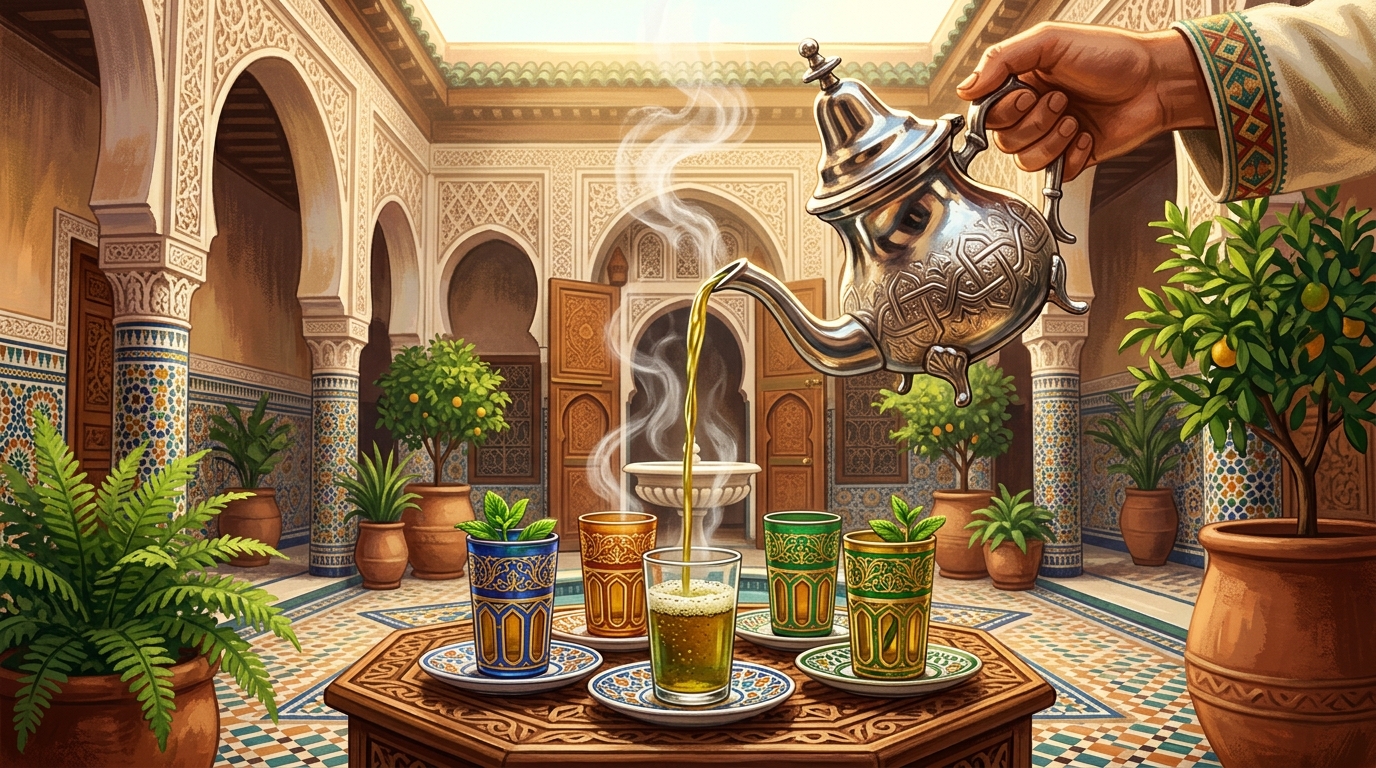
More Than a Drink: The Ritual of Hospitality
In Morocco, offering atay is the ultimate gesture of welcome. Whether you step into a home, a shop or a desert camp, tea appears almost immediately, and refusing it can seem impolite. The preparation is often performed in front of guests, with the host pouring with care and showmanship, because the act of making and serving the tea is as important as drinking it.
The ceremony is deeply social. It marks the start of conversations, the sealing of deals in the souk, and family gatherings of every kind. Tea is rarely something you grab and go; it is sipped slowly, in company, across several rounds. To understand Morocco, you have to understand that the teapot is at the center of its social life.
The Recipe: Gunpowder, Spearmint and Plenty of Sugar
Authentic atay starts with loose-leaf gunpowder green tea, named for its tightly rolled pellets, never tea bags. The leaves are first rinsed with a little hot water that is poured off, a step that removes excess bitterness and gives a cleaner, more balanced taste. This rinse is a traditional and essential part of the brewing method.
Next comes a generous handful of fresh spearmint, known as nana, and plenty of sugar, traditionally chipped from a tall white sugar cone. The tea is brewed in a metal teapot, then poured and returned to the pot a few times to mix everything thoroughly. The result should be sweet, aromatic and refreshing, equally welcome in summer heat or winter cold.
The High Pour and the Foam
One of the most recognizable parts of the ritual is the high pour. The server holds the pot up to around 12 inches above the glass, starting low and slowly raising it as the tea streams down. This dramatic technique aerates the tea and creates a delicate layer of foam called rghwa on top of each glass.
That foam is not just for show; it is considered the sign of a well-made glass of tea and a mark of the host's skill. The higher, steadier pour also cools the tea slightly and mixes the sugar evenly. Watching a practiced Moroccan host pour from a height into a tray of small decorated glasses is one of the country's quiet pleasures.
Three Glasses, Three Meanings
Tradition holds that you should be served three glasses from the same pot, and each one tastes a little different as the leaves keep steeping. A famous Moroccan proverb captures the idea poetically: the first glass is as bitter as life, the second as strong as love, and the third as gentle as death.
Because every round is poured from the same pot, the brew genuinely deepens and grows stronger over time, so the proverb reflects a real change in flavor. Accepting all three glasses is a sign of respect for your host's hospitality. To leave after one can seem hasty; staying for the full three honors the ritual and the relationship it celebrates.
Frequently asked
What tea is used in Moroccan mint tea?
Authentic Moroccan mint tea uses loose-leaf gunpowder green tea, combined with fresh spearmint (nana) and sugar. Tea bags are not used in the traditional preparation.
Why is Moroccan tea poured from a height?
Pouring from around 12 inches high aerates the tea and creates a layer of foam called rghwa, which is a sign of a well-made glass. The high pour also mixes the sugar and cools the tea slightly.
What is the meaning of the three glasses of Moroccan tea?
A Moroccan proverb says the first glass is as bitter as life, the second as strong as love, and the third as gentle as death. Because the tea keeps steeping in the same pot, each glass really does taste stronger than the last.