Moroccan Medina Architecture
The Walled City and Its Gates
A traditional medina is enclosed by ramparts of stone or rammed earth, pierced by monumental gates known as babs. These gates, often richly decorated, once controlled access to the city and could be closed at night for security.
Famous examples include Bab Boujloud in Fez and Bab Mansour in Meknes, both celebrated for their tilework and carved detailing. The walls and gates defined the medina as a distinct, protected world separate from the countryside and, later, from the modern districts built outside them.
Winding Streets and the Logic of Privacy
The seemingly chaotic maze of medina streets follows an internal logic. Main thoroughfares connect gates, mosques, and markets, while progressively narrower lanes lead into residential quarters and finally to dead-end alleys serving small clusters of homes.
This hierarchy reflects Islamic principles of privacy and community. Public commercial life concentrates on the main routes, while quiet residential cul-de-sacs shelter family life away from passing strangers. The narrowness also provides shade and channels cooling breezes.
The Courtyard House
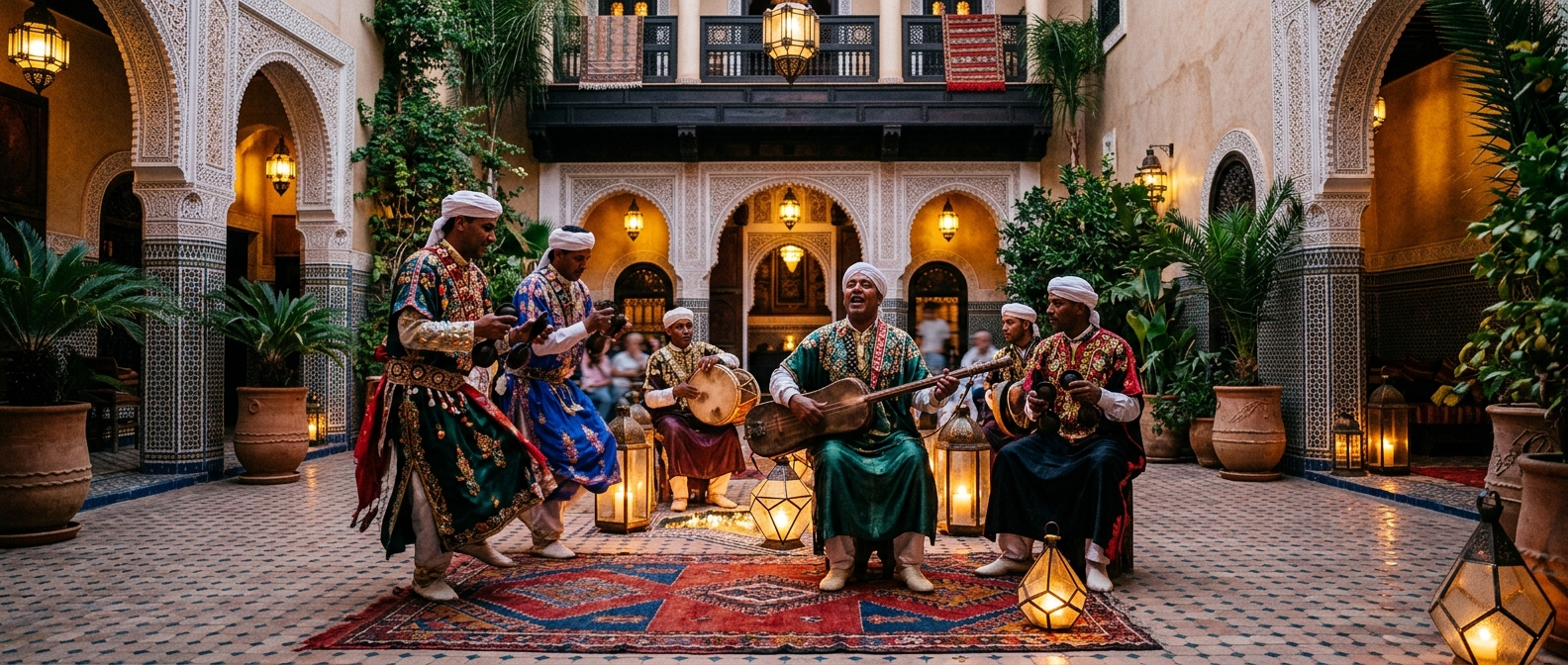
The basic unit of medina housing is the courtyard house, which turns inward around a central open space. Plain exterior walls reveal little, while interiors can be lavishly decorated with tile, plaster, and carved wood around a private courtyard or garden.
This inward orientation provides privacy, security, and a climate-controlled microenvironment. The courtyard admits light and air, often features a fountain, and serves as the social and physical center of family life. The grandest of these houses are known as riads.
Souks and Commercial Organization
Commerce in the medina is organized into souks, markets traditionally grouped by trade. Spice sellers, leatherworkers, metalsmiths, and textile merchants each occupied distinct quarters, a system that aided regulation, apprenticeship, and quality control.
At the heart of many medinas lies the qissaria, a covered market for valuable goods, and the funduq or caravanserai, where merchants lodged and stored wares. These structures supported the medina's role as a center of regional and international trade.
Religious and Civic Landmarks
The Friday mosque is the spiritual and often geographic anchor of the medina, surrounded by religious schools called madrasas, public fountains, and bathhouses known as hammams. Together these formed the institutions of communal life.
Madrasas such as the Bou Inania in Fez display the height of Moroccan craftsmanship in zellige tile, carved cedar, and sculpted plaster. Fountains and hammams provided essential water access and hygiene, reflecting the central role of cleanliness in Islamic practice.
Climate, Materials, and Sustainability
Medina architecture is profoundly shaped by climate. Thick walls, small windows, shaded streets, and courtyards all help manage extreme heat without mechanical cooling. Local materials such as earth, lime, stone, and cedar were used throughout.
This produced cities that were remarkably sustainable by modern standards, relying on passive cooling and renewable local resources. Contemporary architects increasingly study medina principles for lessons in low-energy urban design suited to hot climates.
Living Heritage and Modern Pressures
Moroccan medinas remain living cities, home to residents, artisans, and traders rather than mere monuments. Several, including Fez, Marrakech, Tetouan, and Essaouira, are inscribed as UNESCO World Heritage Sites.
Preservation faces challenges from aging infrastructure, tourism pressure, and the conversion of homes into guesthouses. Balancing conservation with the needs of residents is the central task in keeping these extraordinary urban landscapes both authentic and alive.
| Element | Arabic term | Function |
|---|---|---|
| City gate | Bab | Controlled and defended access |
| Courtyard house | Dar / Riad | Private family dwelling |
| Covered market | Qissaria | Trade in valuable goods |
| Religious school | Madrasa | Education and worship |
| Bathhouse | Hammam | Communal hygiene |
Key elements of a Moroccan medina
FAQ
What is a medina?
A medina is the old, walled quarter of a Moroccan city, characterized by ramparts, gates, narrow winding streets, courtyard houses, souks, and mosques.
Why are medina streets so narrow and confusing?
The layout follows a hierarchy from public main routes to private dead-end alleys, providing privacy, security, shade, and natural cooling suited to the hot climate.
Are Moroccan medinas still lived in?
Yes. Medinas remain living cities with resident families, artisans, and traders, though several are also protected as UNESCO World Heritage Sites.
Loved this? Useful? React below — your feedback helps other readers.