Moroccan Medicinal Herbs
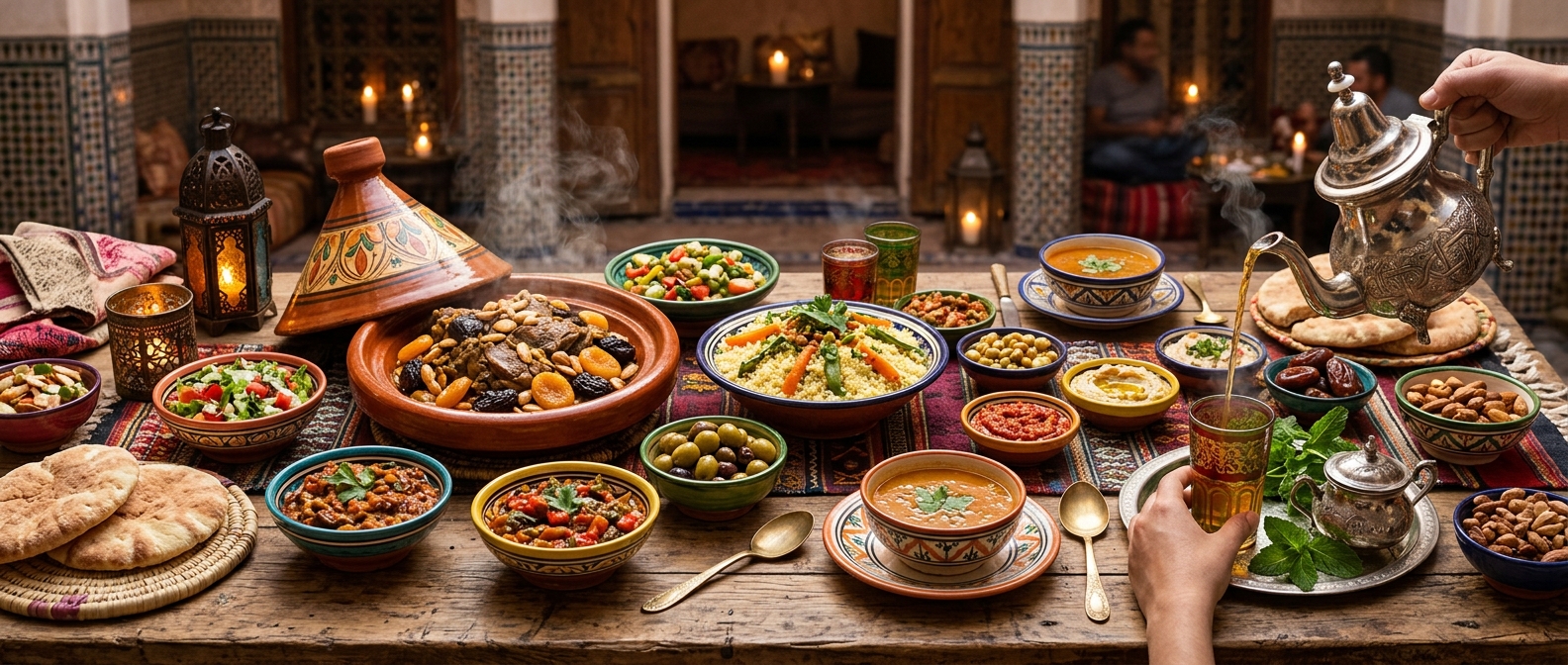
Traditional Herbal Medicine in Morocco
Morocco has a deep tradition of herbal medicine that blends Berber, Arab, and Andalusian knowledge. Plants and spices are used not only for cooking but also for everyday wellbeing, from digestion to colds, in a practice woven into daily life and passed down through generations.
These remedies are folk traditions and should not replace professional medical care. Some herbs can interact with medications or be unsafe in large doses or during pregnancy, so it is wise to treat them as cultural and culinary rather than as guaranteed cures.
The Attarine: Herbalist Shops
The attarine, or herbalist shop, is a fixture of Moroccan medinas. These colourful stores stock dried herbs, spices, seeds, roots, natural cosmetics, and remedies in open sacks and jars, with the herbalist offering advice on traditional uses.
Famous spice and herb markets, such as those in Marrakech and Fez, are popular with both locals and visitors. While many products are genuine, tourist-oriented shops can overstate benefits, so buying from reputable, busy shops used by locals helps ensure quality.
Common Medicinal Herbs and Seeds
Nigella seeds, known as habba sawda or black seed, are among the most valued, traditionally taken for general wellbeing and digestion. Ginger and cinnamon are used for warmth and circulation in beliefs about cold weather and minor ailments.
Wormwood (chiba) and sage (salmia) appear both in tea and in home remedies for digestion and comfort. Lemon verbena (louiza) and chamomile are used as calming infusions, and fenugreek seeds are valued in traditional postpartum and digestive care.
Spice Blends with Reputed Benefits
Ras el hanout, the famous Moroccan spice blend, can contain dozens of ingredients, and traditionally some versions included spices believed to have warming or tonic properties. While mainly culinary today, it reflects the close link between Moroccan cooking and folk medicine.
Cumin is widely believed to aid digestion and is often sprinkled on dishes for that reason, while saffron is prized as both a luxury spice and a traditional mood and digestion tonic. Turmeric and ginger are common for their reputed anti-inflammatory associations.
Argan and Plant Oils
Argan oil, produced from the nuts of the argan tree native to southwestern Morocco, is used both in cooking and in cosmetics. Culinary argan oil has a nutty flavour and is traditionally believed to support heart health and digestion, while cosmetic argan oil is applied to skin and hair.
Other plant oils and products, including prickly pear seed oil and various herbal cosmetics, are sold widely. As with herbs, quality varies; genuine argan oil is labour-intensive to produce, so suspiciously cheap products may be diluted.
Buying Safely and Realistic Expectations
When buying herbs in Morocco, favour established attarines used by locals, ask about origin, and be sceptical of dramatic health claims or pressure to buy expensive cure-all blends. Bargaining is normal, and it helps to know rough prices in advance.
Treat Moroccan medicinal herbs as part of the culture and cuisine rather than as medical treatment. If you have health conditions, are pregnant, or take medication, consult a healthcare professional before using unfamiliar herbs or supplements.
| Herb / product | Local name | Traditional use |
|---|---|---|
| Black seed | Habba sawda | Digestion, general wellbeing |
| Wormwood | Chiba | Digestion, warming tea |
| Lemon verbena | Louiza | Calming infusion |
| Saffron | Zaafran | Mood, digestion, luxury spice |
| Argan oil | Argan | Cooking, skin and hair care |
Common Moroccan herbs and their traditional uses
FAQ
Are Moroccan herbal remedies medically proven?
Most are traditional folk practices, not clinically proven treatments; they should be treated as cultural and culinary rather than substitutes for medical care.
Where can I buy authentic herbs in Morocco?
At attarine herbalist shops in the medinas; favour busy shops used by locals over heavily tourist-oriented stores and be wary of exaggerated claims.
Is it safe to use these herbs?
Many are safe in culinary amounts, but some can interact with medication or be unsafe in large doses or pregnancy, so consult a doctor if unsure.
Loved this? Useful? React below — your feedback helps other readers.