Mechoui: Moroccan Slow-Roasted Lamb
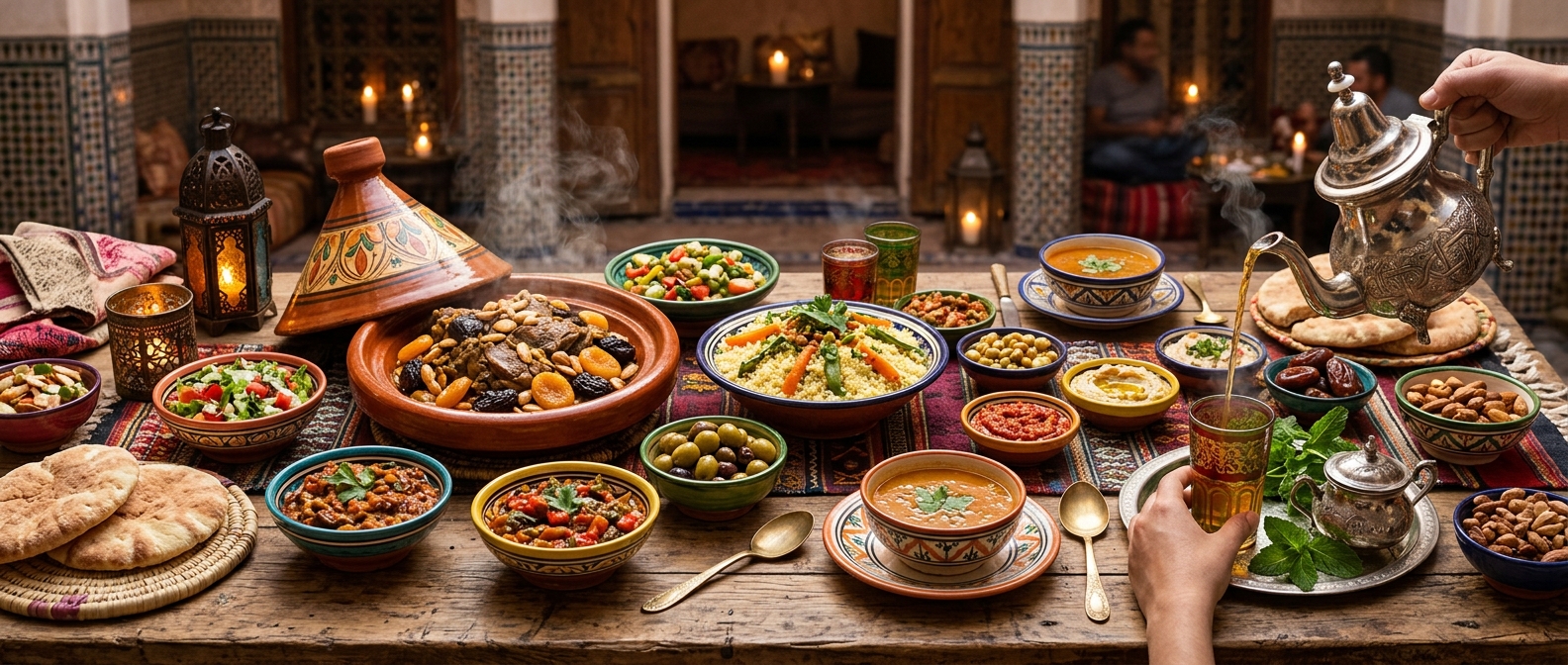
What Mechoui Really Is
Mechoui simply means "grilled" or "roasted" in Darija, but at a Moroccan feast it refers to an entire lamb cooked over embers or in a clay pit oven called a ferrane. It is the dish of weddings, Eid, and large family gatherings, where the host's generosity is measured by how much meat reaches the table.
The defining quality is texture: the meat must be so tender it pulls apart with the fingers, while the skin crisps to a thin, salty crackling. There is no heavy sauce, no long list of vegetables. Mechoui is a celebration of the lamb itself, seasoned with restraint.
The Spice Rub (Dhen)
The classic rub is built on smen or soft butter blended with ground cumin (kamoun), sweet paprika, salt, and a little garlic. Some cooks in the south add a pinch of saffron or a spoon of ras el hanout, but purists keep it minimal so the lamb flavour leads.
Massage the rub deep into slashes cut across the meat. The butter bastes the lamb as it melts, while cumin and salt form a savoury crust. Let the seasoned meat rest at least an hour, ideally overnight, so the flavours penetrate.
Pit-Roasting the Traditional Way
In rural Morocco the lamb is lowered into a deep clay-lined pit heated with wood embers, then sealed so it roasts in trapped heat for several hours. Communal bakery ovens (ferrane) are the urban equivalent, where families bring their seasoned lamb to be cooked alongside their bread.
This slow, enclosed heat is what gives authentic mechoui its smoky aroma and steam-tender flesh. The meat is never rushed; a small lamb may take three hours, a whole one much longer.
Home Oven Method (Lamb Shoulder)
For a home kitchen, a bone-in lamb shoulder of about 2 kg gives the best results. Rub it with the spiced butter, place it on a rack over a little water, cover tightly with foil, and roast at 150 C for 3 hours.
Remove the foil for the last 30 minutes and raise the heat to 220 C to brown and crisp the surface. Baste with the buttery pan juices. The shoulder is ready when the meat shreds with no resistance.
How to Serve and Eat It
Mechoui is served whole or in large pieces on a communal platter, with small dishes of cumin mixed with coarse salt for dipping. Diners tear the meat by hand, traditionally with the right hand only, scooping it up with khobz (Moroccan bread).
Accompaniments stay simple: warm bread, a few olives, and sweet mint tea to follow. Because the meat is rich, a fresh tomato-and-onion salad is sometimes set alongside to cut the fattiness.
Tips for the Best Mechoui
Choose a fatty cut; the fat is what keeps the meat moist over long cooking. Lean leg can dry out unless wrapped well. Always cook low first, then blast high to finish the crust.
Do not skip resting the seasoned meat before roasting and the cooked meat before serving. Both rests make the difference between good lamb and unforgettable mechoui.
| Method | Cut | Time | Result |
|---|---|---|---|
| Clay pit / ferrane | Whole lamb | 4-6 hours | Smoky, steam-tender, festive |
| Home oven (covered) | Shoulder 2 kg | 3.5 hours | Fall-apart, crisp finish |
| Rotisserie / spit | Whole or leg | 3-4 hours | Even crust, self-basting |
Mechoui cooking methods compared
FAQ
What does mechoui mean in Darija?
Mechoui (مشوي) literally means "grilled" or "roasted." At celebrations it refers specifically to a whole slow-roasted lamb.
What spices go on mechoui?
The core is butter or smen with cumin, salt, paprika, and garlic. Saffron or ras el hanout are optional southern additions.
Can I make mechoui without a pit?
Yes. A bone-in lamb shoulder roasted covered at 150 C for 3 hours, then uncovered hot to crisp, closely mimics the traditional result.
Loved this? Useful? React below — your feedback helps other readers.