Moroccan Lanterns & Decor Guide
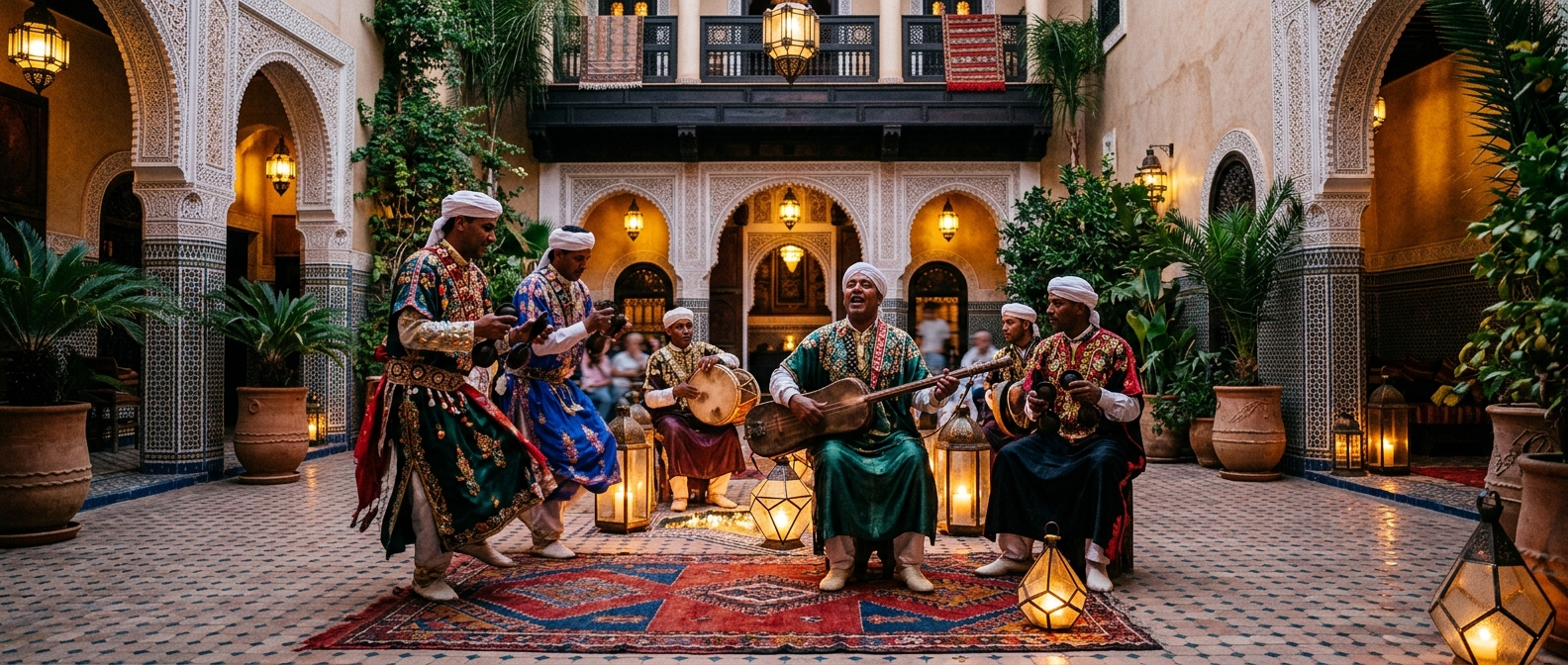
The Magic of the Moroccan Lantern
The Moroccan lantern, or fanous, is one of the country's most recognisable crafts. Made from sheet metal that is hand-pierced or fitted with coloured glass, it turns a single bulb or candle into a room full of moving star, arabesque and geometric shadows. This play of light and shadow reflects Islamic decorative traditions that favour pattern over figurative imagery.
Lanterns appear everywhere in Moroccan life, from grand riad courtyards and hotel lobbies to family living rooms and Ramadan decorations. Their warm glow is central to the cosy, layered look that defines Moroccan interiors.
Main Styles of Lanterns and Lamps
Pierced metal lanterns are made from brass, copper or iron punched with tiny holes, so they project crisp shadow patterns and look striking even unlit. Stained-glass lanterns set panels of coloured glass into a metal frame, washing walls with reds, blues, greens and ambers when lit.
Beyond hanging pendants, you will find floor and table lamps, candle lanterns for safe outdoor use, and wall sconces. Many designs feature the pointed 'keyhole' arch silhouette and finials on top, instantly signalling the Moroccan style even from a distance.
Choosing the Right Lantern for a Space
For ambient mood lighting, hang a pierced lantern where its shadows can spread across a ceiling or feature wall; a single large lantern often looks better than several small competing ones. For colour, choose stained glass, but remember coloured panels block more light, so they create atmosphere rather than bright task lighting.
Scale matters: a tiny lantern lost in a big room looks like an afterthought, while an oversized one can overwhelm a hallway. Mix metals carefully with your existing fixtures, and consider a warm-white, low-wattage bulb to keep the candle-like glow that suits these lamps.
Buying Authentic Pieces
The medinas of Fez and Marrakech are famous for metalwork, and you can often watch artisans cutting and soldering lanterns by hand. Genuine handmade pieces show slight irregularities in the piercing and seams, whereas mass-produced versions feel flimsy and perfectly uniform with thin, easily dented metal.
Check that glass panels are seated firmly and that electrical lanterns are properly wired or can be rewired safely for your country's standards. As with rugs, bargaining is normal, so agree a fair price, and for large or fragile pieces, sort out packing and shipping before you pay.
Beyond Lanterns: Building the Look
Lanterns pair naturally with other Moroccan decor: low seating with bright cushions, carved wood tables, pouffes (leather poufs), zellige tile accents and patterned rugs. Layering textures and warm metals is what gives a room that relaxed riad feeling rather than a single themed gimmick.
Keep the rest of the palette fairly calm so the lanterns and patterns can shine. A few well-chosen authentic pieces, a quality rug and good warm lighting will evoke Morocco far more convincingly than a room crammed with souvenirs.
| Style | Material | Light effect | Best placement |
|---|---|---|---|
| Pierced metal | Brass, copper, iron | Shadow patterns | Ceilings, feature walls |
| Stained glass | Metal + coloured glass | Coloured glow | Mood corners, riads |
| Candle lantern | Metal + glass panes | Soft flicker | Patios, tables (outdoor) |
| Table lamp | Metal base + shade | Warm pool of light | Side tables, bedrooms |
Lantern styles and where they shine
FAQ
What is a Moroccan lantern called in Arabic?
It is commonly called a fanous (plural fawanees). The same word is used widely for ornamental lanterns associated with Ramadan and Moroccan decorative lighting.
Do stained-glass lanterns give enough light to read by?
Not usually. Coloured glass blocks much of the light, so these lanterns create atmosphere rather than bright task lighting. Use a pierced metal or clear-glass lamp where you need to read.
Where is the best place to buy authentic lanterns in Morocco?
The medinas of Fez and Marrakech are renowned for hand-cut metalwork, and you can often watch artisans at work. Look for slight handmade irregularities and avoid thin, perfectly uniform mass-produced pieces.
Loved this? Useful? React below — your feedback helps other readers.