Moroccan Lamb Tagine with Prunes
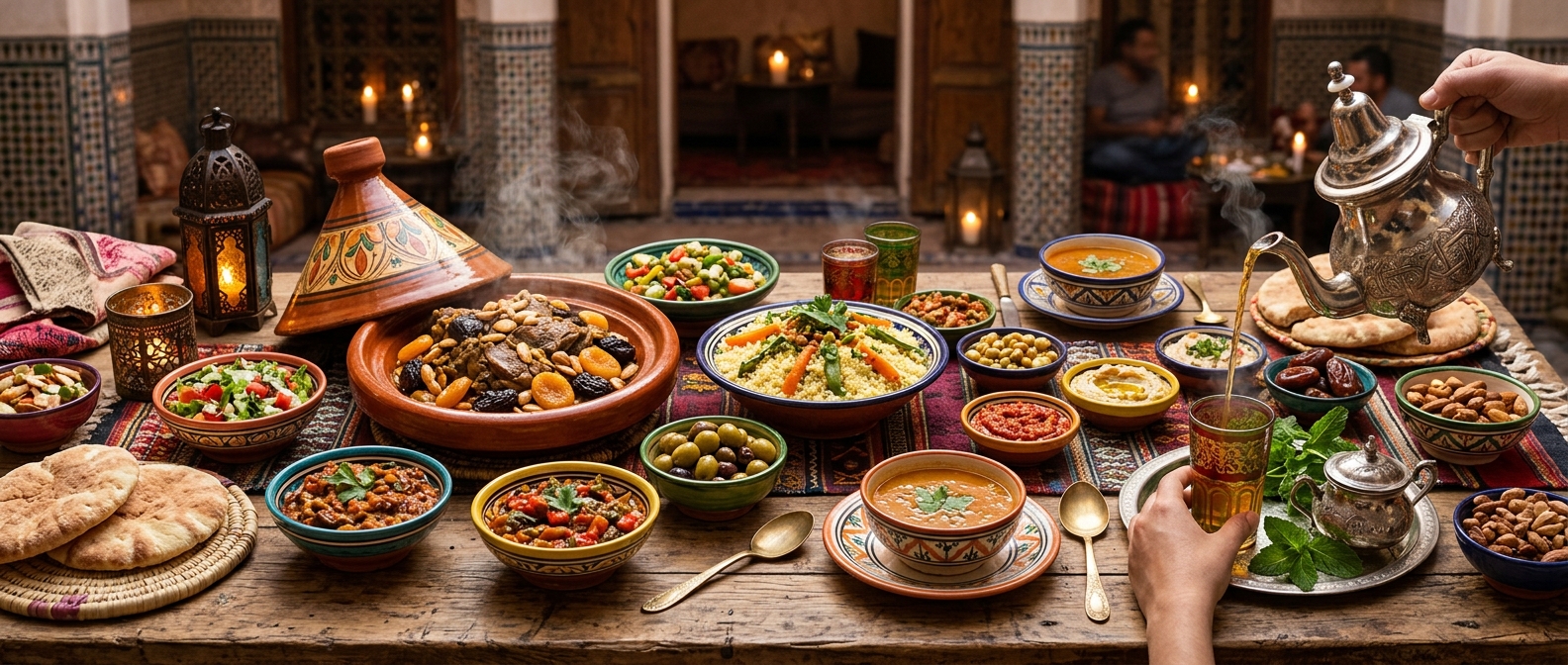
A Dish for Celebrations
Lham bil barkouk (lamb with prunes) is one of Morocco's most beloved festive tagines, reserved for weddings, Eid, and important family gatherings. The combination of tender meat with sweet, syrupy prunes captures the Moroccan love of mixing savory and sweet in one dish.
The recipe reflects centuries of culinary exchange, blending Berber slow-cooking traditions with the dried fruits, nuts and warm spices introduced through trade. The result is luxurious yet made from humble pantry staples.
Selecting the Lamb
Choose well-marbled, bone-in cuts such as lamb shoulder, neck, or shanks. The collagen in these cuts breaks down during long braising to create a rich, glossy sauce and fall-apart meat. Avoid lean leg meat, which can dry out.
Cut the lamb into large chunks, about 5 cm each, so it holds together through the long cook. Trim only the heaviest fat, leaving some for flavor. Season generously with salt and pepper before cooking.
Spices and Aromatics
The flavor base (the marqa) relies on grated onion, garlic, fresh ginger, ground cinnamon, turmeric or saffron, and a pinch of white pepper. A cinnamon stick added whole infuses warmth into the sauce as it simmers.
Saffron is the prized aromatic here; soak a pinch of threads in warm water and add the liquid for color and perfume. A small knob of butter or smen (Moroccan aged butter) enriches the sauce and gives that signature unctuous mouthfeel.
Cooking the Prunes
Prunes (barkouk) are simmered separately or added in the last 20 minutes so they soften without disintegrating. They are glazed with honey, a stick of cinnamon, and a little of the lamb cooking liquid until they turn dark, sticky and jammy.
Some cooks soak the prunes first in warm water or orange-blossom water to plump them. The sweetness should balance the savory meat, not overwhelm it, so add honey gradually and taste as you go.
Step-by-Step Method
1) Brown the lamb in olive oil and butter. 2) Add onions, garlic, ginger, cinnamon stick and spices, and cook until fragrant. 3) Add water to nearly cover, then simmer covered for 1.5 to 2 hours until the meat is very tender. 4) Reduce the sauce until thick. 5) Add the honey-glazed prunes and simmer 15 minutes more.
Finish by scattering toasted blanched almonds and toasted sesame seeds (jeljlan) over the top. The almonds add crunch against the soft meat and prunes. Serve immediately while the sauce is glossy and hot.
Serving Tradition
This tagine is presented in the center of the table with the prunes arranged over the meat and the almonds sprinkled on top, eaten communally with bread. It is rich, so it is usually served as the main course after a lighter starter or salad.
Pair it with Moroccan mint tea or a simple cucumber and tomato salad to cut the richness. Like most tagines, it tastes even better the next day once the flavors meld, and it reheats gently on the stove with a splash of water.
| Ingredient | Amount |
|---|---|
| Lamb shoulder or shanks, bone-in | 1.5 kg (3 lb) |
| Onions, grated | 2 large |
| Garlic cloves | 3 |
| Fresh ginger, grated | 1 tbsp |
| Ground cinnamon + cinnamon stick | 1 tsp + 1 stick |
| Saffron threads | 1 pinch |
| Turmeric | 1/2 tsp |
| Pitted prunes | 300 g |
| Honey | 3 tbsp |
| Blanched almonds | 1/2 cup |
| Sesame seeds, toasted | 2 tbsp |
| Butter or smen | 2 tbsp |
| Olive oil | 3 tbsp |
Ingredients
FAQ
Can I use beef instead of lamb?
Yes, beef chuck or stewing beef works well and is a common variation. It needs a similar long, slow braise of around 2 hours until fork-tender. The sweet prune and honey finish suits beef just as well as lamb.
How do I keep the prunes from falling apart?
Add them only in the final 15 to 20 minutes and simmer gently rather than boiling. Glazing them separately with honey and a little sauce also helps them stay whole and glossy.
Is this dish very sweet?
It is sweet-and-savory rather than dessert-sweet. The honey and prunes balance the savory lamb, salt and spices. You control the sweetness by adjusting how much honey you add at the end.
Loved this? Useful? React below — your feedback helps other readers.