Khobz: Moroccan Bread Explained
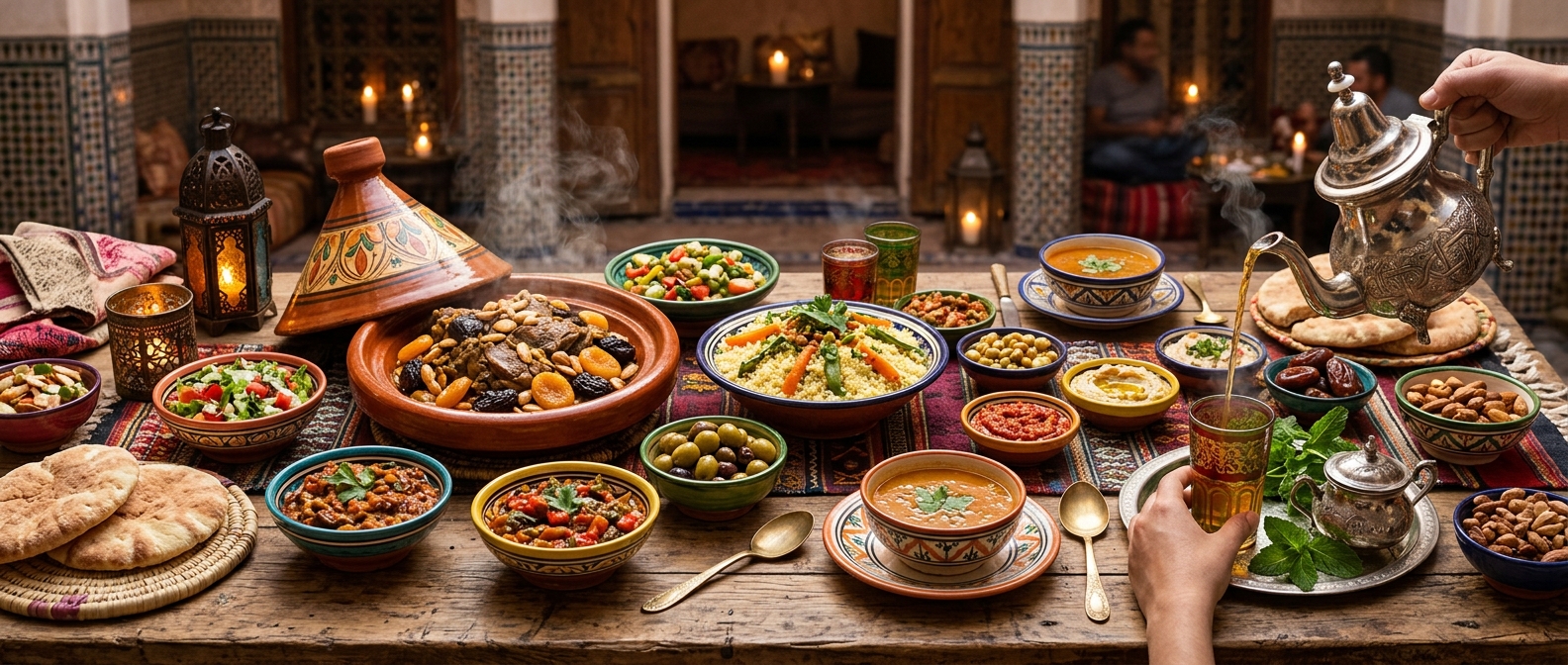
The Bread at Every Table
No Moroccan meal is complete without khobz. The round, palm-sized to dinner-plate-sized loaf appears at breakfast, lunch, and dinner, used to scoop food, mop sauce, and carry every bite from plate to mouth.
Because cutlery is often optional, bread is the universal tool. A meal without bread feels incomplete to most Moroccans, which is why fresh loaves are bought or baked every single day.
What Goes Into Khobz
The classic dough is simple: white flour, often blended with some semolina (smida) or whole wheat, plus yeast, salt, sugar, water, and sometimes a little oil. The semolina adds a pleasant chew and golden crumb.
The dough is kneaded, shaped into flattened rounds, and left to rise. Before baking, the tops are often pricked with a fork or sprinkled with sesame or nigella seeds.
The Communal Oven (Ferrane)
Traditionally, families shaped their loaves at home, marked each with a family stamp, and sent them on a board to the neighbourhood wood-fired oven, the ferrane, to be baked by the oven-keeper.
This communal baking is still alive in many medinas. The ferrane also bakes pastries, mechoui, and other dishes, making it a social hub where the day's bread and news both circulate.
Other Breads in the Family
Khobz is the everyday round loaf, but Morocco has a rich bread tradition: msemen (flaky square pancakes), baghrir (thousand-hole semolina crepes), harcha (semolina griddle bread), batbout (stovetop pockets), and rghaif.
Each has its place, from breakfast and tea-time breads to the sturdy khobz that anchors main meals. Together they show how central grain and bread are to the cuisine.
The Respect for Bread
Bread carries strong cultural and religious significance in Morocco. It is considered a blessing (baraka), and wasting it is frowned upon. Stale or dropped bread is set aside, given to animals, or left for those in need rather than thrown in the trash.
You will see bits of bread placed on walls or ledges in the street so they are not trampled. This reverence reflects bread's role as the literal staff of life.
Making Khobz at Home
Home bakers can make khobz easily: mix and knead the dough, shape flattened rounds, rise until puffy, prick the tops, and bake at around 220 C until golden and hollow-sounding, about 20-25 minutes.
Eat it warm the same day. Day-old khobz is toasted, used in soups, or turned into breakfast with olive oil, honey, or cheese.
| Bread | Type | Typical use |
|---|---|---|
| Khobz | Round baked loaf | Every meal, scooping food |
| Msemen | Flaky griddle square | Breakfast, tea time |
| Baghrir | Honeycomb crepe | Breakfast with honey |
| Batbout | Stovetop pocket | Stuffed sandwiches |
Moroccan bread family
FAQ
What is khobz made of?
Mainly white flour, often with some semolina or whole wheat, plus yeast, salt, sugar, and water. Semolina adds chew and a golden crumb.
Why is bread so respected in Morocco?
Bread is seen as a blessing (baraka). Wasting it is taboo, so leftover bread is reused, given away, or set aside rather than thrown out.
How do Moroccans use bread at meals?
Khobz is both food and utensil, torn into pieces and used to scoop tagine, dip sauces, and carry food, often instead of cutlery.
Loved this? Useful? React below — your feedback helps other readers.