Mimouna: Inside the Moroccan Jewish Festival That Marks the End of Passover
What Mimouna Is, and When It Falls
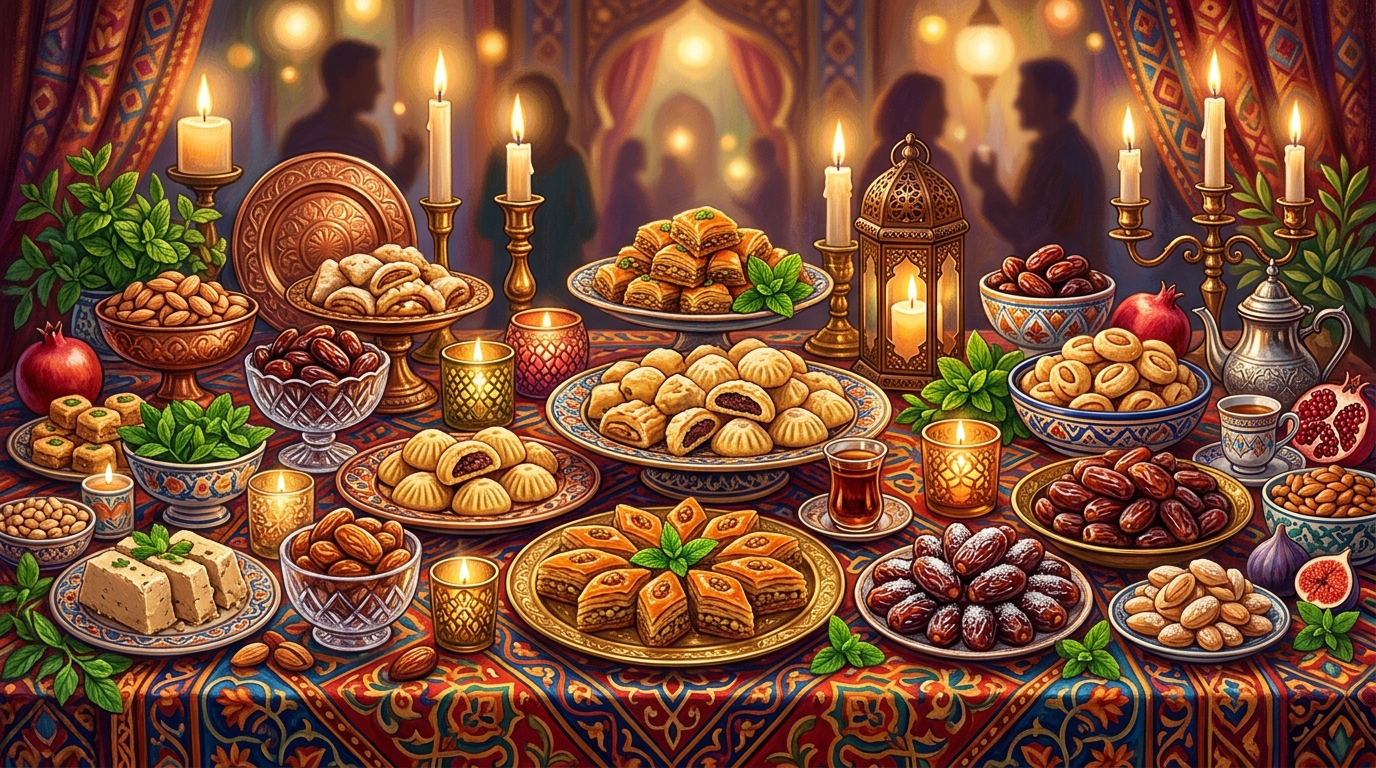
Mimouna is a Maghrebi Jewish celebration held after nightfall on the final day of Passover, the week-long holiday during which Jewish dietary law forbids chametz, or leavened food. For seven days, observant households eat only unleavened matzah and avoid bread, pasta, beer, and anything made with leavening agents. Mimouna marks the moment that restriction lifts, and the first evening back to ordinary eating becomes an occasion in its own right rather than a quiet return to routine.
The date moves with the Hebrew calendar, since Passover itself is a lunar-calendar holiday, but the structure is fixed: Mimouna always falls on the evening after the last day of Passover, before the new leavened food is actually eaten the following morning. Historians who have traced written references to the festival find it documented from the mid-18th century onward in Morocco, though the practice, and the beliefs behind it, appear considerably older than the paper trail.
Unlike most Jewish holidays, Mimouna has no basis in Torah law and no formal liturgy. It grew instead as a folk custom particular to Moroccan and, to a lesser extent, other North African Jewish communities, which is part of why its exact origins remain debated among scholars rather than settled by a single canonical text.
The Mofletta Table: Foods and Symbols
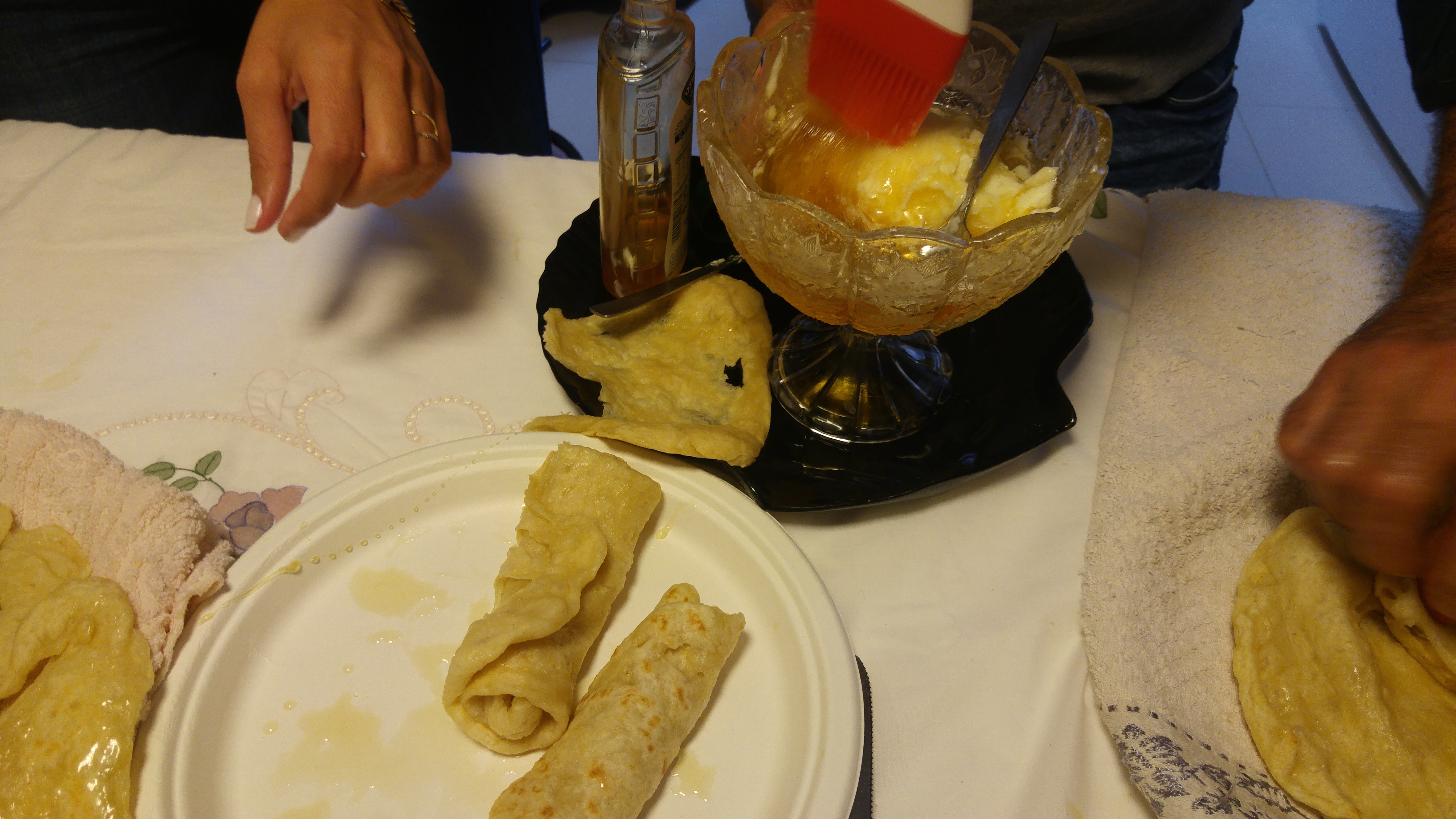
The centerpiece of Mimouna is mofletta (also spelled moufleta or mufletta), a thin, crepe-like pancake made from little more than flour, water, and oil, then cooked in a lightly greased pan until golden. Diners tear off pieces and eat them warm, drenched in honey and butter, sometimes with jam or dried fruit alongside. Because mofletta uses simple, inexpensive ingredients and can be made in large batches, it suits its purpose: feeding a home full of visitors who may arrive well into the night.
Beyond the pancakes, Mimouna tables are traditionally dressed with a set of symbolic items rather than left purely as a meal. Families lay out flour and a bowl of milk, dishes of honey, gold jewelry, and dates or other dried fruit, and often a whole fish, all associated with wishes for prosperity, fertility, and good fortune in the year ahead. Green stalks of wheat or fava beans sometimes appear on the table too, tying the holiday to the return of spring in the Moroccan agricultural calendar.
The overall effect is closer to a household open house than a seated dinner. Visitors move between homes across the neighborhood through the evening, and hosts are expected to keep the mofletta coming for as long as guests keep arriving, which in some Moroccan Jewish communities meant cooking continued for hours.

Muslim Neighbors and an Open Door
One of the most frequently cited details of Mimouna's history in Morocco concerns Muslim neighbors. Because Jewish households could not keep flour, yeast, or other leavened ingredients in the house during Passover, accounts describe Muslim neighbors safeguarding these items and then bringing the first flour, milk, or fresh bread to Jewish families once the holiday ended, timed to arrive just as Mimouna began. The gesture supplied exactly what a mofletta-making household needed at exactly the moment it needed it.
Descriptions of Mimouna evenings in Morocco note a loose order to the parade of visitors: the town rabbi first, then parents and elders, then other notable community figures, and finally everyone else, Jewish and Muslim alike, moving from house to house. That mixed guest list is what gives Mimouna its lasting association with coexistence — an evening where the boundary between two neighboring communities, ordinarily marked in countless small ways, was set aside by mutual custom.
It's worth being precise about what the historical record supports here: Mimouna's interfaith character is well documented as a real and recurring Moroccan tradition, particularly strong in cities with large Jewish quarters, but it was a local custom carried by individual relationships between neighbors rather than a uniform national practice enforced or organized from above. Commentators writing on the holiday today, including in Israeli and Moroccan press, continue to debate how far to generalize from it, and the fairest reading treats it as a genuine and meaningful pattern rather than a claim that friction never existed elsewhere or at other times.
Where the Name Mimouna Comes From
No single explanation of the word "Mimouna" has won out among scholars, and that uncertainty is itself part of what people who study the holiday find interesting. The most commonly repeated theory ties the name to Maimon, the father of the medieval philosopher and rabbi Moses Maimonides (Rambam), on the reasoning that "Mimouna" reads as an Arabic feminine form of Maimon's name; some tellings connect this to a Maimonides family tradition in Fez, where Maimonides lived for a period.
A second theory, favored by the Israeli-Moroccan historian Yigal Bin-Nun among others, traces the word to the Arabic and Berber term mimoun, meaning lucky, blessed, or auspicious — a reading that lines up neatly with the holiday's table full of luck-and-prosperity symbols. A related strand of folk etymology points to the Hebrew word emuna, meaning faith, and to a midrashic tradition holding that gold and jewelry from drowned Egyptian soldiers washed ashore for the Israelites around this point in the Exodus story, which would explain the gold jewelry set out on modern Mimouna tables.
None of these explanations can be proven definitively, and Mimouna itself was passed down for generations as lived practice long before anyone wrote down a theory of its name. That gap between an old, well-established custom and a late, contested etymology is common in folk holidays worldwide, and writers covering Mimouna, including Chabad's own holiday materials and Jewish studies publications, generally present two or three competing theories side by side rather than a single settled answer.
From Moroccan Mellahs to Jerusalem's Parks
Mimouna traveled with the roughly 250,000 Moroccan Jews who emigrated in the decades following Israel's founding, the large majority of Morocco's ancient Jewish population. In Israel, the custom took on a new, public form. The first organized mass Mimouna gathering is generally dated to 1966, a picnic organized in the town of Ben Shemen that drew a few hundred people; by the following year, attendance had grown into the thousands.
The holiday's growth in Israel paralleled a broader shift in how the young state treated the customs of Jewish communities from the Middle East and North Africa, which early Israeli institutions had often discouraged in favor of a more uniform, Ashkenazi-inflected civic culture. As Moroccan-Israelis became more organized politically from the 1970s onward, Mimouna was increasingly promoted rather than sidelined, and it grew from a private family custom into a public, cross-community event.
Today the largest Mimouna gathering is held at Sacher Park in Jerusalem, where mofletta grilling and picnicking regularly draw very large crowds over the course of the evening and following day, and it has become customary for Israel's president and prime minister to make an appearance. Israeli labor law entitles employees to request unpaid leave for Mimouna, a formal acknowledgment of a holiday that began as an unofficial neighborhood custom.
Mimouna Today: A Living Symbol of Coexistence
In Morocco itself, Mimouna has become part of a wider, actively promoted narrative around the country's Jewish history. King Mohammed VI has overseen the restoration of synagogues, mellahs, and Jewish cemeteries across the country and pushed for Jewish history to be included in the national school curriculum. New institutions created under royal direction, including the National Council of the Moroccan Jewish Community and the Foundation of Moroccan Judaism, describe Jewish heritage explicitly as part of Moroccan culture rather than a separate or foreign strand of it.
The Museum of Moroccan Judaism in Casablanca, the only museum dedicated to Jewish history and culture anywhere in the Arab world, documents this history year-round, including the customs and material culture around holidays like Mimouna. Separately, the nonprofit Mimouna Association, founded by young Moroccan Muslims to preserve and study Moroccan Jewish heritage, has spent years running heritage tours, school programs, and public events under the same name as the festival itself.
None of this erases the fact that Morocco's Jewish population fell from a pre-independence high of a few hundred thousand to a community numbering in the low thousands today, most of that decline driven by emigration around Israel's founding and in the decades that followed. Mimouna is best understood in that fuller context: a genuinely old and well-attested tradition of shared celebration, now also serving, deliberately, as a modern symbol that Moroccan officials and diaspora institutions alike hold up as evidence of a coexistence they want remembered and continued, even as the on-the-ground Jewish community it once surrounded has become very small.

Frequently asked
What does the word Mimouna mean?
There's no single agreed-upon meaning. Leading theories link it to Maimon, the father of the philosopher Maimonides; to the Arabic and Berber word mimoun, meaning lucky or blessed; or to the Hebrew word emuna, meaning faith. Scholars present these as competing possibilities rather than a settled fact.
When is Mimouna celebrated?
Mimouna takes place on the evening after the last day of Passover, following the Hebrew calendar. Because Passover's dates shift each year on the Gregorian calendar, Mimouna moves with it, always falling the night the week-long ban on leavened food (chametz) ends.
What is mofletta?
Mofletta (also spelled moufleta or mufletta) is a thin, crepe-like pancake made from flour, water, and oil, cooked in a lightly greased pan and served warm with honey and butter. It is the signature dish of Mimouna and is typically made in large batches to feed a steady stream of evening visitors.
Why do Muslim neighbors appear in Mimouna's history?
Since Jewish households avoided keeping leavened ingredients like flour or yeast during Passover, Moroccan accounts describe Muslim neighbors storing these items and delivering the first flour, milk, or bread to Jewish families right as Mimouna began, supplying exactly what was needed for the mofletta table. It is documented as a real and meaningful local custom, though one that varied by community rather than a single fixed nationwide practice.
What symbolic items appear on a Mimouna table?
Traditional tables include flour, milk, honey, gold jewelry, dates, and often a whole fish, along with green wheat or fava bean stalks. Each item is associated with wishes for prosperity, fertility, or good luck in the year ahead, drawing partly on a midrashic tradition about gold reaching the Israelites near this point in the Exodus story.
Is Mimouna a religious holiday?
No. Mimouna has no basis in Torah law and no formal liturgy or synagogue service. It developed as a folk custom specific to Moroccan and other Maghrebi Jewish communities, first documented in written sources from around the mid-18th century, though it is likely older than that record.
How did Mimouna become popular in Israel?
Moroccan Jewish immigrants brought the custom to Israel after emigrating in large numbers from the 1950s onward. The first organized mass gathering is dated to 1966 in Ben Shemen; attendance grew quickly in the following years, and the holiday eventually became a large public celebration, especially at Sacher Park in Jerusalem, drawing even the president and prime minister.
Do Israeli workers get time off for Mimouna?
Israeli labor law allows employees to request unpaid leave to observe Mimouna, a formal recognition of a holiday that began purely as an unofficial neighborhood custom in Morocco and grew into a nationally acknowledged celebration in Israel.
How does Morocco mark Mimouna and Jewish heritage today?
King Mohammed VI has directed the restoration of synagogues, mellahs, and Jewish cemeteries and the inclusion of Jewish history in school curricula, while newer bodies such as the National Council of the Moroccan Jewish Community describe that heritage as part of Moroccan culture. The Museum of Moroccan Judaism in Casablanca and the Mimouna Association, run by Moroccan Muslims dedicated to preserving this history, both document and promote the tradition.
How many Jews live in Morocco today?
Morocco's Jewish community numbers in the low thousands today, down from a pre-independence population of several hundred thousand, with the decline driven mainly by emigration to Israel, France, and elsewhere from the late 1940s through the following decades. Mimouna is celebrated today by a much larger Moroccan Jewish diaspora than by the community remaining inside Morocco itself.
- Mimouna — Wikipedia ↗
- Mimouna: A Post-Passover Celebration — My Jewish Learning ↗
- Museum of Moroccan Judaism, Casablanca ↗
- Mimouna Association — Preserving Moroccan Jewish Heritage ↗
- Politicians flock to traditional Mimouna celebrations — The Jerusalem Post ↗
- Mimouna: The Moroccan Holiday Celebrated by Politicians in Israel — Morocco World News ↗
Video via official YouTube embeds; photos via Wikimedia Commons under their stated licenses. All rights belong to the respective owners; 212 Daily claims no ownership.