Moroccan Islamic Architecture
A Fusion of Traditions
Moroccan Islamic architecture is the product of many influences blended over centuries. It draws on the broader Islamic architectural tradition, the sophisticated styles of Muslim Spain known as al-Andalus, and indigenous Berber building practices adapted to the local climate and materials.
This fusion produced a distinctive style recognized around the world, characterized by harmony, ornament, and an interplay of light, shade, and water. It is sometimes called Moorish or Hispano-Moorish architecture, reflecting its deep ties to medieval Spain.
The Horseshoe Arch
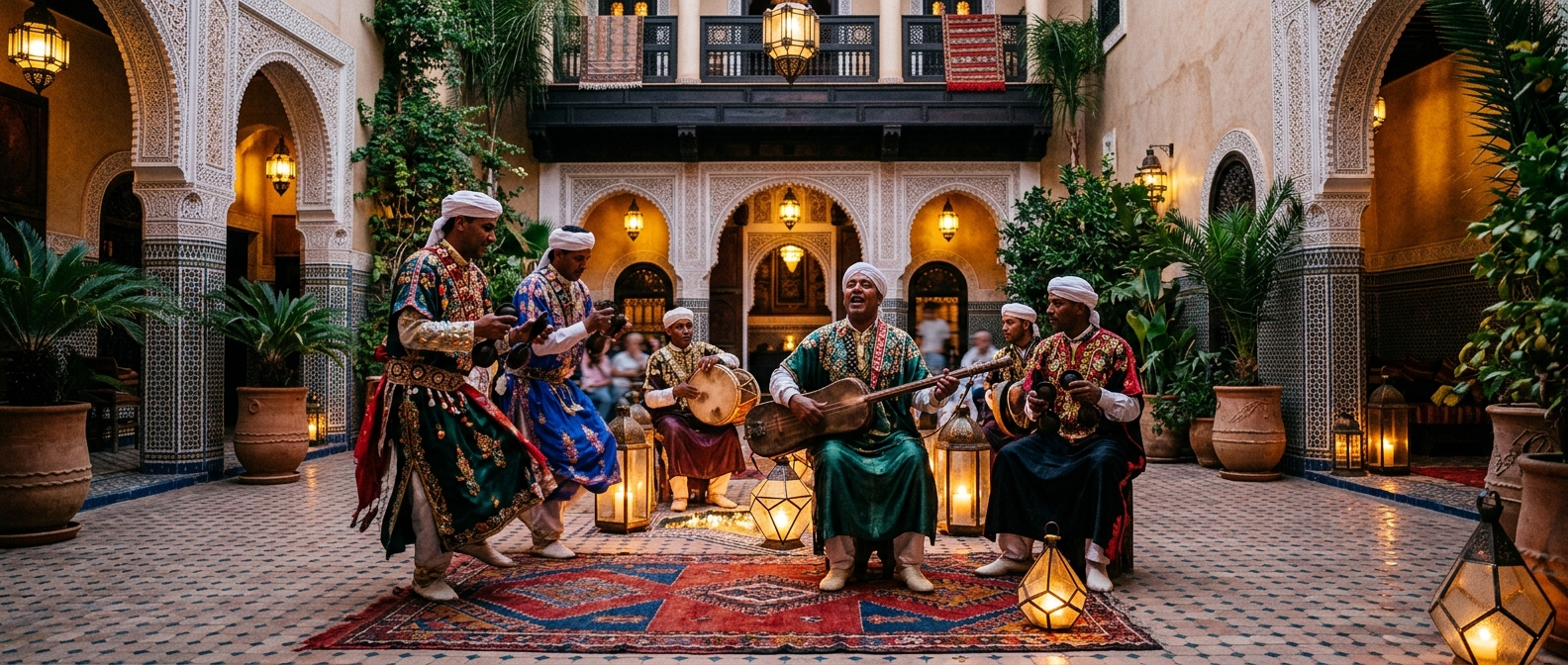
One of the signature elements of Moroccan architecture is the horseshoe arch, whose curve extends beyond a semicircle to create a rounded, keyhole-like opening. Often decorated with carved or tiled surrounds, these arches frame doorways, gateways, and prayer niches.
The horseshoe arch became emblematic of Islamic architecture in the western Mediterranean, appearing in mosques and palaces from Cordoba to Fez. In Morocco it remains a defining motif, instantly evoking the region's architectural heritage.
Zellij: The Art of Tile Mosaic
Perhaps the most dazzling feature of Moroccan design is zellij, the art of geometric tile mosaic. Skilled artisans cut glazed tiles into precise shapes and assemble them into intricate patterns of stars, polygons, and interlacing lines, covering walls, floors, fountains, and columns.
Zellij reflects the Islamic emphasis on geometry and abstraction, creating mesmerizing designs without figural imagery. The craft is passed down through generations of master tilemakers, particularly in Fez, and remains a living tradition central to Moroccan aesthetics.
Carved Stucco and Cedar Woodwork
Above the tilework, walls are often covered in carved plaster, or stucco, worked into delicate floral, geometric, and calligraphic designs. This lacy white ornament catches the light and adds a sense of refinement to interiors.
Ceilings and upper walls frequently feature elaborately carved and painted cedar wood. The aromatic cedar of the Atlas Mountains has long been prized for its beauty and durability, and its intricate coffered ceilings are a hallmark of palaces, mosques, and grand homes.
Courtyards, Fountains, and Riads
Moroccan buildings are typically organized around interior courtyards, providing privacy, light, and cool air in a hot climate. The traditional courtyard house known as a riad centers on a garden or fountain, with rooms facing inward away from the street.
Water is integral to this architecture, both practically and symbolically. Fountains and reflecting pools cool the air and evoke the gardens of paradise described in Islamic tradition, turning private homes and public buildings alike into serene retreats.
Minarets and Monumental Gateways
The most visible architectural symbols are minarets, the towers from which the call to prayer is given. Moroccan minarets are typically square in plan, often richly decorated with tile and carved patterns, as seen in the famous Koutoubia of Marrakesh.
Cities and palaces are also marked by monumental gateways, grand arched portals set in fortified walls. These imposing entrances, such as those of imperial cities, combine defensive function with elaborate decoration, announcing the grandeur within.
| Element | Description |
|---|---|
| Horseshoe arch | Rounded, keyhole-shaped arch framing openings |
| Zellij | Geometric mosaic of hand-cut glazed tiles |
| Carved stucco | Delicate plaster ornament with floral and calligraphic motifs |
| Cedar woodwork | Carved and painted ceilings from Atlas cedar |
| Courtyard / riad | Inward-facing home centered on a garden or fountain |
Key elements of Moroccan Islamic architecture
FAQ
What defines Moroccan Islamic architecture?
It is defined by horseshoe arches, intricate zellij tile mosaics, carved stucco, cedar woodwork, and inward-facing courtyards, blending Islamic, Andalusian, and Berber traditions.
What is zellij?
Zellij is the Moroccan art of geometric tile mosaic, made by hand-cutting glazed tiles into precise shapes and assembling them into elaborate patterns on walls, floors, and fountains.
Why are Moroccan courtyards so important?
Courtyards provide privacy, light, and cooling in a hot climate, and their fountains and gardens evoke the paradise imagery central to Islamic tradition.
Loved this? Useful? React below — your feedback helps other readers.