Moroccan Henna: Meaning & Traditions
What Is Henna
Henna is a reddish-brown dye made from the crushed, dried leaves of the henna plant (Lawsonia inermis), mixed into a paste and applied to the skin. As the paste dries and is removed, it leaves a temporary stain that deepens over a day or two and lasts one to three weeks.
In Morocco, henna is far more than decoration; it carries deep cultural and spiritual meaning. It is believed to bring baraka, divine blessing, and to ward off the evil eye, which is why it appears at life's most important moments.
Symbolism of the Designs
Moroccan henna patterns tend to be geometric and angular, distinct from the floral, lacy styles of India or the bold blocks of the Gulf. Motifs draw on Berber symbols, diamonds, lines, dots and stylized eyes, many meant to protect or to invoke fertility and prosperity.
Specific symbols carry meaning: the eye motif guards against envy, while certain patterns represent water, the sun or femininity. The act of wearing them is as much about invoking protection and good fortune as about beauty.
The Henna Night Before a Wedding
The most important henna occasion is the lilat al henna, the henna night held shortly before a wedding. The bride's hands and feet are adorned with elaborate designs by a professional henna artist known as a neggafa or hennaya, surrounded by female family and friends.
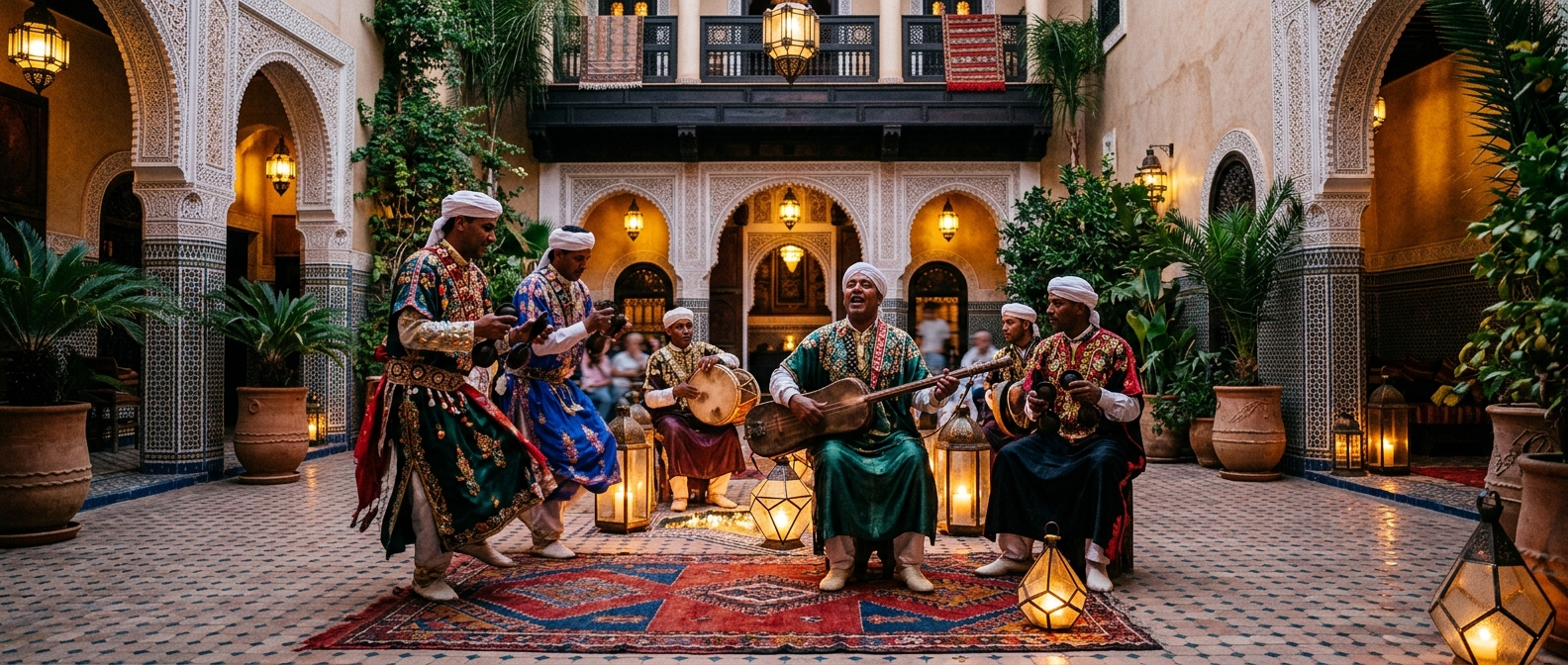
The ceremony is rich with music, sweets, ululations and blessings for the bride's future. Hiding the groom's initials within the bride's design is a playful tradition in some families, and guests too may receive smaller henna patterns.
Other Occasions for Henna
Beyond weddings, henna marks religious festivals such as Eid, births and naming ceremonies, and circumcisions. It is also applied simply for beauty, especially before celebrations, or to soothe and cool the skin in hot months.
Pregnant women and new mothers may wear henna for protection and blessing, and it is sometimes used in folk remedies. In everyday life, henna remains a beloved, accessible adornment for women of all ages.
Natural Versus Black Henna
Authentic henna stains in shades of orange, red and deep brown; it is never naturally black. So-called black henna often contains a chemical dye called PPD, which can cause severe allergic reactions, burns and lasting scars.
Travelers should insist on natural henna and be wary of vendors, especially in tourist squares, offering instant black designs. Genuine henna takes hours to deepen and is safe, while a jet-black, fast-staining paste is a warning sign.
Getting Henna as a Visitor
Tourists can get henna in markets and salons, but choose reputable artists, agree on a price and design beforehand, and confirm the paste is natural. Be cautious of overly aggressive vendors who apply henna without consent and then demand payment.
Allow the paste to dry fully and stay on for several hours for the deepest stain. A natural henna design is a meaningful, beautiful souvenir when done safely and respectfully.
| Aspect | Natural henna | Black henna |
|---|---|---|
| Color | Orange to deep brown | Jet black |
| Stain time | Develops over 1 to 2 days | Stains almost instantly |
| Safety | Safe, plant-based | May contain harmful PPD |
| Risk | Minimal | Burns, allergies, scarring |
Natural henna vs black henna
FAQ
What does henna symbolize in Morocco?
Henna symbolizes baraka (blessing), protection from the evil eye, fertility, joy and prosperity. It is applied at weddings, festivals, births and other important life events.
Is black henna safe?
No. Black henna often contains the chemical PPD, which can cause severe allergic reactions, burns and scarring. Natural henna stains orange to brown and is the safe choice.
What is the henna night?
The lilat al henna is a pre-wedding celebration where the bride's hands and feet are decorated with elaborate designs amid music, sweets and blessings from female relatives and friends.
How long does Moroccan henna last?
A natural henna stain typically lasts about one to three weeks, fading gradually as the skin renews. The longer the paste stays on, the deeper and longer-lasting the color.
Loved this? Useful? React below — your feedback helps other readers.