Moroccan Harira Soup Recipe
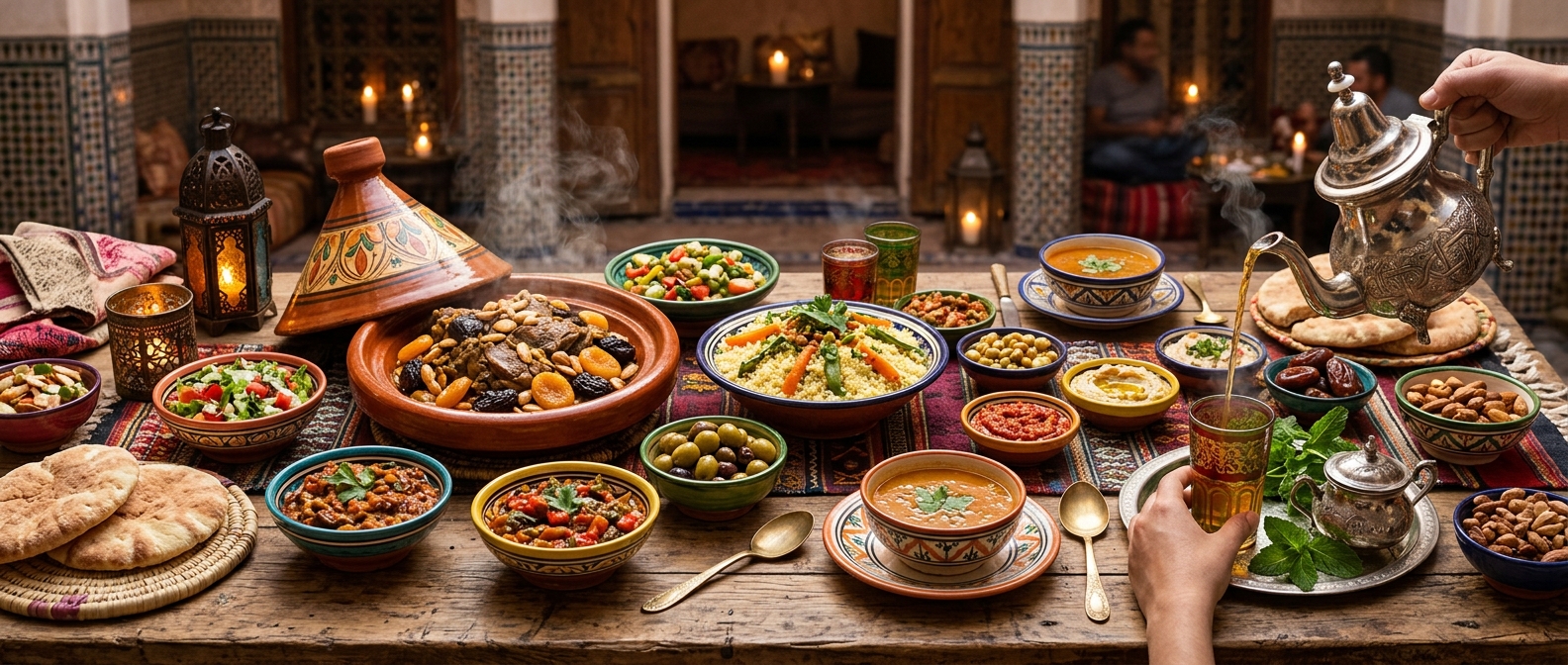
What Is Harira
Harira is Morocco's most beloved soup, a thick, tangy and deeply aromatic broth that signals comfort and celebration. While it is eaten year-round, it is inseparable from Ramadan, when it appears on nearly every table at sunset to break the day's fast.
Its character comes from the balance of acidity from tomatoes and lemon, earthiness from lentils and chickpeas, and a forest of fresh herbs. A final thickening with flour gives it the velvety body that distinguishes harira from an ordinary vegetable soup.
The Ramadan Connection
When the maghrib call to prayer sounds, fasting Moroccans traditionally break their fast with dates and a bowl of steaming harira. The soup is nourishing yet gentle on a stomach that has gone without food and water all day.
Alongside the bowl sit chebakia, sesame-coated pastries soaked in honey, and hard-boiled eggs sprinkled with cumin and salt. The combination of savory soup and sweet pastry is one of the defining flavors of the holy month.
Ingredients That Define the Flavor
Fresh ripe tomatoes, blended and strained, form the base, supported by tomato paste for depth. Brown or green lentils and chickpeas provide protein and texture, while a small amount of lamb or beef adds richness, though vegetarian versions are common.
The herb mixture, large bunches of cilantro and parsley, is essential and should be generous. Ginger, turmeric, black pepper and a little cinnamon round out the spice profile, with a squeeze of lemon brightening the finished soup.
How to Make It Step by Step
Brown the meat with onions and spices, then add blended tomatoes, the herb bundle and water and simmer with the chickpeas until everything is tender. The lentils go in partway through, as they cook faster than chickpeas.
Near the end, a tedouira, flour whisked smooth with water, is stirred in slowly to thicken the soup; some cooks use a beaten egg or a little fermented dough instead. The soup is finished with chopped fresh herbs and lemon juice off the heat.
Regional and Family Variations
Fez-style harira tends to be thicker and sometimes adds vermicelli or a little rice, while other regions keep it lighter. Some families finish the pot with beaten eggs swirled in for extra body, a technique borrowed from older Andalusian recipes.
Vegetarian harira, common during everyday meals, simply omits the meat and leans on the legumes and herbs. The flexibility of the recipe is part of why nearly every Moroccan household has its own slightly different version.
Storing and Reheating
Harira keeps well for two to three days in the refrigerator and the flavor deepens overnight as the spices meld. It thickens considerably when chilled, so loosen it with a little water or broth when reheating.
It also freezes well for up to two months if made without the egg or pasta, which can change texture on thawing. Add the fresh lemon and herbs after reheating rather than before freezing to keep the brightness intact.
| Ingredient | Quantity | Notes |
|---|---|---|
| Lamb or beef | 300 g | Optional; small dice |
| Chickpeas | 200 g | Soaked overnight |
| Brown or green lentils | 150 g | Rinsed |
| Ripe tomatoes | 1 kg | Blended and strained |
| Tomato paste | 2 tbsp | For depth |
| Onion | 1 large | Finely chopped |
| Celery stalk | 1 | Chopped |
| Cilantro and parsley | 1 large bunch each | Tied or chopped |
| Ginger, turmeric, pepper | 1 tsp each | Cinnamon optional |
| Flour (for tedouira) | 3 tbsp | Whisked with water |
| Lemon | 1 | Juiced, to finish |
Harira ingredients (serves 6 to 8)
FAQ
Is harira always eaten during Ramadan?
It is the signature Ramadan iftar dish, but Moroccans eat harira throughout the year, especially in cooler months, as a warming everyday soup.
Can I make harira vegetarian?
Yes, simply omit the meat. The chickpeas, lentils, tomatoes and herbs carry plenty of flavor, and vegetarian harira is common in many Moroccan homes.
What is the flour mixture for?
The tedouira, flour whisked with water, is stirred in near the end to thicken the soup and give it its signature velvety body. Some cooks use beaten egg instead.
What is served with harira?
Traditionally dates, honey-soaked chebakia pastries, hard-boiled eggs and bread accompany the soup, especially when breaking the Ramadan fast.
Loved this? Useful? React below — your feedback helps other readers.