Harcha: Moroccan Semolina Bread
What Makes Harcha Special
Harcha is sometimes called Moroccan English muffin because of its round shape and griddled crust, but the texture is unique: sandy and crumbly like cornbread, thanks to the semolina (smida). It is not raised much, so it stays dense and short.
The name comes from the Darija word for rough, describing the gritty, slightly coarse surface. It is everyday food, cooked quickly on a flat griddle and eaten warm.
The Ingredients
The dough uses a mix of fine and coarse semolina, melted butter or oil, a little sugar and salt, baking powder, and just enough warm milk to bring it together. The butter is what gives harcha its rich, crumbly bite.
There is no long kneading and usually no yeast; baking powder gives a gentle lift. Some cooks rest the dough briefly so the semolina absorbs the liquid and the discs hold their shape.
Mixing and Shaping
Rub the butter into the semolina, sugar, salt, and baking powder until it looks like wet sand, then add milk gradually until you can form a soft, moldable dough that is not sticky. Avoid over-mixing.
Shape into discs about 1.5 cm thick, either by hand or in a ring mold, and coat the outsides in extra dry semolina so the crust crisps up nicely on the griddle.
Cooking on the Griddle
Cook harcha on a dry or lightly oiled flat pan over medium-low heat. Patience matters: too hot and the outside burns before the inside sets. Each side needs several minutes to turn deep golden and crisp.
You will know it is done when the discs feel set and sound hollow-ish when tapped, with a toasted, sandy crust. Eat them warm for the best texture.
How to Eat Harcha
Split a warm harcha in half like a roll and fill it with honey, apricot or fig jam, soft cheese (such as La Vache qui rit), or amlou, the almond-argan-honey spread from the south.
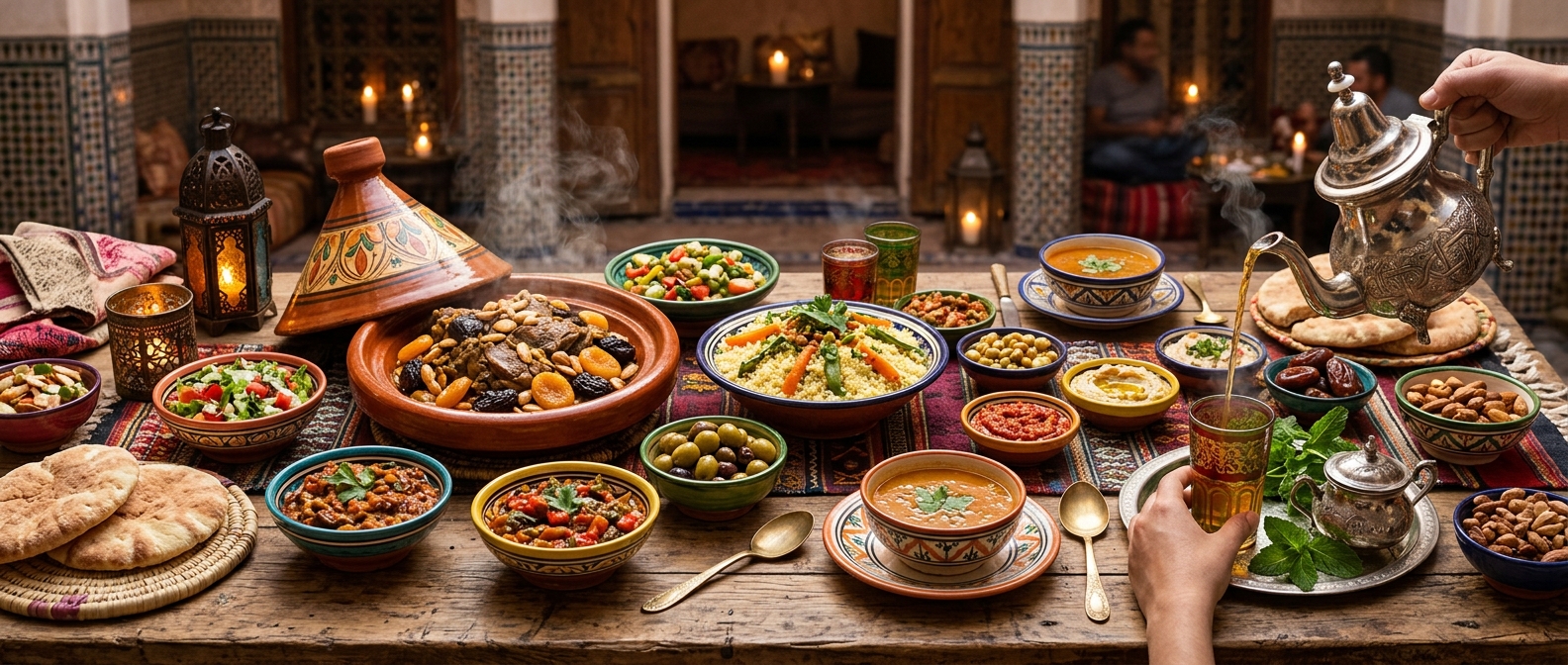
It is a staple of the Moroccan breakfast and afternoon tea (l'asr) spread, served alongside mint tea or coffee. Leftovers reheat well on the griddle.
Tips and Variations
For extra-tender harcha, use a bit more butter and milk; for a crisper, drier version, use more coarse semolina. A pinch of nigella or sesame seeds in the dough adds aroma.
Some families make savoury harcha stuffed with cheese or herbs before cooking. Always serve fresh, as harcha firms up considerably once fully cooled.
| Element | Detail |
|---|---|
| Main flour | Fine + coarse semolina (smida) |
| Leavening | Baking powder (usually no yeast) |
| Cooking | Dry/oiled griddle, medium-low |
| Best served | Warm, with honey, jam, or cheese |
Harcha quick reference
FAQ
What is harcha made of?
Mainly semolina (smida), butter, milk, a little sugar and salt, and baking powder. The butter gives it a rich, crumbly texture.
Does harcha use yeast?
Traditional harcha relies on baking powder, not yeast, which keeps it dense and crumbly rather than airy.
What do you eat harcha with?
Most often honey, jam, soft cheese, or amlou, served warm at breakfast or afternoon tea with mint tea or coffee.
Loved this? Useful? React below — your feedback helps other readers.