Moroccan Hammam Etiquette: The Complete First-Timer's Guide
What a hammam actually is
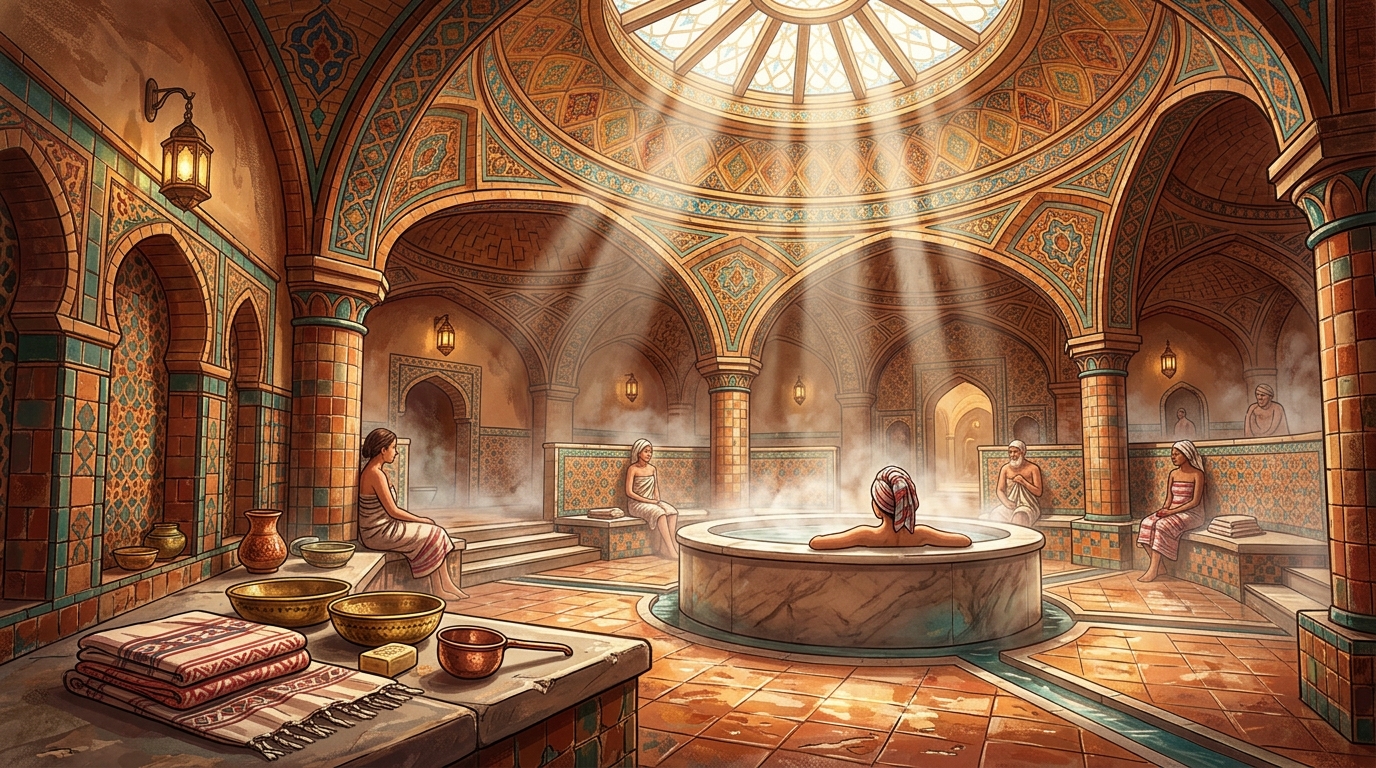
A hammam is a communal steam bathhouse, and in Morocco it is less a tourist attraction than basic civic infrastructure. Historically, many Moroccan homes — especially older houses in the medinas — had no private bathing facilities, so the neighborhood hammam was where people actually got clean. Bathhouses were traditionally built close to mosques so worshippers could wash before prayer, and a functioning old neighborhood in Fez or Marrakech is still expected to have a mosque, a bakery, a fountain, and a hammam within a short walk of each other.
The design borrows from the Roman and Ottoman bathing traditions but was adapted into something distinctly Moroccan, built around three rooms of increasing heat: a cooler entry room, a warm middle room, and a very hot steam room closest to the furnace. Bathers move between the rooms to let their pores open gradually, rather than plunging straight into intense heat.
Beyond hygiene, the hammam has always been a social institution. It is where brides are traditionally prepared before a wedding, where new mothers are cared for after childbirth, where neighbors catch up on gossip, and where mothers have historically taught daughters the rituals of self-care. Even as private bathrooms have become standard in newer homes, the hammam has held on precisely because of that social function — it is a weekly ritual, not just a wash.
The furnace that heats the whole system, called the moqad, is traditionally fed by wood, sawdust, or scrap organic waste, and the man who tends it works from a back room that most bathers never see. Heat and hot water flow from that furnace room through the hammam's three chambers, which is why the room nearest the furnace is hottest and the entry room, farthest from it, is coolest. This layout is centuries old and remains largely unchanged in the historic medinas of Fez and Marrakech, where some hammams have been in continuous operation for hundreds of years.

Public neighborhood hammam vs. hotel and spa hammam
Visitors in Morocco will run into two very different versions of this experience, and it helps to know which one you are booking. The public hammam (hammam beldi) is the real, everyday version: a plain, tiled building used by local residents, often with separate hours or separate entrances for men and women, minimal decoration, and a cost that is usually a few dirhams for entry plus a small extra fee if you want an attendant to scrub you. This is where Moroccans actually go every week.
The touristic or hotel hammam, by contrast, is built for visitors: private rooms, scheduled appointments, robes, herbal teas, and a full package of black soap, scrub, and often an oil massage bundled together for a set price, usually payable in advance. Riads and spas across Marrakech, Fez, and Chefchaouen offer this version, and it is a gentler, more predictable entry point if the idea of a shared public bathhouse feels like too much on a first trip.
Neither version is more "authentic" than the other in a judgmental sense — they simply serve different purposes. A public hammam is a slice of real daily life and is by far the cheaper option; a private hotel hammam trades some of that texture for comfort, privacy, and a guided experience with an attendant who is used to explaining each step to first-timers.
A useful middle ground for nervous first-timers is a mid-range spa hammam that still uses the traditional three-room layout and real savon beldi and kessa gloves, rather than a Westernized version stripped of the ritual altogether. Riad owners and local guides can usually point visitors toward a hammam that matches their comfort level, and it is entirely acceptable to ask directly whether a scrub attendant is included, whether the space is shared with other bathers, and roughly how long the session runs before booking.

What to bring
If you are visiting a public neighborhood hammam rather than an all-inclusive spa package, you are expected to bring your own supplies, the same way locals do. The core kit is: a large towel, flip-flops or rubber sandals (the floors are wet, hot, and can be slippery), a change of underwear to wear inside plus a dry set for afterward, a plastic bucket or bowl if one is not provided, and a bag to carry it all in.
For the ritual itself, bring savon beldi (Moroccan black soap, made from macerated olives and olive oil), a kessa exfoliating glove, and optionally rhassoul (also spelled ghassoul), a mineral clay mined in the Atlas Mountains that is used as a natural shampoo and mask. All three are sold cheaply in any Moroccan souk or pharmacy, so there is no need to bring them from home — buying a small kit locally is part of the experience.
Most Moroccans bathe in underwear or a swimsuit, never nude, since hammams are gender-segregated but still communal spaces. Modesty within your own gender's section is still the norm, so pack accordingly rather than assuming a Western-style spa dress code.
If you are booking a hotel or spa hammam instead, most of this is handled for you — towels, robes, black soap, and a kessa are typically included in the price, and you will usually be told in advance exactly what, if anything, to bring. It is still worth packing a swimsuit or underwear you are comfortable bathing in, since even upscale hammams generally expect some covering rather than nudity.
The ritual, step by step
The classic sequence starts in the warmest room, where you sit and let the heat and steam open your pores for several minutes before doing anything else. Many first-timers try to rush straight to scrubbing; locals instead treat the initial heat soak as its own unhurried stage.
Next comes the black soap. You (or an attendant) smear savon beldi over your entire body and leave it to sit for five to ten minutes — it looks and feels a little like a thick, dark honey, and it is doing real work softening the top layer of skin. Bowls of hot and warm water are used throughout to rinse and re-wet the skin as needed, drawn from a tap or basin in the room.
Then comes the kessa scrub, either self-administered or done by an attendant known as a tellak for men or a teyaba for women. This is the step every first-timer is warned about: the glove is coarse and the scrubbing is firm, and long gray rolls of dead skin visibly peel away from the body. It looks alarming the first time and is completely normal — it is simply exfoliation, just far more thorough than anything most visitors have experienced. If the pressure is too much, the phrases to know are shwiya ("gently" or "a little") and bezzaf ("too much" / "enough").
The session typically finishes with a rinse, sometimes a rhassoul clay treatment for the hair and skin, and a period to cool down gradually before stepping back outside — going straight from the hot room into cold air is discouraged, and most hammams have a cooler transition room built in for exactly that reason.

Etiquette rules first-timers need to know
Hammams are strictly gender-separated, either by having entirely separate men's and women's sections or by alternating hours for each sex in smaller establishments — always check which applies before you go. Within your section, minimal talking and no photography are the baseline expectations; this is a space for quiet self-care and, in public hammams, real neighbors going about a weekly routine, not a backdrop for content.
Water is a shared, limited resource drawn and heated on site, so the etiquette is to use only what you need rather than running the tap freely. If an attendant scrubs or assists you, a tip is customary and appreciated, generally handled separately from any set entry fee.
Timing matters more than most visitors expect. Thursday evenings and Friday mornings are traditionally the busiest times at public hammams, since many Moroccans bathe before the Friday communal prayer — first-timers who want a calmer, less crowded introduction are usually better off avoiding those slots. Finally, remember this is fundamentally a real, ongoing part of daily Moroccan life rather than a performance staged for outsiders: patience, quiet observation of what regulars are doing, and following the lead of an attendant will get any first-timer through smoothly.
Common mistakes first-timers make
The single most common mistake is rushing. Visitors used to a quick shower often try to move through the heat, soap, and scrub stages in a few minutes, when the whole point of the ritual is a slow, deliberate soak that can easily take forty-five minutes to well over an hour. Skipping the initial heat-soak stage and going straight to scrubbing also means the black soap and dead skin have not had time to soften, making the exfoliation rougher than it needs to be.
Another frequent misstep is showing up to a public hammam without supplies, assuming towels or soap will be provided the way they would at a Western gym. At a hammam beldi, bring your own kit; at a hotel spa package, check in advance what is included so you are not caught without a towel or dry underwear at the end.
Finally, many visitors either over-tip out of uncertainty or under-tip out of not realizing a tip is expected at all for attendant-assisted scrubs. A modest, standard tip handed directly to the tellak or teyaba at the end of the service is the norm, and asking a local host, riad owner, or guide beforehand for a typical amount avoids any awkwardness in the moment.
Frequently asked
What is a Moroccan hammam?
A hammam is a communal steam bathhouse found in nearly every Moroccan neighborhood, traditionally used for washing, exfoliating with black soap and a kessa glove, and socializing. Many Moroccan homes historically lacked private bathing facilities, so the hammam functioned as essential infrastructure as well as a social and pre-prayer ritual space.
Do you wear clothes in a Moroccan hammam?
Yes. Moroccans typically wear underwear or a swimsuit inside the hammam; full nudity is not the norm. Hammams are gender-separated, so modesty is maintained within a same-sex space rather than through full covering.
What should I bring to a public hammam?
A large towel, rubber sandals or flip-flops, underwear to wear inside plus a dry change for afterward, a bucket or bowl if one isn't supplied, savon beldi (black soap), a kessa exfoliating glove, and optionally rhassoul clay. All of these are cheap and easy to buy at any local souk.
Does the kessa scrub hurt?
It is firm, not gentle, and can feel intense the first time, but it should not be painful. If the pressure is too much, say shwiya (gently) or bezzaf (enough/too much) to the attendant. Seeing gray rolls of dead skin come off is normal and expected, not a sign anything is wrong.
What is the difference between a public hammam and a hotel or spa hammam?
A public neighborhood hammam (hammam beldi) is a plain, inexpensive bathhouse used daily by local residents, where you bring your own supplies. A hotel or spa hammam is a private, appointment-based version aimed at visitors, usually bundling black soap, scrub, and sometimes massage into one paid package with robes and amenities provided.
What is savon noir / savon beldi?
Savon noir, or savon beldi, is a soft, dark Moroccan soap made from macerated black olives and olive oil. It is smeared over the skin and left to sit for five to ten minutes before scrubbing, softening the top layer of skin so the kessa glove can exfoliate it away.
What is rhassoul (ghassoul) clay used for?
Rhassoul, sometimes spelled ghassoul, is a mineral clay mined from Morocco's Atlas Mountains, used for over a thousand years as a natural cleanser, hair wash, and skin mask. It is often applied near the end of a hammam session after the black soap and kessa scrub steps.
Are men and women separated in a Moroccan hammam?
Yes. Hammams are strictly gender-segregated, either through separate sections or alternating hours for men and women in smaller establishments. It's important to confirm which schedule applies to the specific hammam before visiting.
Should I tip at a Moroccan hammam?
If an attendant (a tellak for men, a teyaba for women) scrubs or assists you, a tip is customary and generally separate from the basic entry fee. Tipping is expected even at modest public hammams when personal service is provided.
When is the best time to visit a public hammam?
Avoid Thursday evenings and Friday mornings if possible, since these are traditionally the busiest times as Moroccans bathe ahead of Friday prayer. Weekday mornings or early afternoons tend to be calmer for a first visit.
- Wikipedia — Moroccan black soap ↗
- Wikipedia — Hammam ↗
- MarocMama — What to Expect in a Hammam: A First-Timer's Guide ↗
- My Five Acres — How to Visit a Moroccan Hammam: First-Timers' Guide ↗
- CultureBladi — The Traditional Moroccan Hammam: Rituals, History & Culture ↗
- Villa Marrakech — Black Soap and Rhassoul: Secrets of Moroccan Beauty Rituals ↗
Video via official YouTube embeds; photos via Wikimedia Commons under their stated licenses. All rights belong to the respective owners; 212 Daily claims no ownership.