Morocco's Football Stadiums Guide
A Nation Building for Football
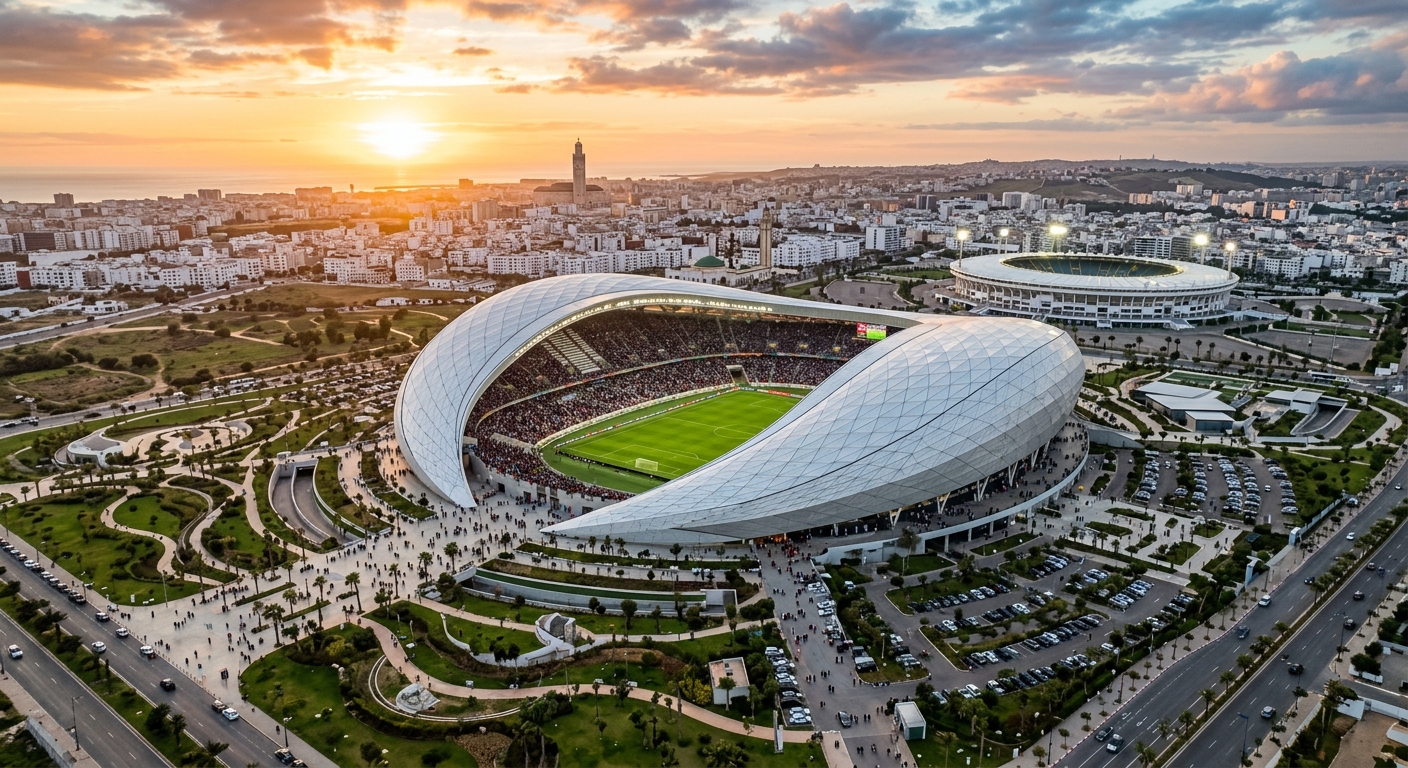
Morocco has invested heavily in football infrastructure over recent years, transforming its network of stadiums in cities across the country. This investment reflects the nation's footballing ambitions, driven by the success of the national team and the country's role as a host of major tournaments.
Morocco's stadiums range from historic venues steeped in football memory to gleaming modern arenas built or renovated to international standards. Together they provide the stage for the Botola Pro, the national team's home matches and major continental and global tournaments.
The country's hosting commitments — including the Africa Cup of Nations and, most significantly, its role as co-host of the 2030 World Cup alongside Spain and Portugal — have accelerated this infrastructure drive. New builds and major renovations are reshaping the football landscape.
This guide explores Morocco's principal football stadiums, from the iconic Stade Mohammed V to the new generation of venues being developed for the country's biggest footballing occasions.
Stade Mohammed V, Casablanca
The Stade Mohammed V in Casablanca is the spiritual home of Moroccan football. This iconic venue hosts both of the city's great clubs, Raja and Wydad, making it the stage for the legendary Casablanca Derby and one of the most atmospheric grounds in African football.
On derby days the stadium becomes a cauldron of noise and colour, split between Raja's green and Wydad's red, with the renowned ultras of both clubs producing spectacular displays. Few venues in world football can match the intensity generated within its stands.
As the home of two giants and a regular host of major matches, the Stade Mohammed V holds a central place in Moroccan football culture. Its history and atmosphere make it one of the most storied stadiums on the African continent.
The stadium has been the backdrop to countless memorable moments in Moroccan football and remains a beloved institution, even as the country develops a new generation of ultramodern venues for its biggest occasions.
Prince Moulay Abdellah Stadium, Rabat
The Prince Moulay Abdellah Stadium in the capital Rabat is one of Morocco's major football venues, hosting national-team matches and serving as a key stadium in the country's footballing infrastructure. The venue has undergone significant modernisation as part of Morocco's investment in football facilities.
As a stadium in the political capital, the Prince Moulay Abdellah holds particular importance for major fixtures and national occasions. Its renovation reflects Morocco's commitment to providing world-class facilities for its football.
The stadium is associated with the capital's football and with the national team, and its modernisation ensures it can host top-level matches and contribute to Morocco's hosting of major tournaments.
The redevelopment of the Prince Moulay Abdellah Stadium exemplifies the broader transformation of Morocco's football infrastructure, upgrading a major venue to meet contemporary international standards.
Stadiums of Tangier and the North
The northern city of Tangier is home to a large modern stadium that has become a significant venue in Moroccan football. The Ibn Batouta Stadium hosts national-team matches and major fixtures, serving the football needs of the northern region.
Tangier's stadium, with its substantial capacity, has been part of Morocco's hosting of major tournaments and reflects the spread of modern football infrastructure beyond the traditional centres of Casablanca and Rabat.
The north of Morocco, including cities like Tangier and Fès, contributes important venues to the country's football landscape, ensuring that major matches and tournaments can be staged across the nation rather than concentrated in a few cities.
These northern stadiums play a key role in Morocco's footballing infrastructure, supporting both domestic competition and the country's ambitions as a host of continental and global tournaments.
Marrakech and the Atlas Stadium
Marrakech, one of Morocco's most famous cities, is home to a major modern stadium that hosts football matches and major events. The Grand Stade de Marrakech is among the country's significant venues, contributing to the geographic spread of Morocco's football infrastructure.
Marrakech's stadium has featured in Morocco's hosting of major tournaments, including the FIFA Club World Cup, and serves as a venue for national-team and high-profile matches. Its modern facilities meet international standards.
As a global tourist destination, Marrakech brings a distinctive profile to its football venue, and the stadium's role in major events underlines the city's importance in Morocco's footballing plans.
The Marrakech stadium is part of the network of modern venues that allows Morocco to stage major continental and global football tournaments across multiple cities, distributing the footballing spotlight throughout the country.
Agadir, Fès and Beyond
The coastal city of Agadir boasts a large modern stadium, the Adrar Stadium, which hosts football matches and contributes to Morocco's southern football infrastructure. Its capacity and facilities make it an important venue in the national network.
Fès, the historic imperial city and home of MAS, has its own significant stadium, the Complexe Sportif de Fès, serving the football needs of the northern interior and hosting top-level matches. These venues ensure representation across Morocco's diverse regions.
Other cities across Morocco contribute stadiums to the country's footballing landscape, supporting the Botola Pro, national-team fixtures and tournament hosting. This geographic spread reflects the depth of Morocco's football culture nationwide.
Together, the stadiums of Agadir, Fès and other cities form part of the extensive network of venues that underpins Moroccan football and supports the country's ambitions as a major footballing host.
The Grand Stade de Casablanca
Central to Morocco's stadium ambitions is the planned Grand Stade de Casablanca, a vast new venue intended to be one of the largest football stadiums in the world. Located near Casablanca, this mega-stadium is a flagship project tied to Morocco's hosting of the 2030 World Cup.
The Grand Stade de Casablanca is designed to be a centrepiece of Morocco's World Cup hosting, with an enormous capacity intended to stage the tournament's biggest matches. The project represents the pinnacle of the country's football infrastructure drive.
Such a stadium would dramatically enhance Morocco's footballing facilities and global profile, providing a world-class venue for major matches and cementing Casablanca's status as one of the great football cities of Africa and beyond.
The construction of this mega-stadium symbolises the scale of Morocco's footballing ambition, as the country prepares to take its place on the world stage as a co-host of the 2030 World Cup.
Stadiums and the 2030 World Cup
Morocco's role as co-host of the 2030 FIFA World Cup, alongside Spain and Portugal, is the driving force behind the country's massive investment in football stadiums. Multiple Moroccan cities are set to host World Cup matches, requiring venues of the highest international standard.
The World Cup hosting has spurred both the construction of new stadiums, like the Grand Stade de Casablanca, and the renovation of existing venues across the country. This investment is transforming Morocco's football infrastructure on an unprecedented scale.
Hosting the World Cup represents a historic milestone for Morocco and for African and Arab football, and the country's stadiums will be at the heart of this global showcase. The venues will welcome teams and fans from around the world.
The 2030 World Cup is the centrepiece of Morocco's footballing ambitions, and its stadiums — both new and renovated — will provide the stage for one of the most significant moments in the history of Moroccan and African football.
The Africa Cup of Nations
Before the 2030 World Cup, Morocco's stadiums are showcased through its hosting of the Africa Cup of Nations, the continent's premier national-team competition. Hosting AFCON requires venues across multiple cities and has further driven the country's stadium investment.
The Africa Cup of Nations provides Morocco with an opportunity to demonstrate its footballing infrastructure and hosting capabilities on the continental stage, serving as a major event in its own right and a preparation for the World Cup.
Morocco's experience hosting major tournaments, including AFCON and previously the FIFA Club World Cup, has built the expertise and infrastructure that underpin its World Cup ambitions. Each tournament strengthens the country's standing as a host.
The continental tournament puts Morocco's stadiums in the spotlight, showcasing venues across the country and reinforcing the nation's role as a leading host of major football events in Africa and beyond.
The Future of Moroccan Stadiums
Morocco's football stadiums are undergoing a transformation unprecedented in the country's history, driven by national-team success and the responsibility of hosting the world's biggest football tournaments. The result is a network of modern venues spread across the nation.
From the iconic Stade Mohammed V to the planned Grand Stade de Casablanca, Morocco's stadiums combine football heritage with cutting-edge ambition. The country is building infrastructure worthy of its rising status in world football.
This investment benefits not only major tournaments but also the domestic game, providing Botola clubs and their supporters with improved facilities and elevating the matchday experience across the country.
As Morocco prepares to co-host the 2030 World Cup, its stadiums stand as symbols of a footballing nation on the rise — venues that have witnessed legendary derbies and continental triumphs, and that will soon welcome the world to the heart of Moroccan football.
| Stadium | City / Notes |
|---|---|
| Stade Mohammed V | Casablanca — home of Raja and Wydad, hosts the derby |
| Prince Moulay Abdellah | Rabat — modernised national venue |
| Ibn Batouta Stadium | Tangier — major northern venue |
| Grand Stade de Marrakech | Marrakech — modern venue, hosted Club World Cup |
| Adrar Stadium | Agadir — large southern coastal venue |
| Complexe Sportif de Fès | Fès — venue for the imperial city and MAS |
| Grand Stade de Casablanca | Planned mega-stadium for the 2030 World Cup |
| Driving force | AFCON hosting and 2030 World Cup co-hosting |
Morocco's principal football stadiums
FAQ
What is Morocco's most famous football stadium?
The Stade Mohammed V in Casablanca is Morocco's most iconic stadium. It is the shared home of Raja and Wydad and hosts the legendary Casablanca Derby, making it one of the most atmospheric grounds in African football.
What is the Grand Stade de Casablanca?
The Grand Stade de Casablanca is a planned mega-stadium near Casablanca intended to be one of the largest football stadiums in the world. It is a flagship project tied to Morocco's co-hosting of the 2030 FIFA World Cup.
Which Moroccan cities have major stadiums?
Major football stadiums are located in Casablanca, Rabat, Tangier, Marrakech, Agadir and Fès, among others, reflecting the geographic spread of Morocco's football infrastructure across the country.
Why is Morocco building so many stadiums?
Morocco is investing heavily in stadiums because of its hosting commitments, including the Africa Cup of Nations and, most significantly, its role as co-host of the 2030 FIFA World Cup alongside Spain and Portugal.
Do Raja and Wydad share a stadium?
Yes. Both Casablanca clubs use the Stade Mohammed V as their home ground, which adds to the intensity of the Casablanca Derby by making each meeting a symbolic battle for the city's central stadium.
Loved this? Useful? React below — your feedback helps other readers.