Moroccan Food: 20 Dishes You Must Try
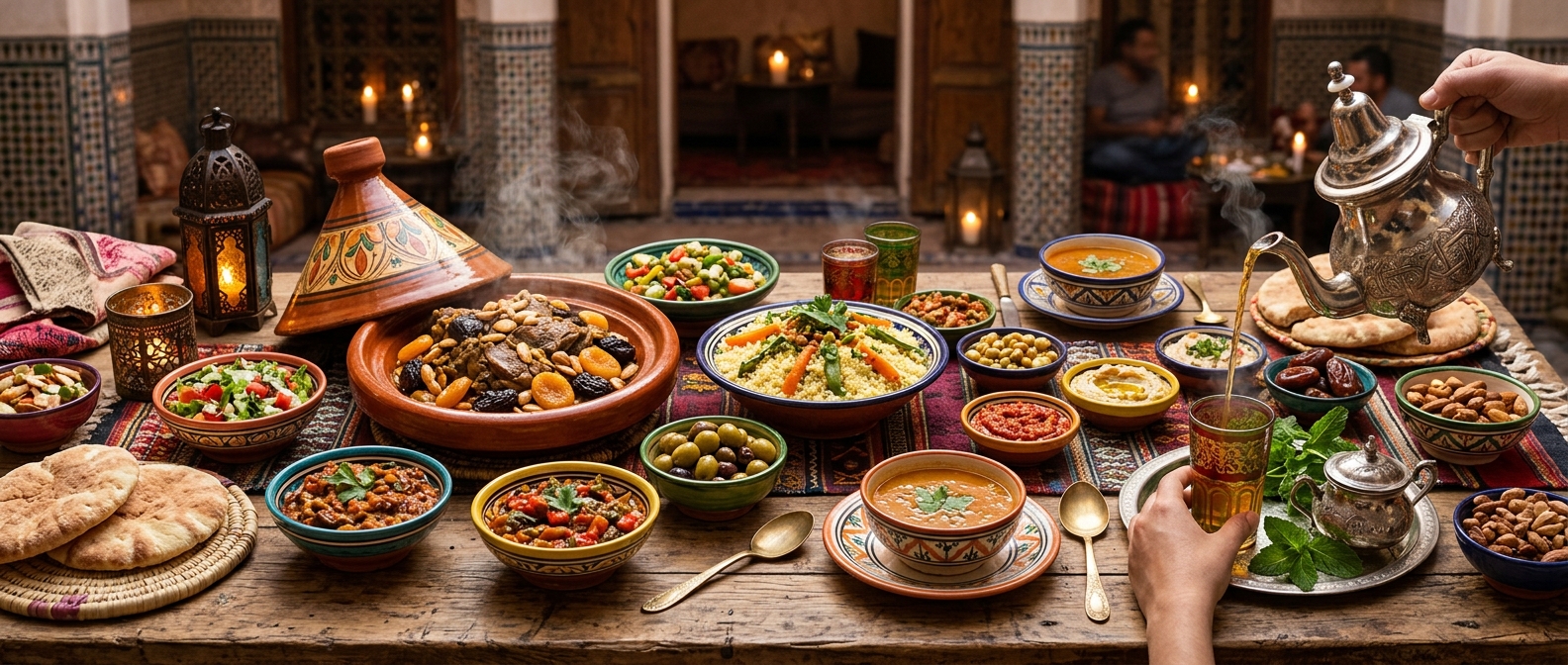
What Makes Moroccan Food Special
Moroccan cooking is one of the most layered cuisines in the world, drawing on Amazigh (Berber) roots, Arab spice traditions, Andalusian refinement and centuries of trans-Saharan trade. The result is a kitchen where sweet and savory meet without apology: lamb with prunes, chicken with preserved lemon, pigeon dusted in cinnamon and sugar.
The backbone is a spice cabinet built around cumin (kamoun), ginger, turmeric, paprika, saffron and the legendary ras el hanout, a blend that can contain a dozen or more spices. Olive oil, smen (aged butter), fresh herbs and preserved lemon tie the flavors together.
The Iconic Mains
No list starts anywhere but tagine, the slow-cooked stew named after the conical clay pot it's cooked in. Classics include chicken with preserved lemon and olives, lamb with prunes and almonds, and kefta (meatball) tagine cracked with eggs on top.
Couscous is the Friday dish, traditionally steamed three times over a bubbling vegetable-and-meat broth until the grains are feather-light. Then there's pastilla, a flaky warqa-pastry pie of pigeon or chicken with almonds and cinnamon, and mechoui, whole lamb slow-roasted until it pulls apart with your fingers.
Don't miss rfissa, shredded msemen or trid pastry soaked in a fenugreek-and-lentil chicken broth, and tangia, the Marrakchi bachelor's dish cooked for hours in the embers of a hammam furnace.
Soups, Salads & Smaller Plates
Harira is the national soup, a tomato, lentil and chickpea broth thickened with flour and brightened with herbs, eaten nightly during Ramadan with dates and chebakia. B'ssara, a thick split-pea or fava bean soup finished with olive oil, cumin and paprika, is a winter breakfast staple in Fes and the north.
Smaller plates shine too: zaalouk (smoky cooked eggplant and tomato), taktouka (pepper and tomato salad), and bowls of olives and khobz (round bread) accompany nearly every meal.
Sweets, Snacks & The Tea Ritual
Moroccan sweets lean on almonds, honey and orange-flower water: kaab el ghzal (gazelle horns), chebakia (sesame-coated fried dough soaked in honey), sellou and briouats. Street snacks include sfenj (Moroccan doughnuts), maakouda (fried potato cakes) and grilled corn.
Everything ends with atay b'nana, sweet green tea with fresh spearmint, poured theatrically from height to build a frothy crown. Refusing the third glass is considered slightly rude.
| Dish | Type | What it is |
|---|---|---|
| Tagine | Main | Slow-cooked stew in a conical clay pot |
| Couscous | Main | Steamed semolina with broth, meat and vegetables |
| Pastilla | Main | Sweet-savory pigeon or chicken pie in flaky warqa |
| Harira | Soup | Tomato, lentil and chickpea Ramadan soup |
| B'ssara | Soup | Split-pea or fava bean breakfast soup |
| Mechoui | Main | Whole slow-roasted lamb |
| Rfissa | Main | Shredded pastry in fenugreek-lentil chicken broth |
| Zaalouk | Salad | Smoky cooked eggplant and tomato dip |
Must-try Moroccan dishes at a glance
FAQ
What is the national dish of Morocco?
Couscous and tagine are both considered national dishes. Couscous is traditionally eaten on Fridays after prayers, while tagine is the everyday slow-cooked stew found across the country.
Is Moroccan food spicy?
Moroccan food is heavily spiced but rarely fiery-hot. It uses warm, aromatic spices like cumin, ginger and ras el hanout for depth. Heat is usually added at the table with harissa or chili sauces.
What do Moroccans drink with meals?
Sweet mint tea (atay) is the national drink, served before, during and after meals. Water, fresh fruit juices and sometimes buttermilk (lben) also accompany food.
Loved this? Useful? React below — your feedback helps other readers.