Moroccan Food & Dining Etiquette
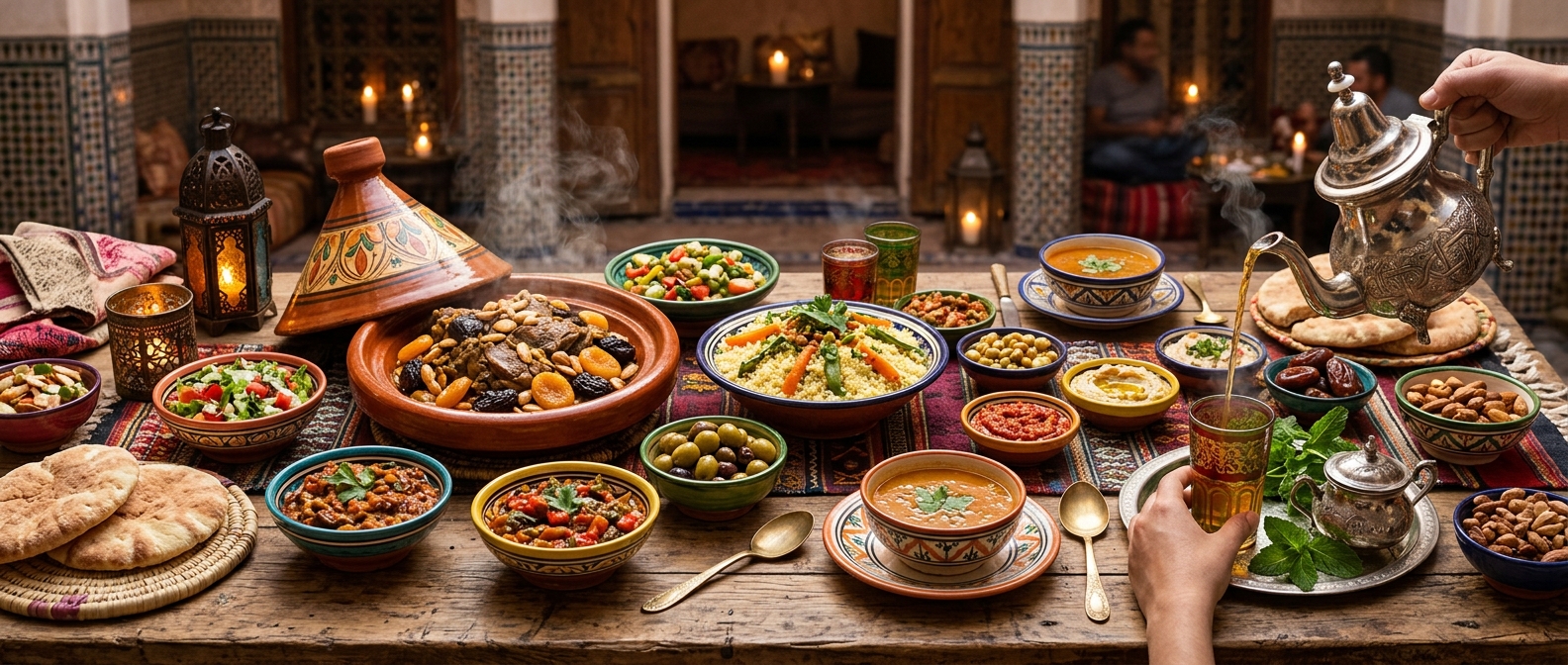
Hospitality at the Heart of Moroccan Dining
Hospitality is a cornerstone of Moroccan culture, and sharing food is a profound expression of welcome. Guests are treated generously, often served more than they can eat, and refusing food outright can unintentionally cause offence, so polite moderation is appreciated.
Being invited to a Moroccan home for a meal is an honour. Bringing a small gift such as pastries, fruit, or sweets for the host is a thoughtful gesture, while alcohol should generally be avoided as a gift in this Muslim-majority country.
The Right Hand Rule
Traditionally, Moroccans eat with the right hand, as the left is considered unclean. When dining communally and using bread or fingers, use your right hand to take and eat food. If you are left-handed, doing your best to follow this custom is courteous.
Before and after eating, hands are washed, sometimes with water poured over them at the table in more traditional settings. Cutlery is common in restaurants and modern homes, but in traditional shared meals, bread is the primary tool.
Sharing from the Communal Dish
Many Moroccan meals are served on a single large platter or in a tagine that everyone shares. The polite custom is to eat from the section of the dish directly in front of you rather than reaching across to others' areas or picking through the centre.
The host may place choice pieces of meat or vegetables in front of guests as a sign of honour, and it is gracious to accept them. Eating at a measured pace and not grabbing the best pieces reflects good manners around the communal dish.
Bread, Tea, and Table Customs
Bread accompanies almost every meal and doubles as a utensil for scooping stews, sauces, and salads. It is regarded with respect, as bread is considered a gift, so it should not be wasted or treated carelessly. Tearing off a piece with the right hand is the norm.
Mint tea is woven through meals and social visits and is often served before, after, or alongside food. Accepting tea is part of the ritual of hospitality, and being offered multiple glasses is common; declining all of it can seem unappreciative.
Being a Gracious Guest
Compliment the food and thank the host, as praising the cook is warmly received. It is polite to try a bit of everything offered and to pace yourself, since hosts may continue serving as long as you appear to want more. Leaving a little food can signal you are satisfied.
Dress modestly when visiting homes, follow the host's cues on seating and starting to eat, and wait for the host to begin or invite you. Removing shoes may be expected when entering a home, depending on the household.
Etiquette in Restaurants and Public Settings
In restaurants, dining is more relaxed and Western norms largely apply, with cutlery provided and individual plates common in many establishments. Tipping a small amount is customary and appreciated for good service.
During Ramadan, be mindful not to eat, drink, or smoke in public during daylight hours out of respect, even though tourist establishments may still serve. Showing awareness of fasting and local sensitivities is a sign of respect that Moroccans value.
| Custom | What to do | Why |
|---|---|---|
| Eating hand | Use the right hand | Left is considered unclean |
| Communal dish | Eat from the area in front of you | Respect for shared eating |
| Bread | Use as a utensil, do not waste | Bread is respected |
| Tea | Accept when offered | Symbol of hospitality |
| As a guest | Compliment the host, pace yourself | Shows gratitude |
Key Moroccan dining etiquette points
FAQ
Why should I eat with my right hand in Morocco?
The left hand is traditionally considered unclean, so food is taken and eaten with the right hand, especially when sharing from a communal dish or using bread.
Is it rude to refuse food or tea?
Refusing everything outright can seem unappreciative; it is more polite to accept at least a little and pace yourself, as hospitality is central to the culture.
Should I bring a gift when invited to a home?
Yes, a small gift such as pastries, sweets, or fruit is appreciated, but avoid alcohol given Morocco's Muslim-majority culture.
Loved this? Useful? React below — your feedback helps other readers.