Moroccan Festive & Celebration Dishes
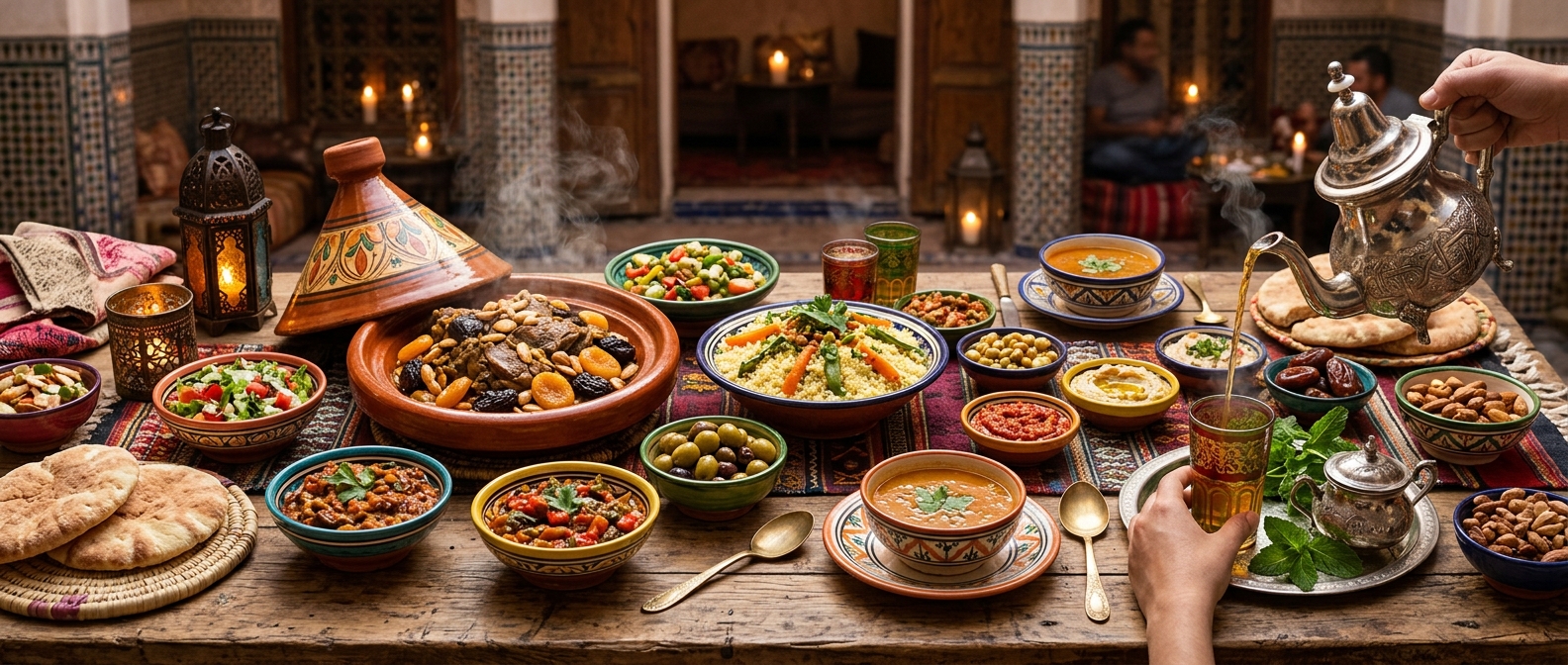
Food That Marks the Moment
In Morocco, major life events and religious holidays are inseparable from special dishes. Festive cooking is grand, generous and often days in the making, designed to honor guests and celebrate abundance.
These dishes tend to be the most elaborate in the Moroccan repertoire, reserved for weddings, Eid, Ramadan, births and the welcoming of important visitors. Serving them is a statement of hospitality and family pride.
Mechoui: The Celebration Centerpiece
Mechoui, a whole lamb slow-roasted until the meat is meltingly tender and the skin crisp, is the ultimate Moroccan feast dish. It is the showpiece at weddings, large gatherings and especially Eid al-Adha.
Seasoned simply with salt, cumin and butter, the lamb is roasted in a pit or special oven for hours. It is carved and eaten communally with the hands, dipped in cumin-salt, an experience that turns a meal into an occasion.
Pastilla and Mrouzia: Sweet-Savory Splendor
Pastilla, the Fassi pastry pie of spiced meat wrapped in warqa and dusted with cinnamon and sugar, is a classic festive dish that appears at weddings and grand dinners as a luxurious opening course.
Mrouzia, a slow-cooked lamb tagine sweetened with honey, raisins and almonds and heavily spiced with ras el hanout, is the signature dish of Eid al-Adha. Its richness and the costly meat involved make it true celebration food.
Festive Couscous: Seffa and Tfaya
Couscous is festive by nature, traditionally served on Fridays and at celebrations. Seffa medfouna takes it to the sweet side: a mound of buttery couscous (or vermicelli) dusted with cinnamon and powdered sugar, hiding spiced chicken or meat beneath.
Couscous with tfaya, topped with caramelized onions, raisins and chickpeas, is another celebratory version. These sweet-savory couscous dishes are crowd-pleasers at weddings and family feasts, embodying Moroccan generosity in a single platter.
Rfissa and Dishes for Births
Rfissa is the traditional dish served to celebrate a birth, especially to new mothers. Shredded msemen or day-old bread is layered under a chicken and lentil stew flavored with fenugreek and ras el hanout, believed to aid recovery and milk production.
Prepared for the naming ceremony (sebaa) on a baby's seventh day, rfissa gathers the extended family. It is a heartfelt example of how Moroccan festive food is tied to the rhythms of family life.
Ramadan and Eid Sweets
Holidays bring a parade of sweets. Ramadan tables overflow with chebakia, sticky sesame-and-honey pretzels, and sellou, the energy-rich toasted-flour blend, alongside dates and harira.
For Eid and weddings, trays of kaab el ghzal (almond-filled gazelle horns), ghriba, briouats and other pastries are offered with mint tea. These sweets are often homemade in large batches and shared among neighbors, sealing the communal spirit of the celebration.
| Dish | Description | Occasion |
|---|---|---|
| Mechoui | Whole slow-roasted lamb | Weddings, Eid al-Adha |
| Pastilla | Sweet-savory meat pastry pie | Weddings, grand dinners |
| Mrouzia | Honey, raisin and almond lamb tagine | Eid al-Adha |
| Seffa medfouna | Sweet couscous over hidden meat | Celebrations |
| Rfissa | Bread, chicken and lentils with fenugreek | Births, sebaa ceremony |
Moroccan festive dishes and their occasions
FAQ
What food is served at a Moroccan wedding?
Moroccan weddings typically feature grand dishes like pastilla, mechoui (whole roasted lamb), sweet seffa couscous, and tagines, followed by trays of pastries such as gazelle horns and briouats served with mint tea.
What is eaten at Eid al-Adha in Morocco?
Eid al-Adha centers on the freshly slaughtered sheep. Families grill boulfaf (liver) and brochettes first, then prepare dishes like mechoui and mrouzia, a honey-and-almond lamb tagine, over the following days.
What is rfissa and when is it served?
Rfissa is a dish of shredded bread or msemen topped with a fenugreek-spiced chicken and lentil stew. It is traditionally served to new mothers and at the sebaa naming ceremony seven days after a baby is born.
Loved this? Useful? React below — your feedback helps other readers.