Moroccan Eid Traditions & Foods
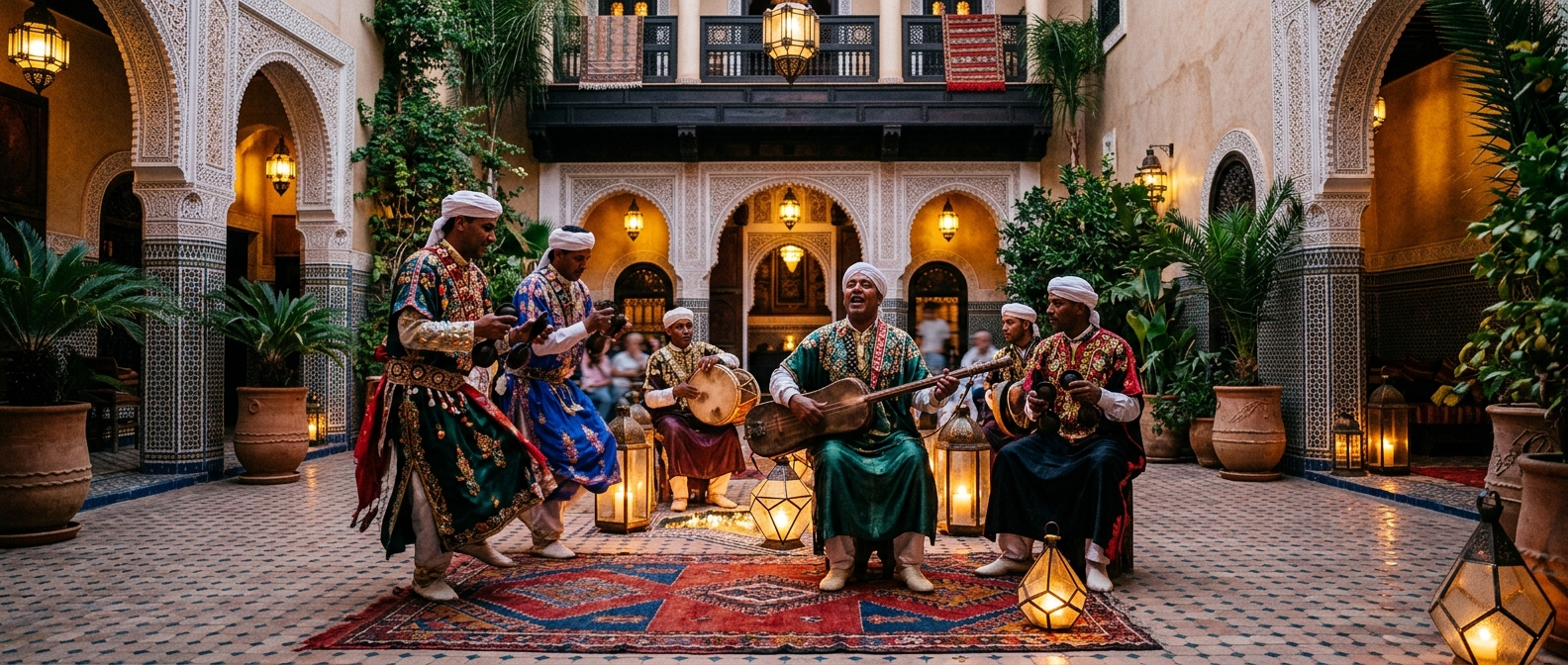
Two Eids, One Spirit
Moroccans celebrate two major Eids each year. Eid al-Fitr ('the feast of breaking the fast') marks the end of Ramadan, while Eid al-Adha ('the feast of sacrifice') commemorates the Prophet Ibrahim's willingness to sacrifice his son and falls during the pilgrimage season.
Both holidays share a spirit of gratitude, family togetherness and charity. The day usually begins with a special communal prayer (salat al-Eid) in the morning, after which families gather, exchange greetings and celebrate.
Eid al-Fitr Customs and Foods
After a month of fasting, Eid al-Fitr is joyful and sweet. People dress in new or best clothes, often traditional like the djellaba or kaftan, give children small gifts or money (l-eidiya), and visit relatives and neighbours throughout the day.
The food is light and celebratory after Ramadan: msemen and baghrir (honeycomb pancakes) with honey and butter, an array of Moroccan cookies such as ghriba, kaab el ghazal and fekkas, and endless rounds of sweet mint tea. Charity (zakat al-fitr) is given before the prayer so the needy can also celebrate.
Eid al-Adha: The Feast of Sacrifice
Eid al-Adha, often called Eid el-Kebir ('the big Eid') in Morocco, centres on the sacrifice of a sheep, following the tradition of Ibrahim. Families who can afford it buy a sheep in advance, and the day involves the ritual sacrifice after the morning prayer.
The meat is shared in three parts according to custom: for the family, for relatives and friends, and for the poor, reinforcing the value of charity. The household then enjoys several days of meat-based meals, making it a deeply communal occasion.
The Foods of Eid al-Adha
Eid al-Adha is a carnivore's feast. On the first day, freshly grilled meat and offal are popular, including boulfaf, skewers of liver wrapped in caul fat and grilled over coals, a much-anticipated speciality.
Over the following days, families cook dishes like tagines with prunes, mrouzia (a sweet-spiced lamb dish with raisins and almonds), couscous and douara (a stew of offal and tripe). Little of the animal goes to waste, reflecting respect and resourcefulness.
Family, Generosity and Celebration
Both Eids are above all about people: visiting elders, reconciling with relatives, welcoming guests, and remembering the less fortunate through gifts of food and money. Greetings like 'Eid Mubarak' and 'Mbrouk l-Eid' fill the day.
Children receive new clothes and treats, homes are cleaned and decorated, and the table is generous. The combination of prayer, family and shared food makes Eid one of the warmest and most anticipated times of the Moroccan year.
| Feature | Eid al-Fitr | Eid al-Adha (el-Kebir) |
|---|---|---|
| Marks | End of Ramadan | Feast of sacrifice |
| Signature food | Pancakes, cookies, tea | Grilled meat, boulfaf |
| Key act | Charity (zakat al-fitr) | Sacrifice, sharing meat |
| Mood | Sweet, light | Meat feast, communal |
The two Moroccan Eids compared
FAQ
What are the two Eids celebrated in Morocco?
Eid al-Fitr, which marks the end of Ramadan, and Eid al-Adha (called Eid el-Kebir), the feast of sacrifice during the pilgrimage season. Both emphasise faith, family and charity.
What is boulfaf?
Boulfaf is a popular Eid al-Adha dish of skewered lamb liver wrapped in caul fat and grilled over coals, typically eaten on the first day of the feast.
How is the Eid al-Adha sheep shared?
Traditionally the meat is divided into three parts: one for the family, one for relatives and friends, and one for the poor, reflecting the holiday's spirit of charity.
Loved this? Useful? React below — your feedback helps other readers.