15 Moroccan Dishes You Must Try (Beyond Tagine)
The Big Plates: Couscous, Pastilla and Tanjia
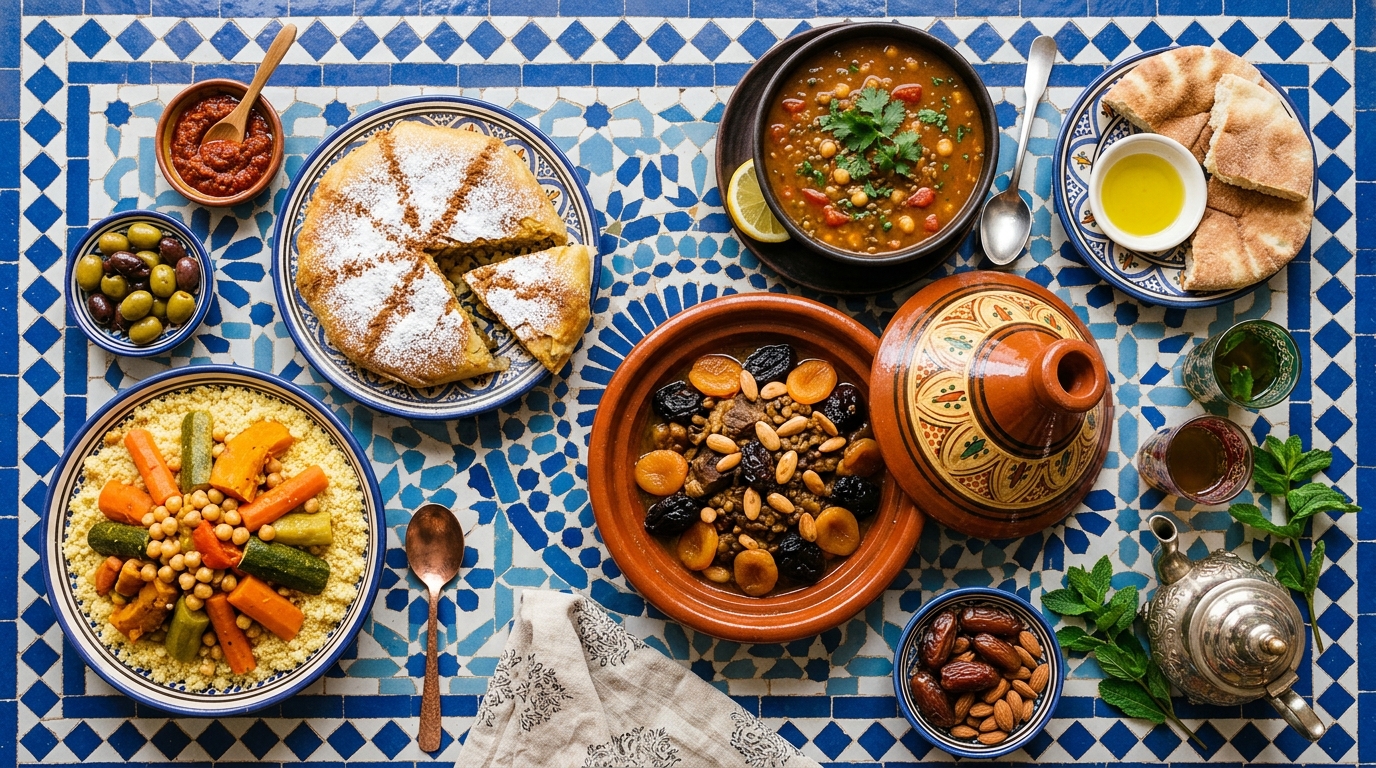
Couscous is the heart of Moroccan home cooking, traditionally served on Fridays after prayers. Steamed semolina is piled high and topped with slow-cooked vegetables and meat, often lamb or chicken, in a fragrant broth. It is communal food, shared from a single platter, and getting the grain light and fluffy is considered a real mark of skill.
For special occasions, pastilla steals the show, a flaky pie that layers shredded pigeon or chicken with almonds, eggs and cinnamon, dusted with sugar in a famous sweet-savory contrast. From Marrakech comes tanjia, a 'bachelor's dish' of meat slow-cooked for hours in a clay urn buried in the embers of a hammam furnace, emerging meltingly tender and deeply spiced.
Comfort and Soul: Harira, Rfissa and Bissara
Harira is Morocco's beloved soup, a thick tomato, lentil and chickpea broth often laced with lamb, herbs and a squeeze of lemon. It is the dish that breaks the fast during Ramadan, served with dates and chebakia, but it is comforting any time of year and varies from region to region and household to household.
Rfissa is the ultimate Moroccan comfort food, shredded msemen or day-old bread soaked in a lentil and chicken stew rich with fenugreek and ras el hanout, traditionally made for new mothers. For a humbler but equally soulful dish, try bissara, a warming fava-bean soup drizzled with olive oil and cumin that is a winter breakfast staple in the hills and northern towns.
From the Grill and the Coast: Mechoui, Khlea and Seafood
Mechoui is a feast in itself, a whole lamb slow-roasted in a pit or clay oven until the meat falls off the bone, often eaten with the fingers and a little cumin and salt. In Marrakech you can buy it by the kilo from dedicated mechoui stalls, and it is a centerpiece at celebrations and large family gatherings.
Morocco's long Atlantic coast means seafood is everywhere, from Essaouira's charcoal-grilled sardines to Oualidia's oysters and Agadir's fish tagines. Inland, Fes is famous for refined cooking, including khlea, preserved spiced beef stored in fat that adds deep flavor to eggs and stews. Together they show how much Moroccan food changes from coast to mountain to imperial city.
Salads and Sweets: Zaalouk, Seffa and Chebakia
No Moroccan table is complete without a spread of small salads. Zaalouk is the star, a smoky cooked salad of roasted eggplant and tomato seasoned with garlic, cumin and paprika and scooped up with bread. These dishes turn a simple meal into a generous mezze and showcase Morocco's love of layered, well-spiced vegetables.
For something sweet, seffa is a festive dish of steamed vermicelli or couscous dusted with cinnamon, sugar and almonds, sometimes hiding chicken beneath the sweetness, and is a wedding favorite. Finally, chebakia, the flower-shaped sesame cookies fried and soaked in honey and orange-blossom water, are the perfect partner to a glass of mint tea and a Ramadan essential.
Frequently asked
What is the national dish of Morocco?
Couscous and tagine are both considered national dishes. Couscous is traditionally served on Fridays, while tagine refers to the slow-cooked stews named after the conical clay pot they are made in.
What Moroccan food should I try beyond tagine?
Start with pastilla, harira soup, rfissa, tanjia, mechoui roasted lamb, zaalouk eggplant salad, seffa and chebakia cookies. Coastal grilled sardines and seafood are also a must.
What do Moroccans eat during Ramadan?
The fast is traditionally broken with harira soup, dates and chebakia, the honey-soaked sesame cookies. Sweet pastries and mint tea are also central to the evening meals during Ramadan.