Moroccan Desserts & Sweets Guide
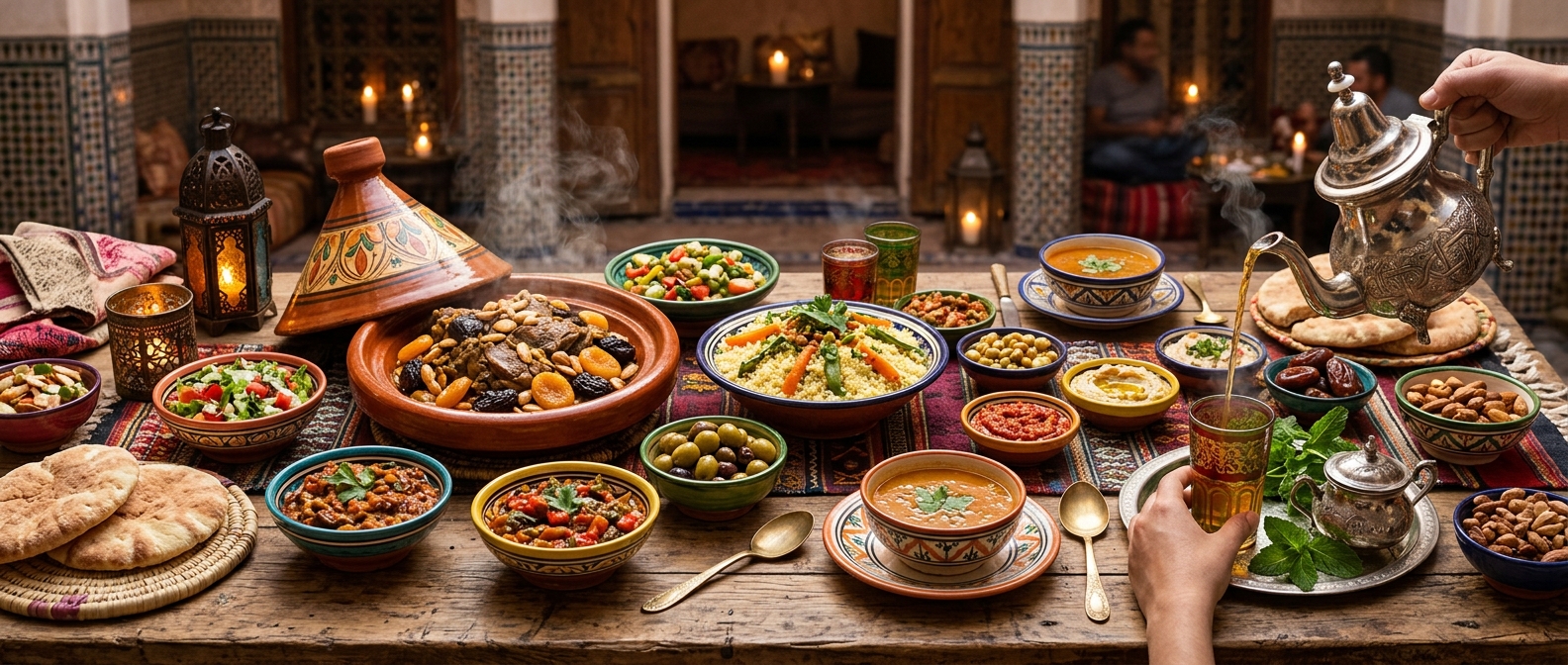
The Character of Moroccan Sweets
Moroccan desserts favor almonds, honey, sesame, dates and fragrant waters like orange-blossom (zhar) and rose, scented with cinnamon and anise. Rather than rich frosted cakes, the repertoire leans toward nut-filled pastries, honey-soaked cookies and griddle breads with sweet toppings.
Sweets are deeply tied to hospitality and ritual. They appear with the daily glasses of mint tea, multiply during Ramadan, and reach their grandest expression at weddings and religious feasts. Offering sweets to a guest is a core gesture of Moroccan generosity.
Kaab el Ghazal (Gazelle Horns)
Kaab el ghazal, meaning 'gazelle horns,' are crescent-shaped pastries filled with a delicate almond paste perfumed with orange-blossom water and cinnamon, wrapped in a thin, tender dough. They are the elegant queen of Moroccan sweets, served at weddings and special occasions.
Made well, the pastry is pale and barely sweet, letting the fragrant almond filling shine. Shaping the perfect slim crescent takes practice and is a point of pride for Moroccan cooks and pastry makers.
Ramadan Favorites
During Ramadan the sweet table fills with chebakia (sesame cookies soaked in honey), sellou (the toasted-flour energy treat), and sweet briouats (almond-filled honey-dipped triangles). These energy-rich sweets are eaten with harira to break the fast.
Dates are the traditional first food at iftar, often stuffed with almond paste. Baghrir pancakes with honey-butter and msemen with amlou also feature heavily, making Ramadan the richest season of Moroccan sweet-making.
Cookies and Tea-Time Treats
Ghriba are crumbly, crackle-topped Moroccan cookies made in many varieties: almond, coconut, semolina, or walnut, with a sandy, melt-in-the-mouth texture. They are the everyday companion to mint tea, served on the family tray throughout the day.
Other tea-time treats include fekkas (twice-baked sliced biscuits studded with almonds and raisins, similar to biscotti), and feqqas-style cookies. These keep well and are always on hand for unexpected guests.
Festive and Spoon Desserts
Seffa is a sweet dish of steamed vermicelli or couscous dusted with cinnamon, powdered sugar and almonds, sometimes topped with chicken for seffa medfouna at celebrations. It blurs the line between main course and dessert in true Moroccan style.
M'hancha, the 'snake cake,' is a coil of almond-paste-filled warqa pastry, glossy and impressive on a celebration table. Rice pudding (roz bil hleeb) scented with orange-blossom and cinnamon offers a gentler, everyday sweet.
Sweets, Tea and Hospitality
No discussion of Moroccan sweets is complete without mint tea (atay), the sweet, foamy green tea poured from a height that accompanies nearly every dessert. The pairing of sweet pastries with hot, sugary mint tea is the heartbeat of Moroccan hospitality.
Sweets are also gifts and gestures: brought to a host, shared at the mosque, or sent to neighbors during Eid. Learning even one or two of these recipes opens a window into the warmth and generosity of Moroccan culture.
| Ingredient | Amount |
|---|---|
| Ground almonds | common base |
| Honey | for soaking/binding |
| Sesame seeds (jeljlan) | garnish/flavor |
| Orange-blossom water (zhar) | 1 to 2 tbsp per recipe |
| Ground cinnamon | to taste |
| Ground anise | for chebakia/sellou |
| Dates | for iftar/fillings |
| Powdered sugar | for seffa/dusting |
| Warqa or filo pastry | for briouats/m'hancha |
| Butter (or smen) | for richness |
Ingredients
FAQ
What is the most famous Moroccan dessert?
Kaab el ghazal (gazelle horns), almond-filled crescent pastries scented with orange-blossom water, are among the most iconic. Chebakia and sellou are equally famous, especially during Ramadan.
Are Moroccan desserts very sweet?
Many are sweet, often from honey, but they are usually balanced by nuts, sesame and fragrant waters rather than being purely sugary. Pastries like kaab el ghazal are quite delicate, while chebakia is intensely honeyed.
What do Moroccans drink with dessert?
Sweet Moroccan mint tea (atay) is the traditional accompaniment to virtually all desserts and tea-time sweets. The hot, sugary tea balances the richness of the pastries and is central to Moroccan hospitality.
Loved this? Useful? React below — your feedback helps other readers.