Types of Moroccan Couscous Explained
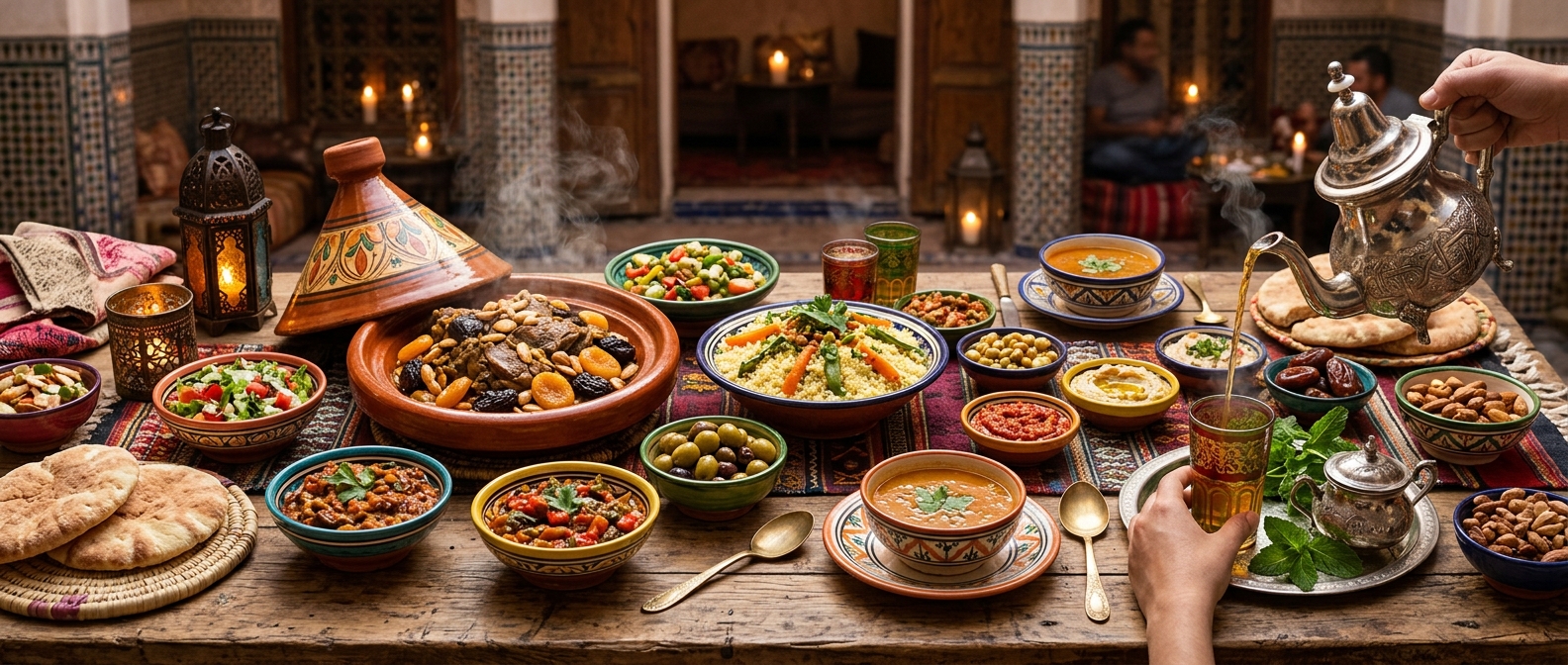
More Than One Couscous
To many outside Morocco, couscous is a single product, but it is really a family of steamed semolina dishes that vary by grain size, base ingredient, and whether they are savoury or sweet.
The word refers both to the tiny rolled grains and to the finished dish. Understanding the types helps you choose the right one for soups, mains, or desserts.
Grain Sizes
Wheat couscous is sold in fine, medium, and coarse grades. Fine couscous suits delicate dishes and sweet seffa; medium is the all-purpose everyday choice; coarse, sometimes called berkoukes when very large, is hearty and good in soups and rustic dishes.
Berkoukes, the largest pearls, is almost like small pasta and is simmered in broths. Matching grain size to the dish affects texture and how the couscous absorbs sauce.
Beyond Wheat: Barley and Corn
Barley couscous, belboula, is nuttier, darker, and more rustic, prized in rural areas and considered especially nourishing. Corn couscous offers a sweeter, golden alternative.
These grain variations reflect regional agriculture and taste, and many Moroccans regard barley couscous as the most traditional and wholesome of all.
The Friday Couscous
The most iconic dish is couscous aux sept legumes, the seven-vegetable couscous traditionally eaten on Fridays after prayers. Medium grains are topped with a mound of vegetables, such as carrot, turnip, pumpkin, zucchini, and chickpeas, plus meat in a saffron-and-ginger broth.
Sharing this dish from a communal platter is a cherished weekly ritual that brings families together. The number seven is considered auspicious.
Sweet Couscous and Seffa
On the sweet side, fine couscous becomes seffa, mounded and dusted with cinnamon, sugar, butter, and almonds, served at celebrations. Tfaya couscous adds caramelised onions and raisins for a sweet-savoury topping.
These dishes show how the same humble grain spans the full range from savoury weekday meals to festive desserts.
The Steaming Technique
Authentic couscous is never boiled. It is steamed in the top of a couscoussier over the simmering stew or water, two or three times, with rests in between where the grains are raked, moistened, and buttered.
This repeated steaming is the secret to light, separate grains. The result is fluffy couscous that absorbs the broth or topping without turning to mush.
| Type | Grain / base | Best for |
|---|---|---|
| Fine couscous | Small wheat semolina | Seffa, delicate dishes |
| Medium couscous | Standard wheat | Friday seven-veg couscous |
| Berkoukes | Large pearls | Soups, rustic stews |
| Belboula | Barley | Hearty traditional couscous |
Couscous types and uses
FAQ
Why is couscous steamed instead of boiled?
Steaming two or three times with rests keeps the grains light and separate. Boiling makes them clump and turn mushy.
What is the Friday couscous?
Couscous aux sept legumes, a seven-vegetable couscous with meat in a saffron broth, traditionally shared after Friday prayers.
What is barley couscous?
Belboula, a nuttier, darker, more rustic couscous made from barley, considered especially traditional and nourishing.
Loved this? Useful? React below — your feedback helps other readers.