Authentic Moroccan Couscous Recipe
What Makes Moroccan Couscous Different
Moroccan couscous, or seksu in Darija, is the national dish and the centerpiece of the Friday family meal. Unlike the boxed instant couscous sold abroad, the authentic version is steamed several times in a couscoussier, the two-part pot whose perforated top sits over a simmering stew.
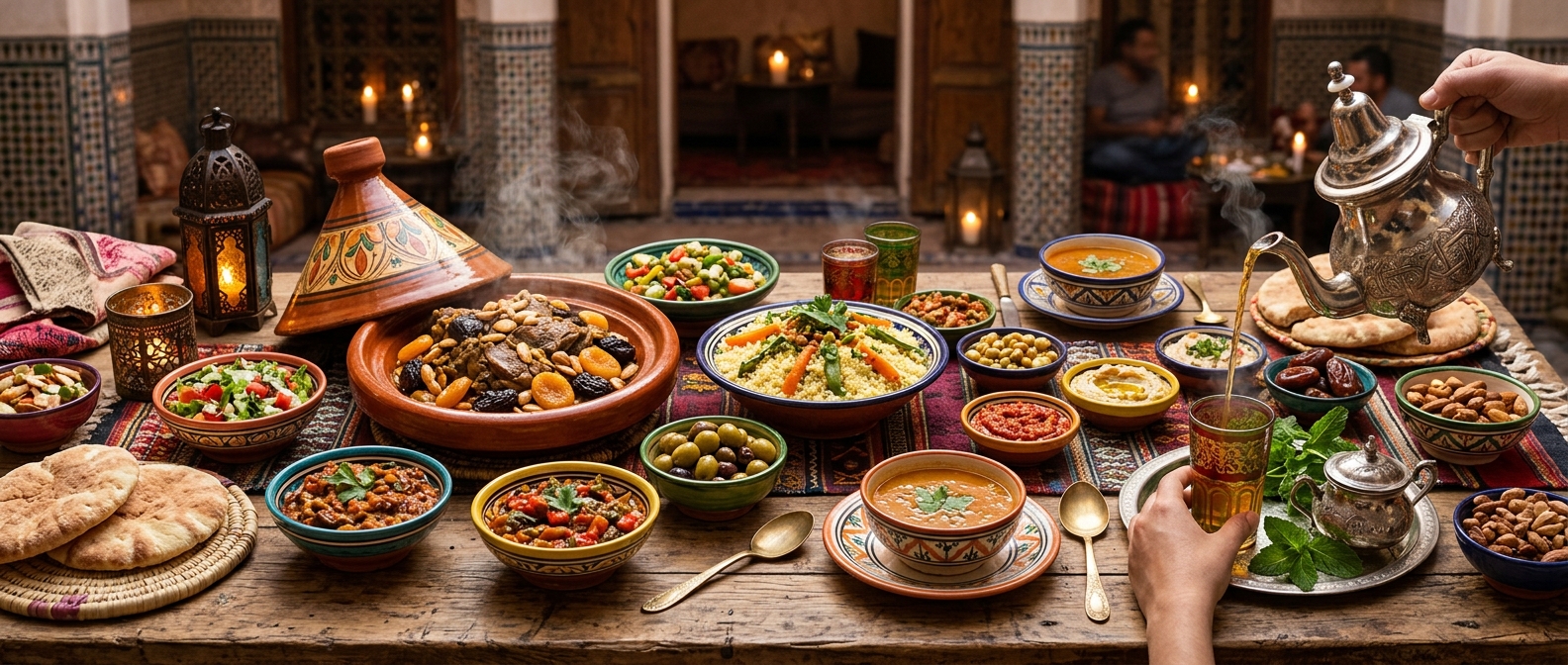
The result is a fluffy mound of grain crowned with meat, a rainbow of vegetables and an aromatic broth ladled over the top. It is a dish of patience: the steaming, rolling and re-steaming can take two hours, which is why it is reserved for the week's most important gathering.
The Seven Vegetables Tradition
The classic Marrakech and Casablanca versions use seven vegetables, a number associated with baraka, or blessing, in Moroccan culture. Typical choices are carrots, turnips, zucchini, pumpkin, cabbage, tomatoes and chickpeas, though families adapt to the season.
Vegetables are added to the broth in stages according to how long they take to cook. Hard roots like turnip and carrot go in first, while zucchini and pumpkin are added late so they hold their shape on the platter.
Ingredients You Will Need
The recipe below serves six and uses lamb shoulder, though beef shank or chicken work equally well. Use coarse or medium dry couscous, not the instant five-minute type, if you want the true texture.
The spice base is gentle: ginger, turmeric, black pepper and saffron, with a little smen (fermented butter) for depth. Harissa is served on the side, never mixed into the pot, so each guest controls the heat.
Step-by-Step Method
Start the meat and broth first, then begin the three-stage steaming of the grain while the stew simmers. The grain is moistened, rubbed between the palms to break clumps, and steamed; this cycle repeats three times with rests in between.
On the final steam, the couscous is fluffed with butter or olive oil and a little salted water, then mounded on a wide platter. The meat is set in the center, vegetables arranged around it like spokes, and the strained broth poured over to moisten.
Serving and Eating Customs
Couscous is traditionally eaten communally from one large platter, each person working the section directly in front of them. In rural homes it is eaten by hand, rolling the grain into a neat ball with the right hand, though most urban families now use spoons.
Buttermilk (lben) is the classic drink alongside it, cutting the richness of the broth. A sweet version called seffa, dusted with cinnamon, sugar and almonds, sometimes follows as a dessert course.
Tips for the Lightest Grain
Never let the bottom of the couscoussier touch the perforated top, and seal the join with a flour-and-water paste or a damp cloth so steam rises only through the grain. Always work the grain with cool water and oiled hands between steamings to keep it separate.
If you lack a couscoussier, a fine-mesh steamer basket lined with cheesecloth set over a stockpot does the job. Avoid the temptation to boil the grain directly in liquid; that produces a gummy, porridge-like result that locals would never recognize as couscous.
| Ingredient | Quantity | Notes |
|---|---|---|
| Dry couscous (medium grain) | 500 g | Not instant |
| Lamb shoulder | 800 g | Cut into large pieces |
| Carrots | 4 | Halved lengthwise |
| Turnips | 3 | Quartered |
| Zucchini | 3 | Added late |
| Pumpkin | 300 g | Added late |
| Cabbage wedge | 1 | Quartered |
| Chickpeas | 200 g | Pre-soaked |
| Onion | 2 | Sliced |
| Ground ginger, turmeric, pepper | 1 tsp each | Spice base |
| Saffron threads | 1 pinch | Bloomed in water |
| Smen or butter | 2 tbsp | For flavor and grain |
Couscous ingredients and quantities (serves 6)
FAQ
Can I make Moroccan couscous without a couscoussier?
Yes. Use a fine-mesh steamer basket lined with cheesecloth over a stockpot, and seal the gap with a damp cloth so steam passes only through the grain.
Why is couscous eaten on Fridays in Morocco?
Friday is the holy day, and after midday prayer families gather for the most important meal of the week. Couscous, which feeds many and signals hospitality, became the traditional Friday dish.
Is couscous a grain or a pasta?
Technically it is a pasta made from rolled and dried semolina wheat, not a whole grain, though it is eaten like one and cooked by steaming rather than boiling.
How spicy is authentic Moroccan couscous?
The pot itself is mild and aromatic, not hot. Heat comes from harissa served on the side, so each diner adjusts the spice to taste.
Loved this? Useful? React below — your feedback helps other readers.