Moroccan Cookies Guide
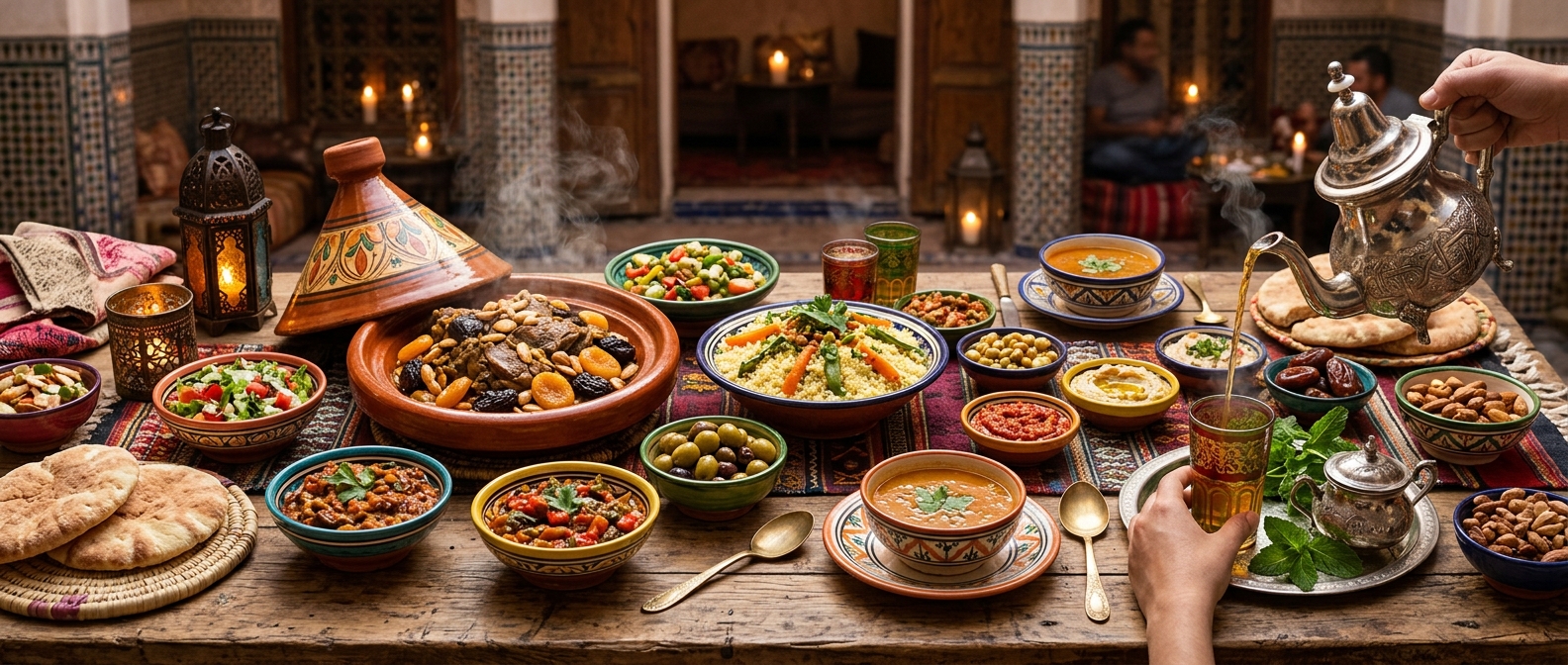
Cookies at the Heart of Hospitality
In Morocco, cookies are far more than a snack; they are an essential expression of hospitality. No guest leaves a Moroccan home without being offered a tray of sweets and a glass of mint tea, and the variety and quality of those cookies reflect the warmth of the welcome.
These sweets reach their peak during celebrations: weddings, Eid, Ramadan, and family gatherings see kitchens fill with the scent of orange blossom and toasted almonds as cooks prepare dozens of varieties, often over several days.
The Shortbread Family: Ghriba
Ghriba are round, crackled shortbread cookies and perhaps the most iconic of all Moroccan cookies. They come in almond, coconut, semolina, and rustic flour-and-oil versions, each with a melt-in-the-mouth texture and a signature fissured top.
Their appeal lies in simplicity and contrast: a tender, crumbly interior beneath a delicate sugar-dusted crust. Easy to make in large batches and quick to please, ghriba are a starting point for anyone exploring Moroccan baking.
The Crunchy Family: Fekkas
Fekkas are twice-baked biscotti studded with almonds, raisins, and sesame, flavored with anise. Crisp and sturdy, they are made to be dunked in tea or coffee and keep for weeks, making them a practical staple in any household.
There are both sweet and savory fekkas, but the sweet anise-scented version is the classic. Their long shelf life makes them ideal for stocking ahead of holidays and for offering to unexpected guests at a moment's notice.
The Elegant Family: Almond Crescents
Kaab el Ghzal, the famed gazelle horns, lead the category of refined almond pastries. Their thin, pale dough wrapped around perfumed almond paste marks them as wedding and special-occasion sweets that demand patience and skill to make well.
Related sweets include almond briouats, little triangular fried parcels filled with almond paste and soaked in honey, and various small almond cakes. These richer, more delicate cookies are reserved for moments when a host wishes to truly impress.
Coconut, Date, and Beyond
Coconut macaroons, light and chewy, are popular for their ease and bright flavor, while date-filled cookies wrap a spiced date paste in tender dough. Sesame cookies, peanut sweets, and chocolate-dipped variations round out the modern Moroccan cookie repertoire.
Many of these cookies share a common flavor palette of orange blossom water, cinnamon, sesame, and honey, which gives the whole family a coherent Moroccan identity even as the textures and shapes vary widely.
Serving and Presentation
Moroccan cookies are presented on tiered trays or large platters, arranged by color and shape for visual appeal, and always accompanied by sweet mint tea. The bitterness of the tea balances the cookies' sweetness in a pairing perfected over centuries.
During festivals, cookies are also packed into decorative boxes as gifts for family and friends. Storing them in airtight tins preserves their texture, and most varieties keep for one to three weeks, making batch baking a cherished pre-holiday ritual.
| Ingredient | Amount |
|---|---|
| Ground almonds | varies by recipe |
| Icing and granulated sugar | varies by recipe |
| Eggs | as needed |
| Sesame and anise seeds | to flavor |
| Orange blossom water | to flavor |
| Honey | for glazing |
| Coconut and dates | for fillings |
Ingredients
FAQ
What flavors define Moroccan cookies?
Almonds, sesame, anise, cinnamon, orange blossom water, and honey are the recurring flavors that unify the Moroccan cookie family, even across very different textures and shapes.
Which Moroccan cookie is best for beginners?
Ghriba and coconut macaroons are the easiest to start with, requiring few ingredients and forgiving techniques, while gazelle horns are best attempted once you have more experience.
Why are Moroccan cookies always served with mint tea?
The slight bitterness and herbal freshness of sweet mint tea balance the richness and sweetness of the cookies, a classic pairing that is also central to Moroccan hospitality.
Loved this? Useful? React below — your feedback helps other readers.