Traditional Moroccan Breakfast Recipes
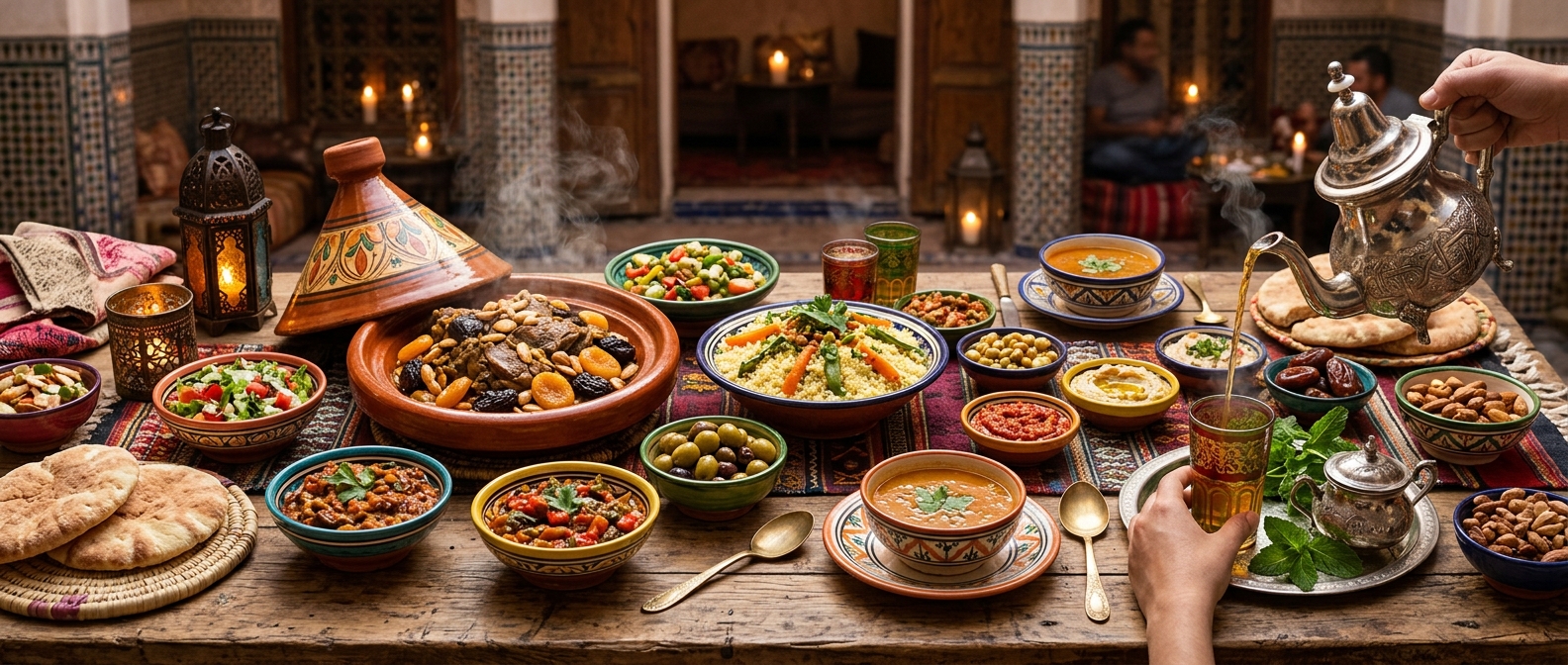
The Moroccan Breakfast Table
Breakfast in Morocco, known as ftour (not to be confused with the Ramadan iftar), is a warm, abundant affair built around fresh-baked breads and an array of toppings. On weekdays it can be simple, but on weekends and holidays it becomes a relaxed feast shared by the whole family.
The table typically holds several breads, pots of honey and butter, jams, amlou, soft cheese (jben), olives, and eggs, all enjoyed with endless glasses of sweet mint tea or strong coffee. Eating is unhurried and social, often stretching over an hour.
Msemen and Meloui
Msemen, the flaky square folded flatbread, is the star of many Moroccan breakfasts. Its buttery layers are perfect for tearing and dipping in honey or wrapping around cheese. Its coiled cousin meloui is softer and equally beloved.
These griddle breads are often made fresh in the morning or bought hot from a neighborhood bakery. Served warm with a drizzle of honey and melted butter, they exemplify the comforting heart of the Moroccan morning.
Baghrir and Harcha
Baghrir, the spongy thousand-hole semolina pancakes, are a breakfast favorite, their holes soaking up a warm honey-butter syrup. They are light, soft and slightly tangy, offering a lovely contrast to the flaky msemen.
Harcha is a pan-fried semolina griddle bread with a crisp, cornbread-like crust and tender crumb. Split and spread with butter, honey, jam or cheese, harcha is hearty and satisfying, another cornerstone of the bread basket.
Savory Sides: Eggs, Olives and Cheese
Eggs appear often, scrambled with cumin and herbs or cooked in a small tagine with tomato and onion (a simple version of the dish khlii or a tomato-egg pan). Olives and a wedge of soft white cheese (jben) add a savory, salty note to balance the sweet breads.
Some households add khlii (preserved spiced beef) fried with eggs for a richer, more substantial breakfast, particularly in colder months or after a hard morning's work. These savory elements round out the spread.
Sweet Spreads: Honey, Amlou and Jam
Honey is essential, drizzled over every kind of bread. Amlou, the almond-argan-honey spread from the Souss, is a luxurious favorite for dipping msemen. Homemade jams, often orange, fig or apricot, and soft cheese complete the sweet options.
Butter, sometimes the aged smen for a tangy depth, is spread on warm bread before the honey. The interplay of warm bread, melting butter, and sweet spreads is what makes a Moroccan breakfast so memorable.
Mint Tea and Coffee
No Moroccan breakfast is complete without atay, the sweet green tea brewed with fresh mint and plenty of sugar, poured from a height to create foam. It is sipped throughout the meal and refilled generously.
Coffee is also popular, often as café cassé or nous-nous (half coffee, half steamed milk). Whether tea or coffee, the hot, sweet drink ties the whole leisurely breakfast together in true Moroccan fashion.
| Ingredient | Amount |
|---|---|
| Msemen or meloui | 2 to 3 per person |
| Baghrir pancakes | 3 to 4 per person |
| Harcha (semolina bread) | 1 round per person |
| Honey | for drizzling |
| Butter or smen | for spreading |
| Amlou spread | 1 jar |
| Jam (fig, orange, apricot) | to taste |
| Soft cheese (jben) | as desired |
| Olives | 1 small bowl |
| Eggs | 1 to 2 per person |
| Fresh mint + green tea + sugar | for atay |
Ingredients
FAQ
What is the most common Moroccan breakfast?
A spread of fresh breads, especially msemen, with honey, butter, jam, olives, cheese and eggs, served with sweet mint tea or coffee. Weekday breakfasts may be simpler, while weekends bring the full leisurely table.
Is Moroccan breakfast sweet or savory?
It is both. Sweet breads with honey, amlou and jam sit alongside savory olives, eggs and cheese. Diners mix and match, which is part of the charm of the Moroccan breakfast spread.
What is the difference between ftour and iftar?
Ftour is the everyday Moroccan word for breakfast. During Ramadan, the evening meal that breaks the fast is also commonly called ftour or iftar. Context makes it clear which meal is meant.
Loved this? Useful? React below — your feedback helps other readers.