Types of Moroccan Bread
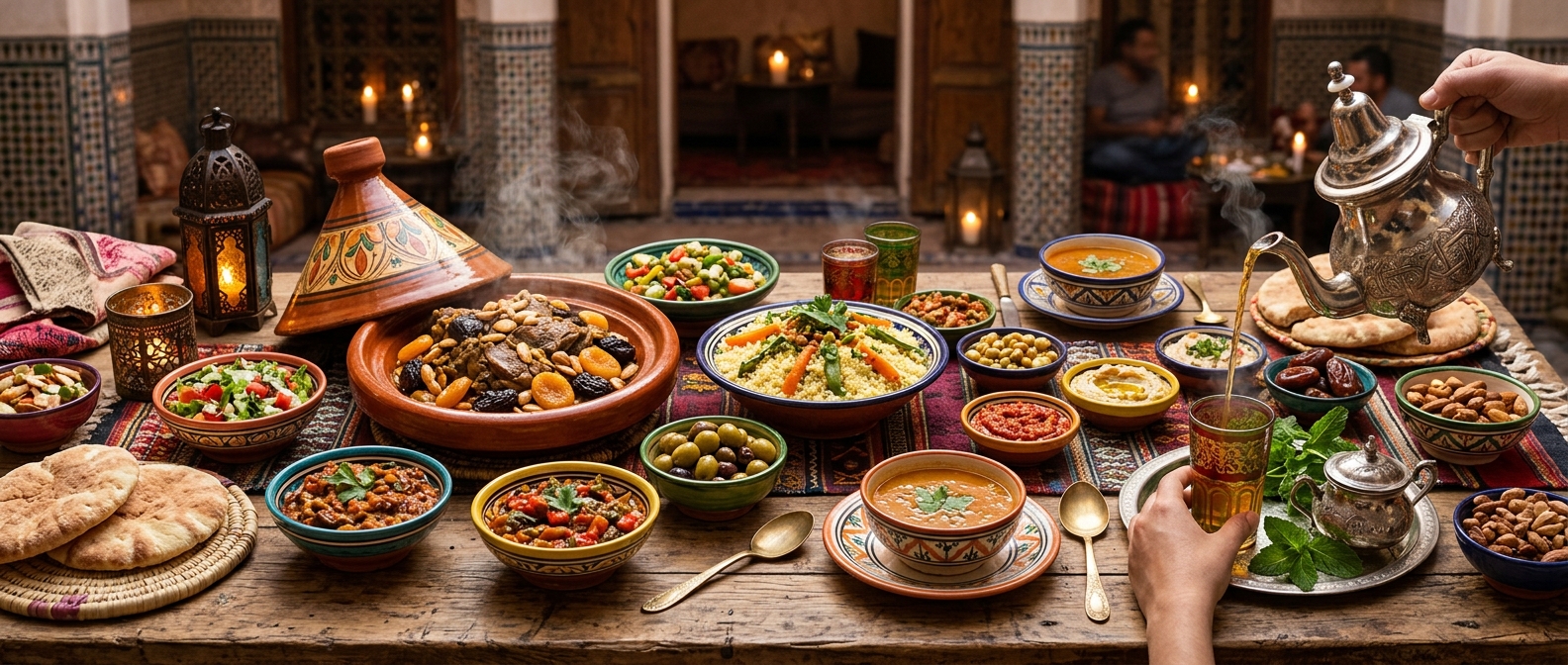
Bread at the Heart of the Meal
In Morocco, bread (khobz in Darija) is sacred. It appears at every meal and is treated with respect; dropping it on the floor is considered shameful, and stale bread is saved rather than wasted. Bread is both food and the primary eating utensil.
Rather than forks, Moroccans use torn pieces of bread to scoop up tagine, salads, dips and sauces. This makes the right bread an essential part of the dining experience, and Morocco has developed a remarkable variety of them.
Khobz: The Daily Round Loaf
Khobz is the everyday Moroccan bread, a round, flattish loaf with a firm crust and soft crumb, often made from a blend of white and whole wheat flour, sometimes with semolina. It is baked fresh daily in homes and neighborhood ovens.
Traditionally, families mixed their own dough and carried it to a communal wood-fired oven (ferran) where the baker baked everyone's loaves, each marked to identify the owner. Sliced into wedges, khobz accompanies virtually every meal.
Msemen and Rghaif: Flaky Layered Breads
Msemen (also called rghaif) is a square, flaky, layered flatbread made by folding oiled dough into multiple layers, then griddle-frying it until golden. Its rich, buttery texture makes it a breakfast and teatime favorite.
Eaten plain, drizzled with honey, spread with amlou or smen, or stuffed with onion-and-tomato fillings (khlea or kefta versions), msemen is endlessly versatile. Watching a street vendor stretch and fold the dough is a small show in itself.
Baghrir and Harcha
Baghrir, the thousand-hole pancake, is a spongy semolina pancake cooked on one side so its surface fills with tiny holes that soak up melted butter and honey. It is a beloved breakfast and Ramadan treat.
Harcha is a pan-fried semolina bread with a crumbly, almost cornbread-like texture and a golden crust. Eaten warm with cheese, honey or jam, it is another staple of the Moroccan breakfast and afternoon tea table.
Batbout, Khringo and Specialty Breads
Batbout is a soft, puffy pocket bread cooked on a griddle rather than in an oven, similar to pita. Its hollow interior makes it perfect for stuffing with kefta, salads or grilled meats, popular as a sandwich base and party food.
Other specialties include semolina-rich breads, anise and sesame loaves, and the layered medfouna or rfissa breads used in regional dishes. Each region and household has its preferred bread for particular meals and occasions.
Breads for Special Dishes
Some Moroccan dishes are defined by their bread. Rfissa layers shredded msemen or day-old bread under a lentil and chicken stew flavored with fenugreek, a dish traditionally served to new mothers.
Trid similarly uses torn sheets of paper-thin dough beneath a saffron chicken broth. These dishes show how bread moves beyond a side role to become the very structure of a meal, soaking up sauces and carrying flavor.
| Bread | Texture | Typical use |
|---|---|---|
| Khobz | Round, firm crust, soft crumb | Daily meals, scooping |
| Msemen | Flaky, layered, griddle-fried | Breakfast, honey, fillings |
| Baghrir | Spongy, thousand-hole pancake | Breakfast with butter and honey |
| Harcha | Crumbly semolina, pan-fried | Tea time, cheese or jam |
| Batbout | Soft, puffy pocket bread | Sandwiches, stuffing |
Major types of Moroccan bread
FAQ
What is the main bread eaten in Morocco?
Khobz, a round flattish loaf with a firm crust and soft interior, is the main daily bread in Morocco. It is served at virtually every meal and used to scoop up tagines, salads and dips.
What is the difference between msemen and baghrir?
Msemen is a flaky, layered, griddle-fried square bread with a buttery texture, while baghrir is a light, spongy semolina pancake full of tiny holes. Both are popular at breakfast, often served with honey and butter.
Why is bread so important in Moroccan culture?
Bread is the staple food and the main eating utensil in Morocco, used to scoop nearly every dish. It is treated with deep respect, never wasted, and considered a blessing, making it central to both daily life and hospitality.
Loved this? Useful? React below — your feedback helps other readers.