Moroccan Arabic Alphabet & Arabizi Explained
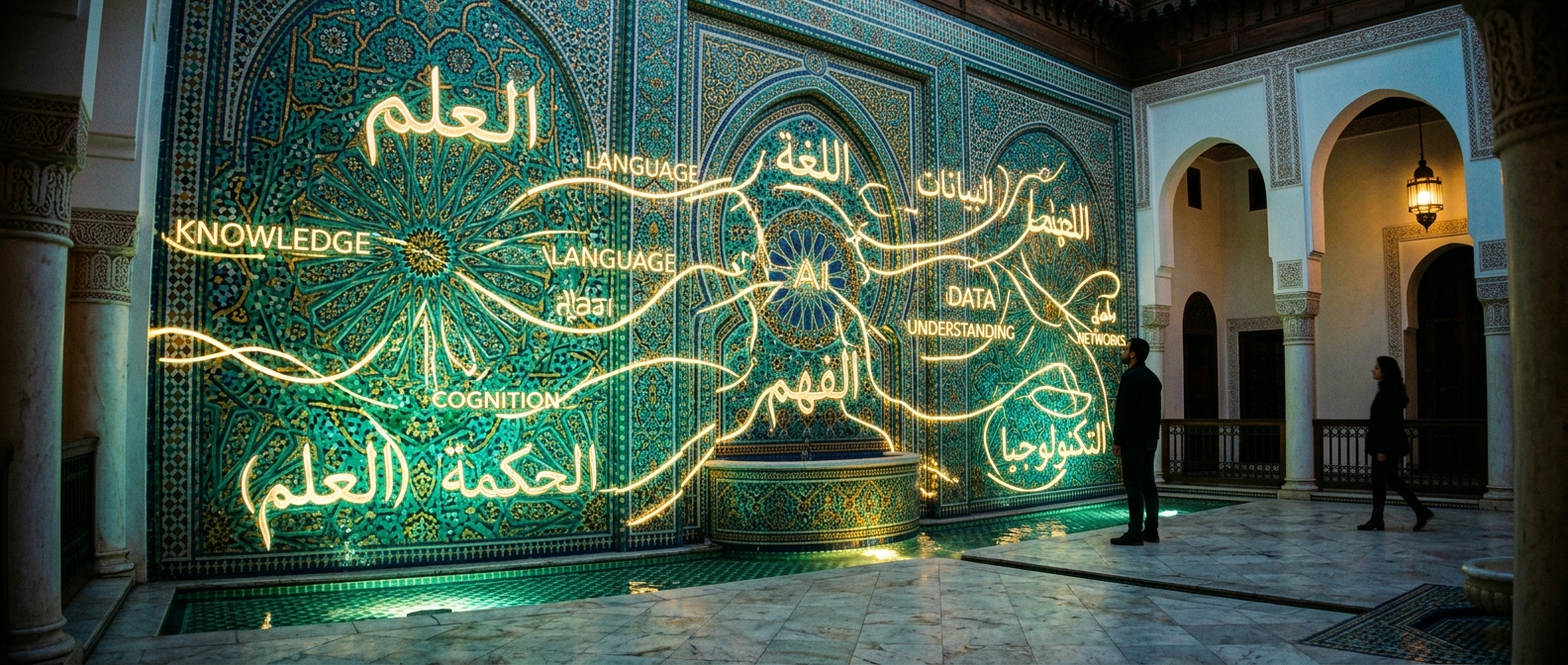
Why Darija Has Two Writing Systems
Darija is primarily a spoken language with no single official written standard. Moroccans write it two ways depending on the context. Formally and on signage, the Arabic script is used, while in texting, social media and casual chat, people write in Latin letters with numbers, a system called Arabizi.
For a learner, Arabizi is the fastest on-ramp because it lets you read pronunciation immediately without studying the Arabic alphabet first. But understanding the Arabic script unlocks signs, menus and deeper literacy. This guide explains both so you can choose your path and read Darija confidently.
What Is Arabizi?
Arabizi, also called Arabish or Franco-Arabe in Morocco, emerged when early phones and keyboards lacked Arabic letters. Moroccans cleverly used numbers that visually or phonetically resemble Arabic sounds that have no Latin equivalent. It is now the dominant way young people write Darija online.
The system is intuitive once you learn the key substitutions. Because Darija has sounds English lacks, like the throaty ayn and the deep qaf, numbers fill the gap. Throughout our guides we use Arabizi precisely so you can sound out every phrase correctly before learning any script.
The Number-to-Letter Code
The core Arabizi numbers are: 3 for ع (ayn), a throaty sound from deep in the throat; 7 for ح (haa), a breathy h from the chest; 9 for ق (qaf), a hard k made at the back of the throat; and 2 for the hamza or glottal stop, the catch in uh-oh.
Secondary ones include 5 or kh for خ (the raspy ch in Scottish loch), 6 for ط (a heavy t), and 8 sometimes for غ (gh, a French-style r) though gh is more common. Once these clicks, words like 3afak, shukran and bsh7al become easy to pronounce accurately.
The Arabic Alphabet Basics
The Arabic alphabet has 28 letters and is written from right to left. Letters change shape depending on their position in a word: initial, medial, final or isolated. Most letters connect to the next, though a few never connect on their left side, which can surprise beginners.
Short vowels are usually not written, shown instead by optional marks above or below letters. This means readers supply vowels from knowledge of the word, which is why beginners find Arabic reading challenging at first. Learning the letter shapes and their sounds is the foundational step toward true literacy.
Sounds That Don't Exist in English
Several Arabic sounds have no English equivalent and deserve focused practice. The ayn (3) is a constriction deep in the throat, the haa (7) is a forceful breathy h, and the qaf (9) is a k produced far back. The kh is the rasp in loch, and the ghayn is like a gargled French r.
Mastering these distinguishes you from a beginner instantly. Practice minimal pairs, such as kalb (dog) versus qalb (heart), where only the k versus qaf changes the meaning. Native speakers will understand you far more easily once these throat sounds become natural, even before your vocabulary grows.
How to Practice Reading Both Systems
Start with Arabizi to build speaking and listening fast, since you can read our phrase tables aloud immediately. Spend your first weeks here, getting comfortable with the number code and the tricky throat sounds described above.
Then layer in the Arabic script gradually. Learn five letters at a time, practice reading shop signs and food packaging, and use a script-learning app. Seeing the Arabic column in our tables next to the Arabizi helps you connect the two systems naturally over time, building real Moroccan literacy.
| English | Darija | Arabic |
|---|---|---|
| Ayn (throaty) | 3 | ع |
| Haa (breathy h) | 7 | ح |
| Qaf (deep k) | 9 | ق |
| Glottal stop | 2 | ء |
| Kha (loch sound) | 5 / kh | خ |
| Heavy t (taa) | 6 | ط |
| Ghayn (gargled r) | gh | غ |
| Sad (heavy s) | s | ص |
| Example: please | 3afak | عافاك |
| Example: how much | bsh7al | بشحال |
| Example: heart | 9alb / qalb | قلب |
| Example: thank you | shukran | شكرا |
Arabizi number-to-letter code
FAQ
What does the 3 mean in Darija writing?
The 3 represents the Arabic letter ع (ayn), a throaty sound made deep in the throat with no English equivalent. It appears in common words like 3afak (please) and 3awnni (help me).
Should I learn Arabizi or the Arabic script first?
Start with Arabizi to speak and read phrases quickly, since it shows pronunciation directly. Add the Arabic script gradually afterward to read signs, menus and gain full literacy.
Why are there numbers in Moroccan text messages?
Numbers stand in for Arabic sounds that have no Latin letter, such as 7 for ح and 9 for ق. This Arabizi system arose when early keyboards lacked Arabic letters.
How many letters are in the Arabic alphabet?
The Arabic alphabet has 28 letters, written right to left, with shapes that change based on position. Short vowels are usually not written, supplied instead by the reader's knowledge.
Loved this? Useful? React below — your feedback helps other readers.