Mawlid (Prophet's Birthday) in Morocco
What Is Mawlid al-Nabi?
Mawlid al-Nabi, known in Morocco as Eid al-Mawlid or simply Mouloud, commemorates the birth of the Prophet Muhammad. It is observed on the 12th day of Rabi al-Awwal, the third month of the Islamic lunar calendar.
Because it follows the Hijri calendar, the Gregorian date shifts about eleven days earlier each year. In Morocco it is a recognized public holiday and a day of both religious devotion and communal celebration.
Religious Devotion and Praise
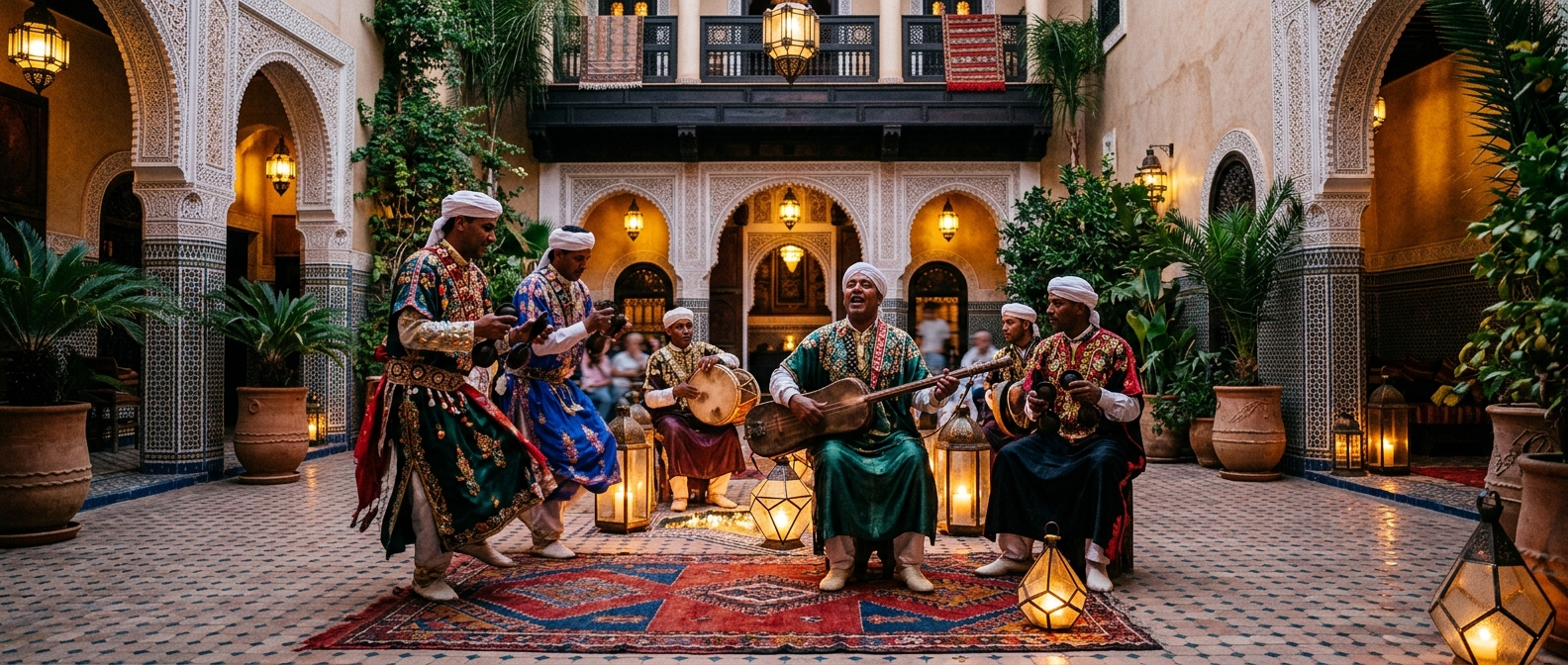
The heart of Mawlid is devotional. Across Morocco, the days surrounding the holiday feature recitations of the Quran, the singing of praise poetry, and chanting of religious songs that honor the Prophet, often performed in mosques, homes and zaouias (Sufi lodges).
Sufi brotherhoods play a prominent role, organizing gatherings with rhythmic chanting (dhikr) and spiritual music. Mosques hold special prayers and lectures recounting the Prophet's life and teachings.
Festive Customs and Sweets
Beyond worship, Mawlid is a joyful family occasion. Households prepare special meals and an abundance of traditional Moroccan sweets and pastries, shared with relatives, neighbors and the poor.
Charity is emphasized, with food and donations given to those in need. In many families it is also a time to celebrate children, and some hold ceremonies such as first haircuts or naming traditions around the holiday.
Candle Processions of Salé
One of Morocco's most famous Mawlid traditions is the candle procession (Dawr al-Chamaa) of Salé, near Rabat. Dating back centuries, it features elaborately decorated wax lanterns and candle structures carried in a colorful procession through the city.
Accompanied by music, chanting and crowds, the Salé candle festival is a celebrated cultural event that draws visitors and showcases the artistry and devotion woven into Moroccan Mawlid celebrations.
Regional and Sufi Celebrations
Celebrations vary across the country. In some towns and at Sufi shrines, the period around Mawlid features larger gatherings, music and communal meals that can extend over several days.
These observances reflect Morocco's deep Sufi heritage and the central place of love and reverence for the Prophet in popular religious life. The atmosphere blends solemn devotion with warmth and festivity.
Tips for Travelers During Mawlid
Mawlid is an official public holiday in Morocco, so government offices, banks and some businesses close, often for one or two days depending on the year's calendar.
Travelers may have the chance to witness devotional gatherings or, in Salé, the famous candle procession. Visitors are generally welcome to observe respectfully; modest dress and quiet attentiveness are appreciated at religious events. The mood is celebratory and family-centered.
| Aspect | Details |
|---|---|
| Local name | Eid al-Mawlid / Mouloud |
| Commemorates | Birth of the Prophet Muhammad |
| Date | 12th of Rabi al-Awwal (lunar, moves yearly) |
| Public holiday | Yes, typically 1-2 days |
| Key practices | Quran recitation, praise songs, charity, sweets |
| Famous tradition | Candle procession of Salé |
Mawlid al-Nabi at a glance in Morocco
FAQ
When is Mawlid celebrated in Morocco?
Mawlid al-Nabi is observed on the 12th of Rabi al-Awwal, the third month of the Islamic lunar calendar, so its Gregorian date shifts about eleven days earlier each year.
What is the Salé candle procession?
It is a centuries-old Mawlid tradition in the city of Salé, where decorated wax lanterns and candle structures are carried through the streets accompanied by music and chanting, drawing crowds and visitors.
Is Mawlid a public holiday in Morocco?
Yes. Mawlid al-Nabi is an official public holiday during which government offices, banks and many businesses close, often for one or two days.
Loved this? Useful? React below — your feedback helps other readers.